Sputnik Holds Expert Discussion to Mark Africa Day
© Sputnik . VITALIY BELOUSOV
Subscribe
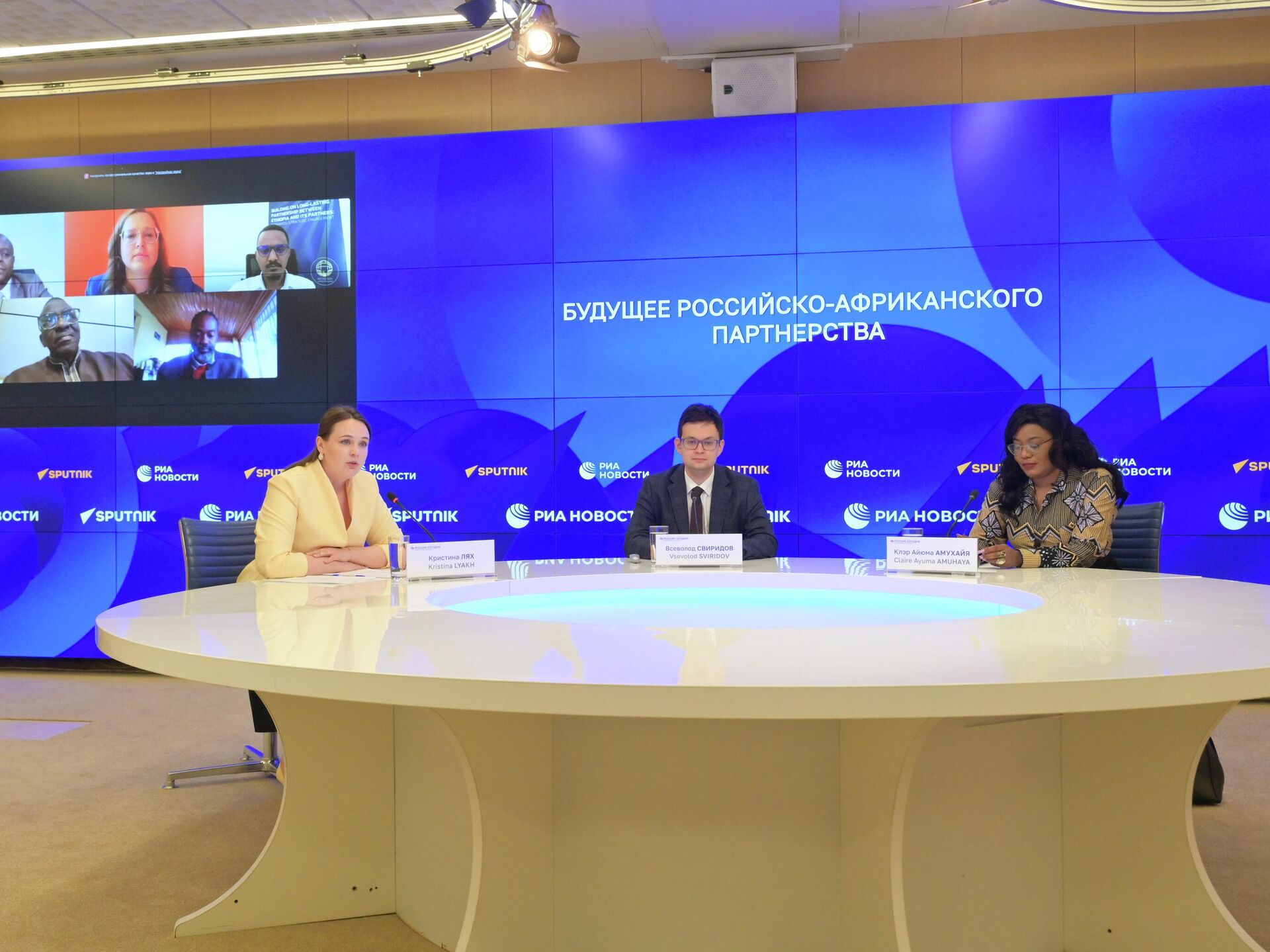
Experts have discussed how growing global instability and African states’ gravitation towards a multipolar world are changing formats of bilateral cooperation and shifting Russian-African relations from a purely economic dimension to a center of geopolitical and strategic decisions.
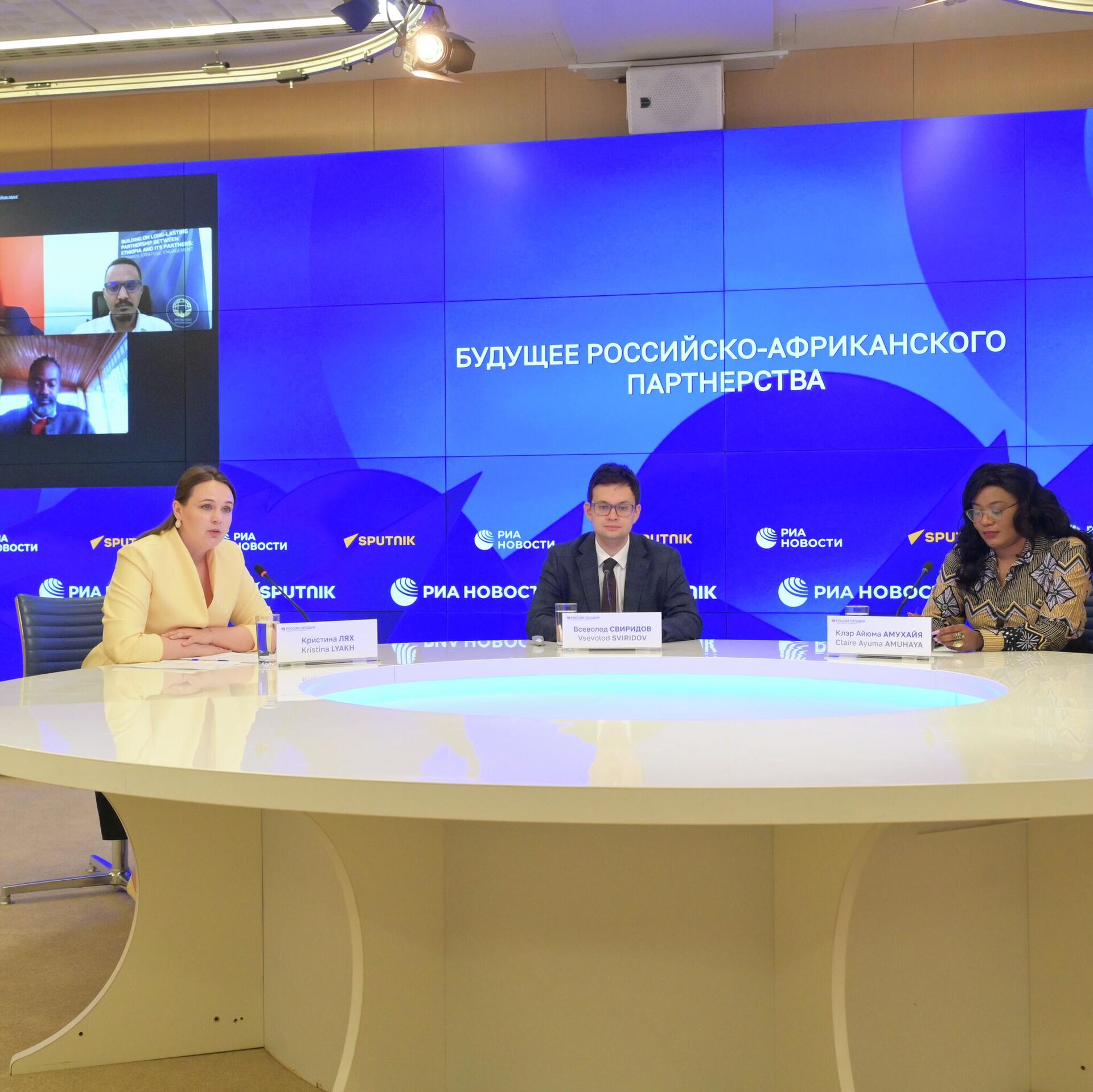
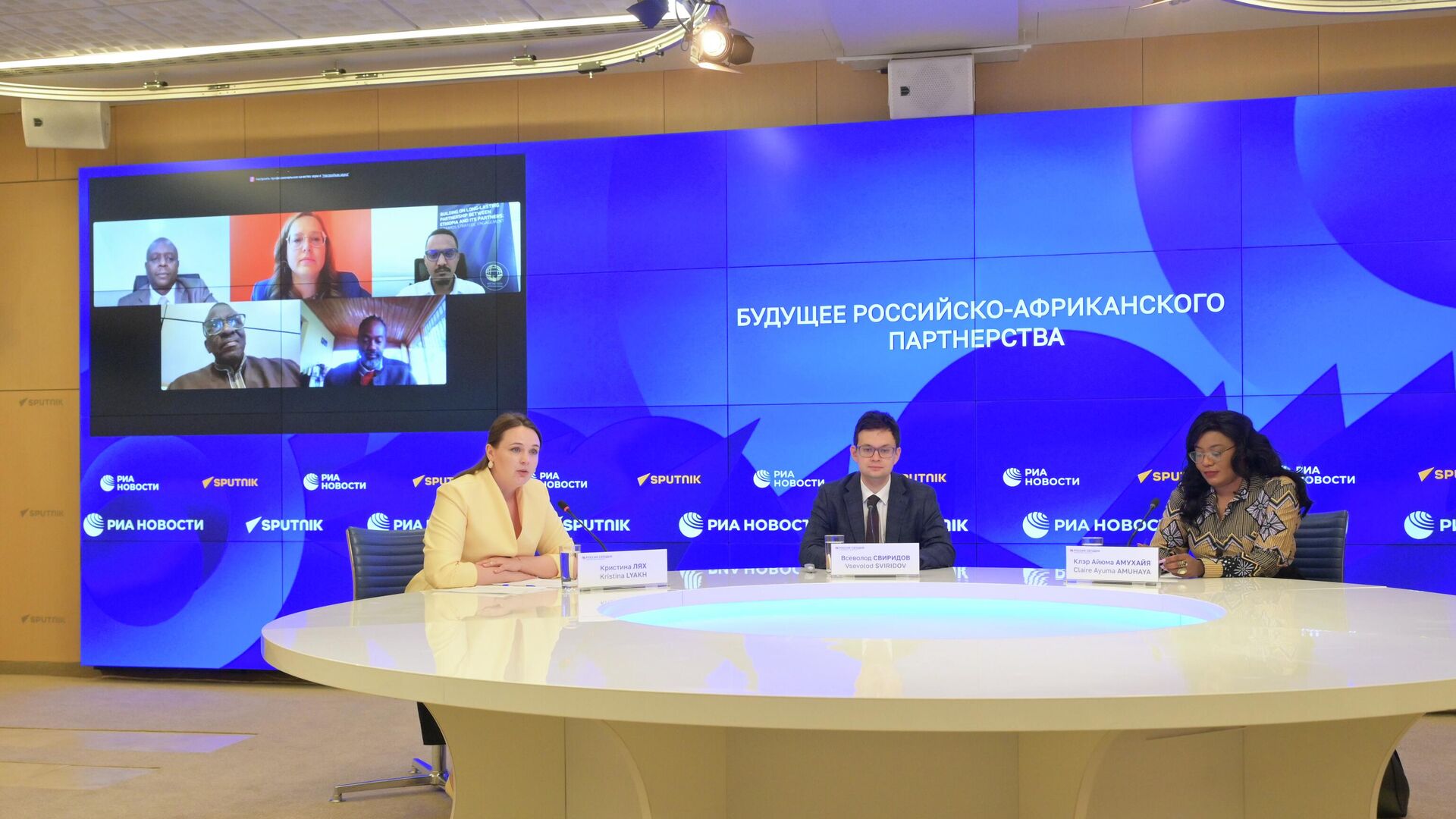
The event marking Africa Day was attended by Director of the HORN International Institute for Strategic Studies Hassan Khannenje, Executive Director of the Institute for Global Dialogue (South Africa) Philani Mthembu, Chief of the Technology and Innovation Section at the UN Economic Commission for Africa Mactar Seck, Lead Researcher at the Institute of Foreign Affairs (Ethiopia) Dareskedar Taye, Sputnik Africa Director Viktoria Budanova, Deputy Director of the Center for African Studies at the Higher School of Economics Vsevolod Sviridov, and Senior Lecturer at the Department of Theory and History of International Relations of Patrice Lumumba People’s Friendship University of Russia Claire Amuhaya.
Chief of the Technology and Innovation Section at the UN Economic Commission for Africa Mactar Seck spoke about developing Russian-African cooperation in artificial intelligence and digital technology. The expert specifically stressed the potential of joint initiatives in the industry:
Chief of the Technology and Innovation Section at the UN Economic Commission for Africa Mactar Seck spoke about developing Russian-African cooperation in artificial intelligence and digital technology. The expert specifically stressed the potential of joint initiatives in the industry:
“We have already established in Congo African Centre of Artificial Intelligence and Russia is supporting it. And I think there is a lot of progress now between the Republic of Congo and the government of Russia to move forward to make sure this African Centre of Artificial Intelligence will be more impactful across the continent.”
Director of the HORN International Institute for Strategic Studies Hassan Khannenje addressed the importance of building a system-wide foundation for Russia-Africa cooperation across all levels. The expert stressed that this foundation is a missing piece of the puzzle in our relations:
“There is a need for intentional strategic engagement at local, regional, as well as continental levels. I think one of the things that has been missing is a very deliberate intentional framework of engagement across multiple sectors and multiple levels between the Russian Federation and the African continent.”
Lead Researcher at the Institute of Foreign Affairs (Ethiopia), Daskedar Taye, spoke about the prospects for bilateral cooperation between Russia and Ethiopia in the context of global transformations and their impact on African countries. The speaker particularly stressed the importance of Russian-African cooperation in the field of food security. In his opinion, the COVID-19 pandemic has shown that Africa should focus on producing its own food. Expert emphasized that the continuous disruptions in global supply chains seriously affect the standard of living in Africa, so future efforts to develop relations between Russia and Africa should be aimed at solving this important problem.
Executive Director of the Institute for Global Dialogue (South Africa) Philani Mthembu pointed out the strategic nature of Russian-African relations:
“As we see a diffusion of power in global politics, Africa utilizes its strategic relations with Russia to expand its policy space when it engages other great powers, and therefore that becomes quite important, especially as we are marking Africa Day.”
Sputnik Africa Director Viktoria Budanova spoke about developing media cooperation between Russia and African countries. The expert noted the importance of expanding media presence on the continent and cooperating with local media partners:
“Last year, we opened our first representative office in the heart of the African Union. We remain the only Russian media company producing news in the Amharic language. Our Ethiopian team produces radio programs and news for online projects across all popular platforms while also developing a website in Amharic. High-ranking Russian and Ethiopian politicians attended our opening ceremony.”
Deputy Director of the Center for African Studies at the Higher School of Economics Vsevolod Sviridov emphasized that Russia and Africa are diversifying their cooperation beyond traditional sectors:
“For the last couple of years, I think we've been trapped into the perception that current Russia-Africa relations are mostly centered around agriculture, energy, oil and gas, military equipment procurement. These are traditional sectors of cooperation that have been in presence for the last, I think, 20 years. But I would argue that over the last four- three years we've seen that Russia-Africa relations are growingly being diversified.”
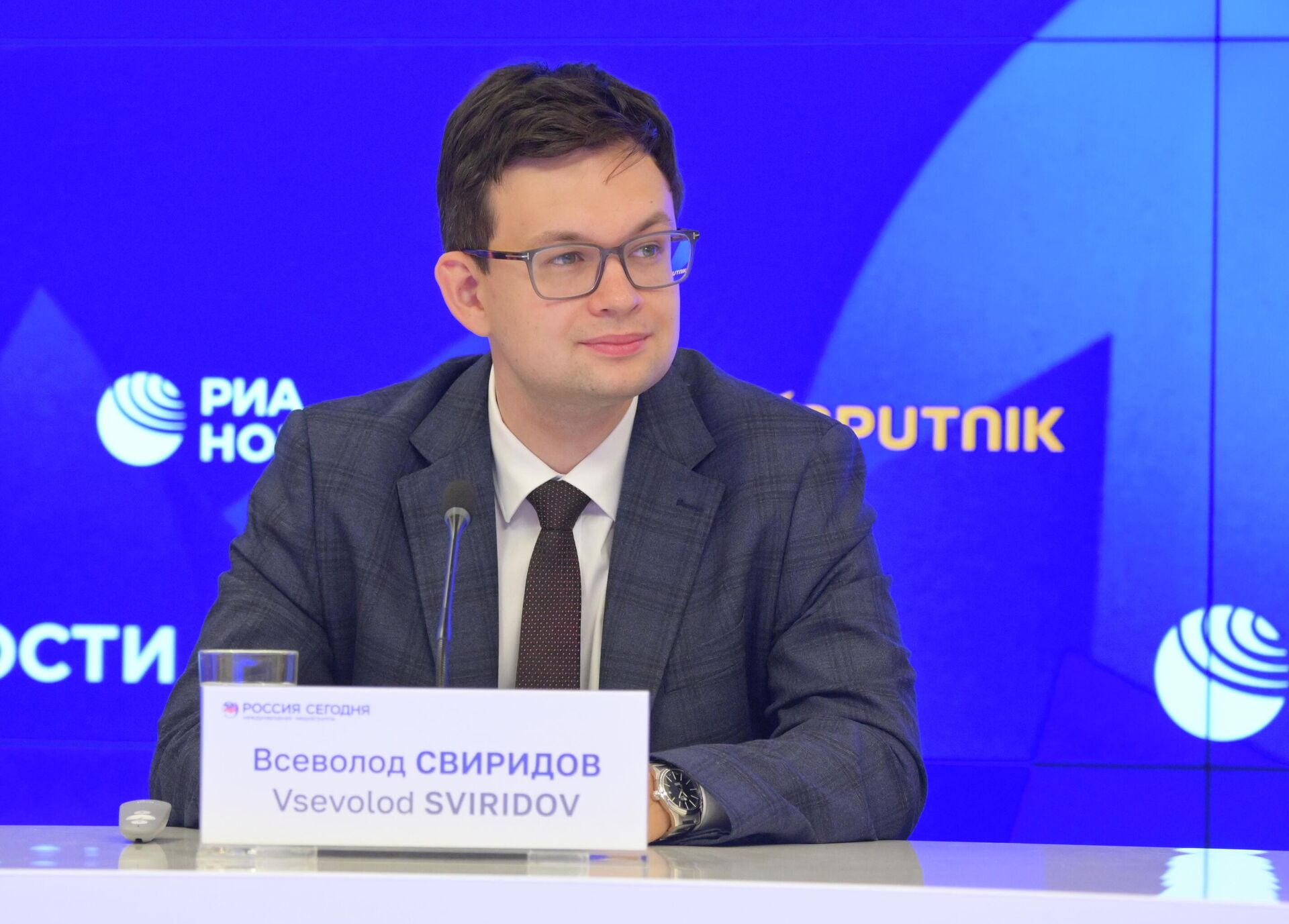
Vsevolod Sviridov
© Sputnik . VITALIY BELOUSOV
Senior Lecturer at the Department of Theory and History of International Relations of Patrice Lumumba People’s Friendship University of Russia Claire Amuhaya spoke about the prospects of cooperation between Russia and African countries in energy, vital minerals and water resources.
The speaker noted the importance of engaging African states in international energy institutions. Expert stressed that when we talk about Tanzania, Cameroon or Ghana, despite their natural resources being relatively limited, it is still very important to engage them into the institutions created by Russia or with Russia’s participation, as it will allow them to develop and study their own capabilities independently.
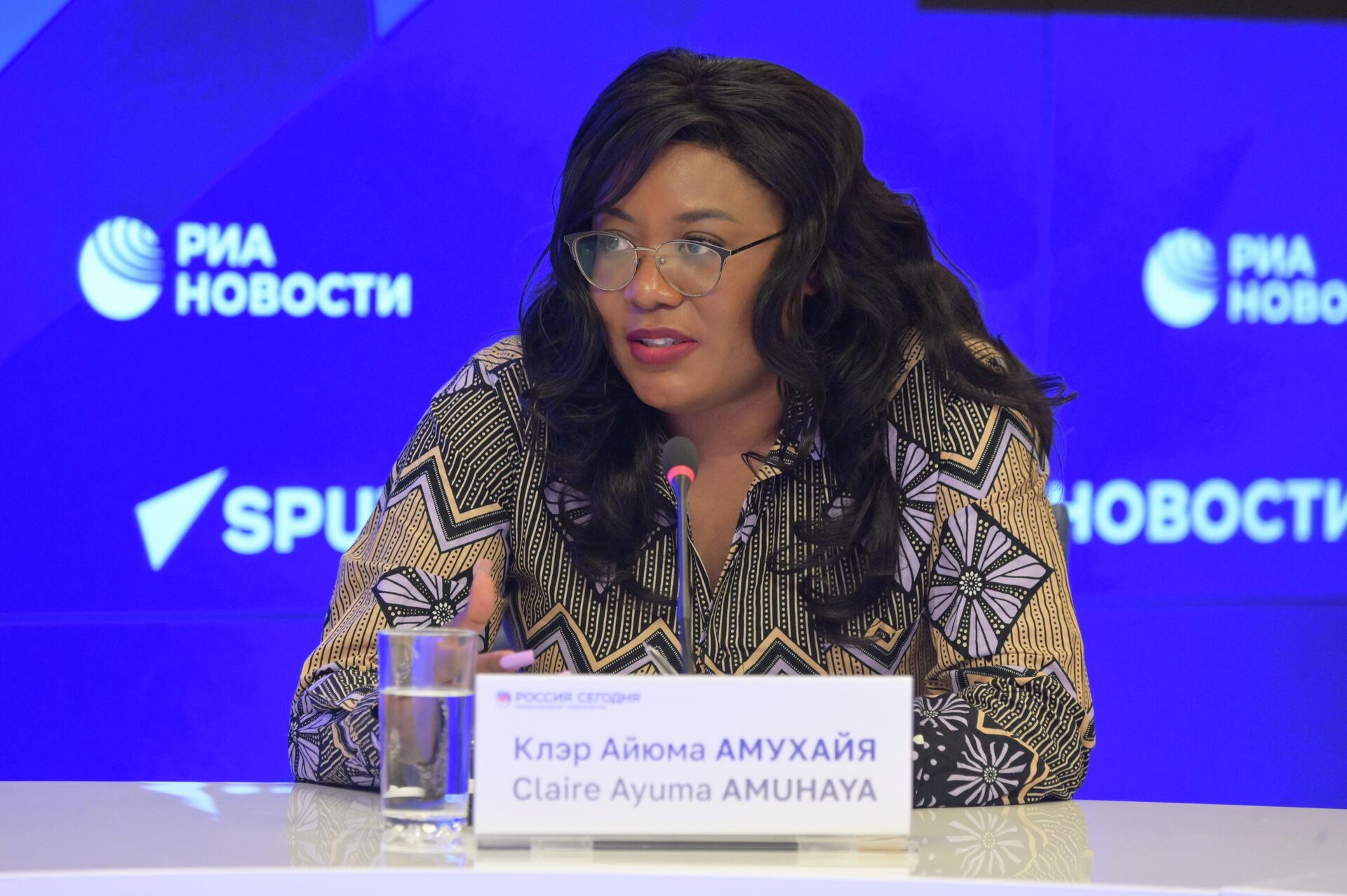
Claire Amuhaya
© Sputnik . VITALIY BELOUSOV