https://en.sputniknews.africa/20261119/13th-congress-innovative-practice-science-plus-business-was-held-in-moscow-1091078679.html
13th Congress 'Innovative Practice: Science Plus Business' was held in Moscow
13th Congress 'Innovative Practice: Science Plus Business' was held in Moscow
Sputnik Africa
The Congress that was organized by Innopraktika with the support of the "Russia" National Center, included 11 events attended by over 2,000 people, including... 19.11.2026, Sputnik Africa
2026-11-19T11:07+0100
2026-11-19T11:07+0100
2026-11-19T11:07+0100
russia
moscow
brics
https://cdn1.img.sputniknews.africa/img/07ea/0b/13/1091085589_0:322:3070:2048_1920x0_80_0_0_a9325606d21eb3641c6c0aa9a0b0825d.jpg
The Congress that was organized by Innopraktika with the support of the "Russia" National Center, included 11 events attended by over 2,000 people, including senior officials and leading specialists from government agencies, major Russian corporations, development institutions, investment companies, and representatives of universities, research institutes, and high-tech Russian companies. A photo exhibition featuring the finalists of the international competition "Picture of the World," organized by Innopraktika and the State Tretyakov Gallery, was held at the Congress venue.A key issue in the discussions was how to build a managed system of trust in which business, government, science, and culture can effectively interact, building a reliable reputation for the country and opening up new opportunities for technological leadership. Participants in the plenary session examined the fundamental prerequisites for building trusting relationships between government agencies, the business community, academia, and the cultural sector, as well as specific mechanisms that facilitate the transformation of these relationships into a synergistic ecosystem."Trust is truly a crucial component of dialogue between all participants in society, at both the micro and macro levels. These are relationships based on confidence in the integrity of the participants in the dialogue and a willingness to rely on the reliability of partners, and on compliance with agreements and commitments. As a non-governmental development institution, we always rely on these simple truths, which is why a whole range of projects that previously seemed impossible are being implemented. Indeed, trust is the 'soft power' that enables the creation of unique products," said Katerina Tikhonova, CEO of Innopraktika, welcoming the participants. She cited examples of completed projects in the fields of pharmaceutical innovation, quantum communications, and agrobiotechnology, specifically mentioning the support of "national champion" companies, the creation of international hubs, and the cultural initiatives of Innopraktika.Viktor Sadovnichiy, Rector of Lomonosov Moscow State University and Academician of the Russian Academy of Sciences, shared a specific example of effective collaboration based on trust: "Moscow University, with the expert participation of Innopraktika, has created a unique system for developing artificial intelligence. In 2019, the Institute for Advanced Research in Artificial Intelligence and Intelligent Systems opened, and in 2025, the Research Center for Artificial Intelligence will follow. Our Faculty of Artificial Intelligence is in high demand, with 129 applicants per position. And in October, Moscow State University established the Coordination Council for Artificial Intelligence." Responding to the technological challenges of the time, Moscow State University's unique AI ecosystem fosters effective partnerships between fundamental science and industry.Russian Minister of Industry and Trade Anton Alikhanov discussed the mechanisms for interaction between science, business, and the government to achieve technological leadership. He noted that to create an ecosystem of trust, it is necessary to increase the involvement of scientific organizations in applied research. To this end, a system for supporting the entire product lifecycle, from research to mass production, has been created. The system is based on technology cooperation maps and qualified customers. The minister noted the importance of support mechanisms and risk sharing between the state and business, including mandatory extra-budgetary co-financing of at least 50% of R&D, as well as a supplier development program operated by the Autonomous Non-Profit Organization (ANPO) "Engineering and Innovation Support Center." In 2025–2026, the Russian Ministry of Industry and Trade will allocate approximately 9 billion rubles to support this mechanism, which unites more than 50 corporations.Petr Fradkov, Chairman of PAO Bank PSB, explained that, in addition to state programs, various investment mechanisms and institutional organizations are designed to support company development. Among these, the speaker cited projects implemented with PSB's participation to support high-tech and special-tech companies: the NPO "Russia-Africa" and the Center for Supporting High-Tech Companies, initiated in partnership with Innopraktika, as well as funds for early- and late-stage projects launched jointly with the Center for Unmanned Systems and Technologies.Andrey Guryev, head of the Russian Fertilizer Producers Association (RAPU) and head of the Russian section of the BRICS Business Council, noted that the mineral fertilizer industry's partnership with Innopraktika on the Innagro testing program for domestic bioproducts is proving its effectiveness. Four products have already been fully tested, registered, and ready for field use. These bioproducts contain environmentally friendly microorganisms, improve the digestibility of mineral fertilizers by plants, and mobilize nutrients in the soil. Grain yields increased by an additional 11-19% after the application of fertilizers containing bioproducts, and legume yields by 23%, with improved protein content.Russian experience in developing biotechnology in the agricultural sector has great potential for international development and the bioeconomy, including with BRICS+ countries and the African continent, he emphasized. Russia and the BRICS countries are world leaders in the field of innovative development of the mineral fertilizer industry, biologization and biofortification of agriculture.Russian solutions for cybersecurity and digitalization of public administration are also of great interest to foreign partners. Rostelecom has accumulated many years of experience in developing and operating such solutions.Andrey Fursenko, Aide to the President of the Russian Federation, considers the reputational aspect of building trust to be crucial. “Trust is a multifactorial concept. What is trust? It’s trust in a person, in a regulatory framework, in specific organizations. And the question arises: what is trust, how does it manifest itself, and how does it arise? What is this concept primarily associated with? In my opinion, with the word ‘reputation.’ There is the reputation of an individual, an organization, and a system. Historically, we had the concept of a ‘shake’—we agreed, shook hands, and began to act. In Russia, this system of mutual trust was quite developed. Reputation doesn’t develop easily; it develops historically: can this person or organization be trusted?”While trust is built on reputation at the level of an individual and an organization, at the level of society as a whole, it is founded on shared values. Sergey Novikov, Head of the Presidential Executive Office for Public Projects, addressed this issue in his speech. According to him, uniting society around traditional Russian values is an existential challenge. "To shape a pan-Russian identity and consolidate the entire nation, we must clearly understand the values that unite us and cement society. This is an existential challenge, a matter of life and death. But it's important not to talk it down or simplify it. We need to educate the younger generation based on these value narratives, understanding what this means for the country, why we need it, and how we will achieve it," said Sergey Novikov.Aleksey Goreslavsky, CEO of the Internet Development Institute, spoke about how to build trust in value narratives among the younger generation.According to Goreslavsky, interest in such stories stems from a deeper demand—trust: in the world around us, in each other, and in our country. The challenge for content creators is not to simply proclaim values, but to organically integrate them into stories that truly engage viewers.
russia
moscow
Sputnik Africa
feedback@sputniknews.com
+74956456601
MIA „Rossiya Segodnya“
2026
Sputnik Africa
feedback@sputniknews.com
+74956456601
MIA „Rossiya Segodnya“
News
en_EN
Sputnik Africa
feedback@sputniknews.com
+74956456601
MIA „Rossiya Segodnya“
Sputnik Africa
feedback@sputniknews.com
+74956456601
MIA „Rossiya Segodnya“
russia, moscow, brics
The Congress that was organized by Innopraktika with the support of the "Russia" National Center, included 11 events attended by over 2,000 people, including senior officials and leading specialists from government agencies, major Russian corporations, development institutions, investment companies, and representatives of universities, research institutes, and high-tech Russian companies. A photo exhibition featuring the finalists of the international competition "Picture of the World," organized by Innopraktika and the State Tretyakov Gallery, was held at the Congress venue.
A key issue in the discussions was how to build a managed system of trust in which business, government, science, and culture can effectively interact, building a reliable reputation for the country and opening up new opportunities for technological leadership. Participants in the plenary session examined the fundamental prerequisites for building trusting relationships between government agencies, the business community, academia, and the cultural sector, as well as specific mechanisms that facilitate the transformation of these relationships into a synergistic ecosystem.
"Trust is truly a crucial component of dialogue between all participants in society, at both the micro and macro levels. These are relationships based on confidence in the integrity of the participants in the dialogue and a willingness to rely on the reliability of partners, and on compliance with agreements and commitments. As a non-governmental development institution, we always rely on these simple truths, which is why a whole range of projects that previously seemed impossible are being implemented. Indeed, trust is the 'soft power' that enables the creation of unique products," said Katerina Tikhonova, CEO of Innopraktika, welcoming the participants. She cited examples of completed projects in the fields of pharmaceutical innovation, quantum communications, and agrobiotechnology, specifically mentioning the support of "national champion" companies, the creation of international hubs, and the cultural initiatives of Innopraktika.
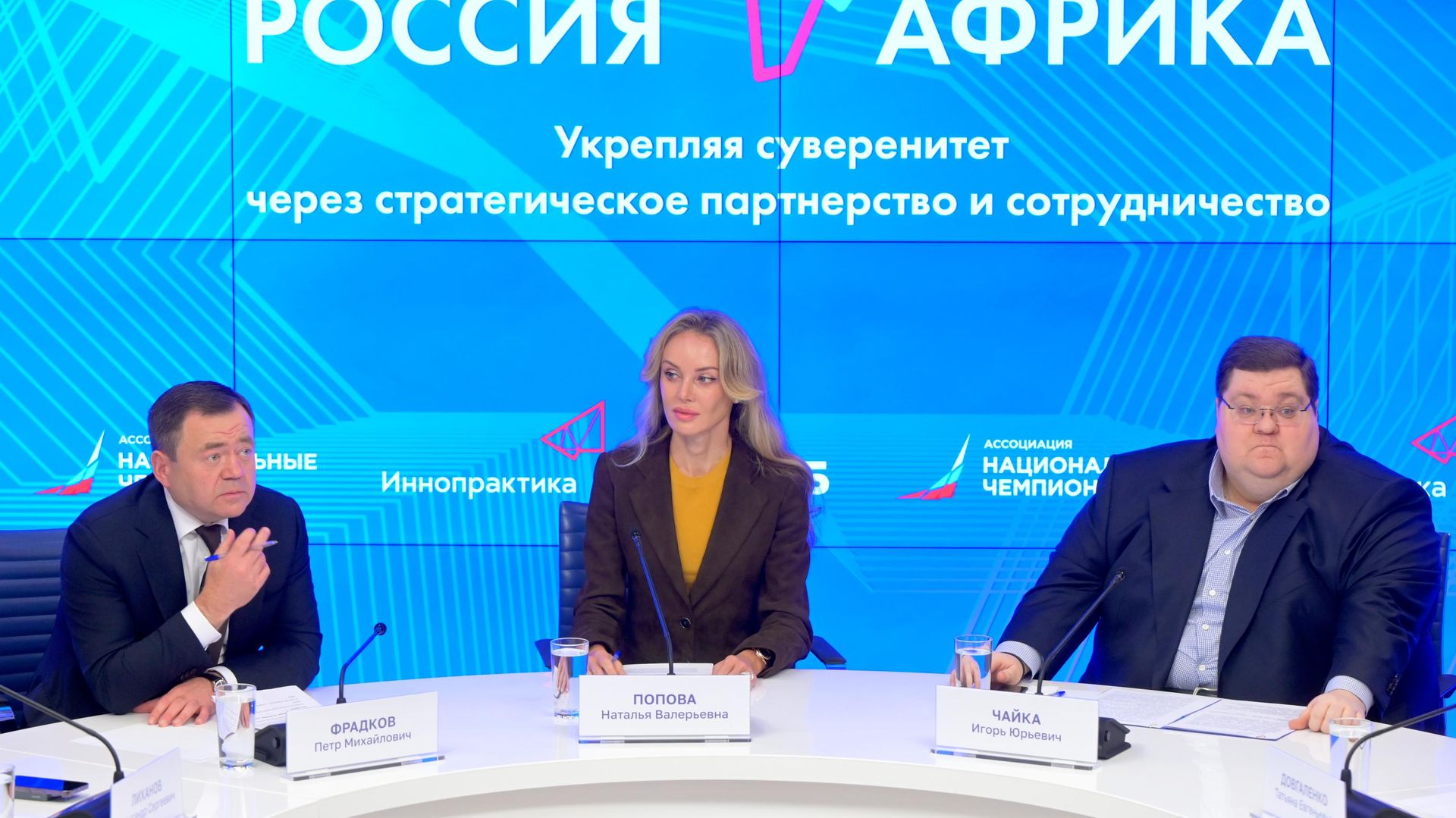
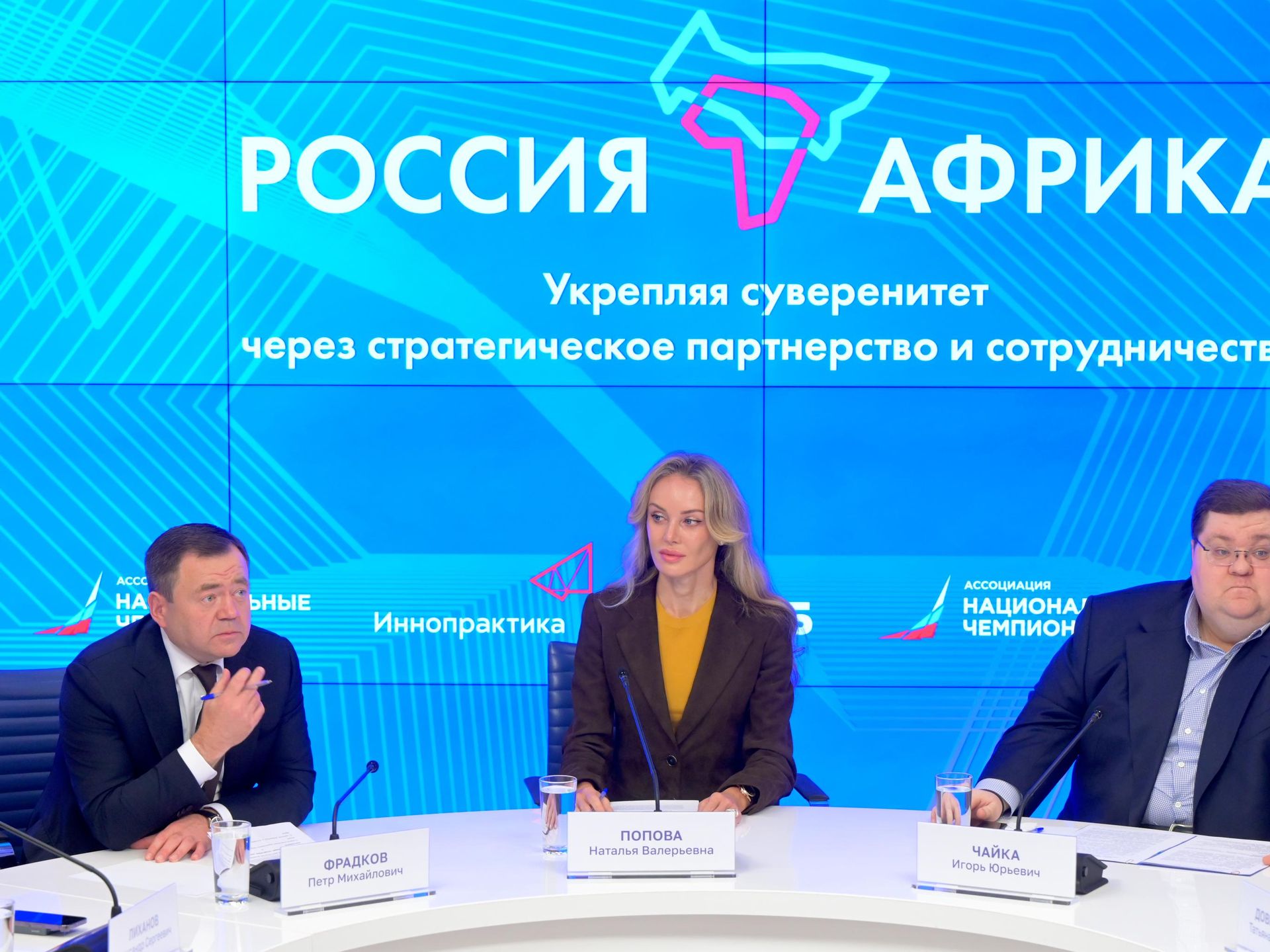
"If we want technological leadership to become a sustainable state for the country, let's create an ecosystem in which science, business, culture, and government are constantly listening to each other. Trust is something that is demonstrated every day in concrete decisions and agreements," noted Natalia Popova, First Deputy General Director of Innopraktika.
Viktor Sadovnichiy, Rector of Lomonosov Moscow State University and Academician of the Russian Academy of Sciences, shared a specific example of effective collaboration based on trust: "Moscow University, with the expert participation of Innopraktika, has created a unique system for developing artificial intelligence. In 2019, the Institute for Advanced Research in Artificial Intelligence and Intelligent Systems opened, and in 2025, the Research Center for Artificial Intelligence will follow. Our Faculty of Artificial Intelligence is in high demand, with 129 applicants per position. And in October, Moscow State University established the Coordination Council for Artificial Intelligence." Responding to the technological challenges of the time, Moscow State University's unique AI ecosystem fosters effective partnerships between fundamental science and industry.
Russian Minister of Industry and Trade Anton Alikhanov discussed the mechanisms for interaction between science, business, and the government to achieve technological leadership. He noted that to create an ecosystem of trust, it is necessary to increase the involvement of scientific organizations in applied research. To this end, a system for supporting the entire product lifecycle, from research to mass production, has been created. The system is based on technology cooperation maps and qualified customers. The minister noted the importance of support mechanisms and risk sharing between the state and business, including mandatory extra-budgetary co-financing of at least 50% of R&D, as well as a supplier development program operated by the Autonomous Non-Profit Organization (ANPO) "Engineering and Innovation Support Center." In 2025–2026, the Russian Ministry of Industry and Trade will allocate approximately 9 billion rubles to support this mechanism, which unites more than 50 corporations.
"From 2022–2025, 141 projects received grant support, 42 of which have been completed. Half of this funding came from the state—22.7 billion rubles—and almost the same amount from businesses. Consumers have indicated demand for future products totaling 444 billion rubles—that's almost 20 rubles in potential orders for every ruble of budget support," Anton Alikhanov reported.
Petr Fradkov, Chairman of PAO Bank PSB, explained that, in addition to state programs, various investment mechanisms and institutional organizations are designed to support company development. Among these, the speaker cited projects implemented with PSB's participation to support high-tech and special-tech companies: the NPO "Russia-Africa" and the Center for Supporting High-Tech Companies, initiated in partnership with Innopraktika, as well as funds for early- and late-stage projects launched jointly with the Center for Unmanned Systems and Technologies.
At the same time, to be competitive in the domestic market, Fradkov believes, one must first be strong in the international market, and he named the African continent as one of the promising areas of development. "We are now perfectly positioned and positioned to not simply present domestic achievements in culture, education, and technology, but to present them on new principles—the world is changing, the model of foreign economic activity and trade flows is changing, the financial architecture is changing, not to mention the political system. "Our initiative, the Russia-Africa NPO, can become a platform where supply and demand for the best Russia has to meet," said Petr Fradkov.
Andrey Guryev, head of the Russian Fertilizer Producers Association (RAPU) and head of the Russian section of the BRICS Business Council, noted that the mineral fertilizer industry's partnership with Innopraktika on the Innagro testing program for domestic bioproducts is proving its effectiveness. Four products have already been fully tested, registered, and ready for field use. These bioproducts contain environmentally friendly microorganisms, improve the digestibility of mineral fertilizers by plants, and mobilize nutrients in the soil. Grain yields increased by an additional 11-19% after the application of fertilizers containing bioproducts, and legume yields by 23%, with improved protein content.
Russian experience in developing biotechnology in the agricultural sector has great potential for international development and the bioeconomy, including with BRICS+ countries and the African continent, he emphasized. Russia and the BRICS countries are world leaders in the field of innovative development of the mineral fertilizer industry, biologization and biofortification of agriculture.
"Within the BRICS Business Council, we are developing a New Technology Platform, which already encompasses 280 Russian and international partners. We are working with partners from six countries, including India, China, Indonesia, Iran, and South Africa, including on biotechnology in the agricultural sector. At the same time, through the Agribusiness Working Group, we are working to eliminate trade barriers, harmonize registration procedures for agricultural products and biological products, and mutually recognize certification standards. Thus, we have existing Business Council mechanisms that can be used to adapt Russian biotechnology to the conditions of other BRICS countries and subsequently expand into other international markets," Andrei Guryev noted.
Russian solutions for cybersecurity and digitalization of public administration are also of great interest to foreign partners. Rostelecom has accumulated many years of experience in developing and operating such solutions.
"One of the most extensive examples of our collaboration with the Russian Ministry of Digital Development is the creation and development of a unified government cloud platform. "This is a gigantic infrastructure deployed in our data centers, where key government information systems are currently being operated and developed: the government services portal, Rosreestr, the Social Fund, and many others. Why did the ministry decide to transfer these functions to us, despite the Federal Tax Service and the Ministry of Finance having established departmental data centers? Firstly, because Rostelecom has reliable technologies, a reputation, and a strong sense of responsibility. But most importantly, we have the expertise to carry out such an important task," emphasized Mikhail Oseevsky, President of Rostelecom.
Andrey Fursenko, Aide to the President of the Russian Federation, considers the reputational aspect of building trust to be crucial. “Trust is a multifactorial concept. What is trust? It’s trust in a person, in a regulatory framework, in specific organizations. And the question arises: what is trust, how does it manifest itself, and how does it arise? What is this concept primarily associated with? In my opinion, with the word ‘reputation.’ There is the reputation of an individual, an organization, and a system. Historically, we had the concept of a ‘shake’—we agreed, shook hands, and began to act. In Russia, this system of mutual trust was quite developed. Reputation doesn’t develop easily; it develops historically: can this person or organization be trusted?”
While trust is built on reputation at the level of an individual and an organization, at the level of society as a whole, it is founded on shared values. Sergey Novikov, Head of the Presidential Executive Office for Public Projects, addressed this issue in his speech. According to him, uniting society around traditional Russian values is an existential challenge. "To shape a pan-Russian identity and consolidate the entire nation, we must clearly understand the values that unite us and cement society. This is an existential challenge, a matter of life and death. But it's important not to talk it down or simplify it. We need to educate the younger generation based on these value narratives, understanding what this means for the country, why we need it, and how we will achieve it," said Sergey Novikov.
Aleksey Goreslavsky, CEO of the Internet Development Institute, spoke about how to build trust in value narratives among the younger generation.
"Today, teenagers cannot be protected from online destructiveness by bans alone. They have long since learned to circumvent technical limitations. The only truly effective method is to offer a story that people will actually want to watch, a character they will be interested in following, and messages that will resonate with them. We've been told many times: don't try to compete with global franchises with billion-dollar budgets and huge audiences. But experience shows that it is entirely possible. "Russian projects are capable of not only attracting attention but also becoming truly in-demand among young audiences," noted Aleksey Goreslavsky. He cited the animated series "Superheroes.ru," the cartoon "Russian Arctic," and the project "The Prince and the Pauper," which have quickly amassed a multi-million audience.
According to Goreslavsky, interest in such stories stems from a deeper demand—trust: in the world around us, in each other, and in our country. The challenge for content creators is not to simply proclaim values, but to organically integrate them into stories that truly engage viewers.
"Always keeping your word and fulfilling your promises—that's what we need to build a system of trust on, starting in kindergarten. A country's reputation grows from adhering to this principle," said Andrey Fursenko, summing up the discussion.