Russian Scientists Develop Cortisol-Reducing Food to Boost Classic Antidepressants
15:31 18.10.2026 (Updated: 16:50 18.10.2026)
© telegram sputnik_africa
Subscribe
Russian scientists develop cortisol-reducing food to boost classic antidepressants
The product designed by the Moscow-based Gorbatov Federal Research Center for Food Systems team is vegetable-and-fruit puree with tryptophan and antioxidants that may help prevent depression.
The product uses a carrot, apple and banana base that preserves tryptophan activity even after heat treatment, providing 0.40 g of tryptophan per 100 g — about one-third of an adult’s daily requirement
In mice with impaired serotonin synthesis, adding the antioxidant taxifolin cut tryptophan-induced fatty liver infiltration by up to 90%, and a taxifolin version lowered cortisol by 31.3% in genetically modified animals
A ginseng version raised brain serotonin by 45.2% and motor activity by 86% in healthy mice
The developers say there are no direct analogues — tryptophan-fortified purees or smoothies — on the Russian market, and they position the product as a functional food for prevention rather than a treatment
Human trials, dosage determination and legal registration are still needed
If the approach holds up in clinical trials, it could open a food-based route to supporting mental health without facing the antidepressants side effects.
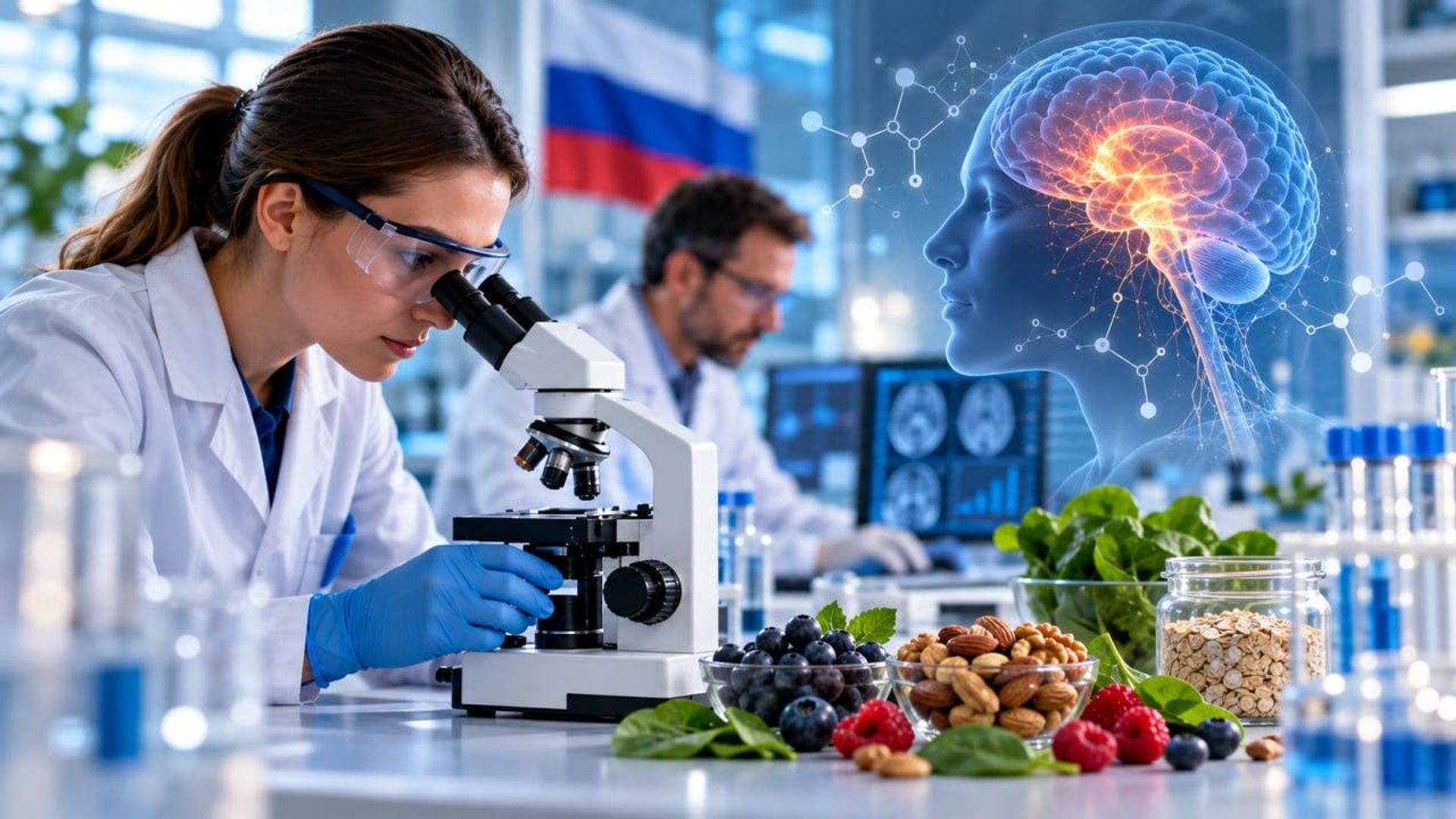
The image is AI-generated
Subscribe to @SputnikInt
The product designed by the Moscow-based Gorbatov Federal Research Center for Food Systems team is vegetable-and-fruit puree with tryptophan and antioxidants that may help prevent depression.
The product uses a carrot, apple and banana base that preserves tryptophan activity even after heat treatment, providing 0.40 g of tryptophan per 100 g — about one-third of an adult’s daily requirement
In mice with impaired serotonin synthesis, adding the antioxidant taxifolin cut tryptophan-induced fatty liver infiltration by up to 90%, and a taxifolin version lowered cortisol by 31.3% in genetically modified animals
A ginseng version raised brain serotonin by 45.2% and motor activity by 86% in healthy mice
The developers say there are no direct analogues — tryptophan-fortified purees or smoothies — on the Russian market, and they position the product as a functional food for prevention rather than a treatment
Human trials, dosage determination and legal registration are still needed
If the approach holds up in clinical trials, it could open a food-based route to supporting mental health without facing the antidepressants side effects.
The image is AI-generated
Subscribe to @SputnikInt