https://en.sputniknews.africa/20261009/how-one-scientist-is-rethinking-future-of-paint-in-africa-1089832499.html
How One Scientist is Rethinking Future of Paint in Africa
How One Scientist is Rethinking Future of Paint in Africa
Sputnik Africa
A Nigerian microbiologist has developed patented, bio-based coating technologies designed to make paints safer for people and the environment while maintaining... 09.10.2026, Sputnik Africa
2026-10-09T17:14+0200
2026-10-09T17:14+0200
2026-10-09T17:14+0200
global south pole
lagos
nigeria
podcasts
innovation
painting
technology
university
research
development
https://cdn1.img.sputniknews.africa/img/07ea/0a/09/1089834834_0:0:1536:864_1920x0_80_0_0_2fdff961379b0dfd96c5fabf0c10c07b.jpg
How One Scientist is Rethinking Future of Paint in Africa
Sputnik Africa
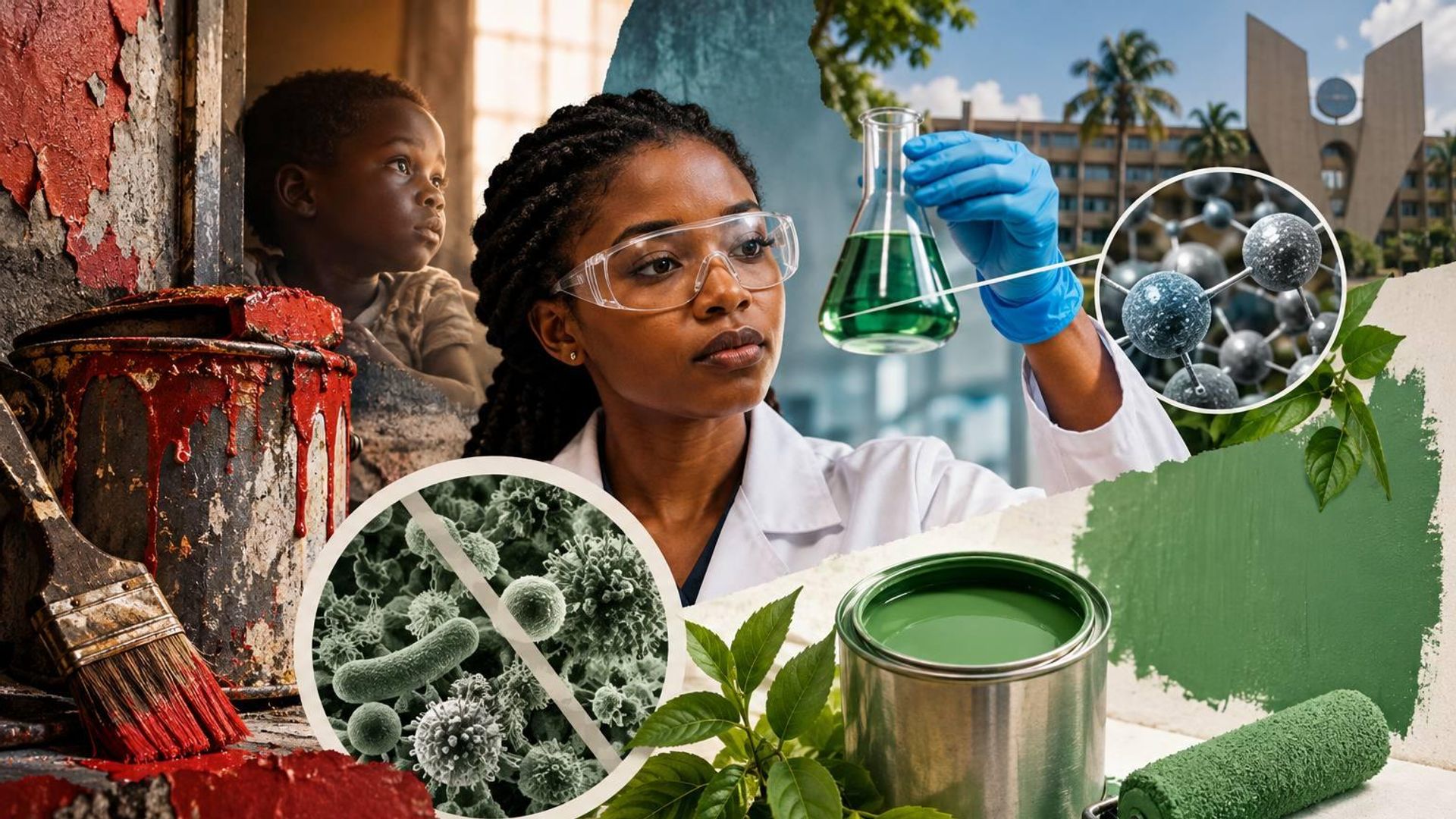
A Nigerian microbiologist has developed patented, bio-based coating technologies designed to make paints safer for people and the environment while maintaining durability.
The innovation, developed at the University of Lagos, uses plant-based materials and nanotechnology to combat microbial deterioration, offering a potential alternative to conventional paint formulations that rely on hazardous substances such as lead, which has long been used in paint manufacturing to improve durability and resistance to deterioration. However, exposure to the toxic metal poses serious health risks, particularly to children, whose developing nervous systems are especially vulnerable. Finding safer alternatives without compromising paint quality remains an important challenge for the industry.Global South Pole spoke with Professor Olayide Folashade Obidi, Head of the Department of Microbiology at the University of Lagos and an industrial microbiologist and bionanotechnology researcher, about her patented technology, its potential health and environmental benefits, and the challenges of bringing university research to the commercial market.Professor Obidi explained that her research began with the problem of biodeterioration in water-based paints, which are susceptible to microbial growth that can affect their quality and shelf life. Drawing on her background in microbiology and materials science, she developed formulations using plant-based materials and nanotechnology to inhibit paint-deteriorating microorganisms. She said laboratory tests and regulatory assessments had supported the potential of the alternatives, which she said could extend paint shelf life without lead and harmful volatile organic compounds.To listen to the whole discussion, tune in to the Global South Pole podcast, brought to you by Sputnik Africa.In addition to the website, you can also catch our episodes on Telegram.► You can also listen to our podcast on Apple Podcasts, Spotify, Deezer, Castbox, Pocket Casts, Afripods, Podcast Addict, Overcast, and Mave Stream.► Check out all the episodes of Global South Pole
lagos
nigeria
Sputnik Africa
feedback@sputniknews.com
+74956456601
MIA „Rossiya Segodnya“
2026
Aliyu Bello
https://cdn1.img.sputniknews.africa/img/07e9/0a/16/1079780916_214:0:1067:853_100x100_80_0_0_4bd8916543c40cbb732ddb736f79e903.jpg
Aliyu Bello
https://cdn1.img.sputniknews.africa/img/07e9/0a/16/1079780916_214:0:1067:853_100x100_80_0_0_4bd8916543c40cbb732ddb736f79e903.jpg
News
en_EN
Sputnik Africa
feedback@sputniknews.com
+74956456601
MIA „Rossiya Segodnya“
Sputnik Africa
feedback@sputniknews.com
+74956456601
MIA „Rossiya Segodnya“
Aliyu Bello
https://cdn1.img.sputniknews.africa/img/07e9/0a/16/1079780916_214:0:1067:853_100x100_80_0_0_4bd8916543c40cbb732ddb736f79e903.jpg
lagos, nigeria, podcasts, innovation, painting, technology, university, research, development, biohazard, health, healthcare, аудио
lagos, nigeria, podcasts, innovation, painting, technology, university, research, development, biohazard, health, healthcare, аудио
How One Scientist is Rethinking Future of Paint in Africa
Aliyu Bello
Correspondent, Podcast Host
A Nigerian microbiologist has developed patented, bio-based coating technologies designed to make paints safer for people and the environment while maintaining durability.
The innovation, developed at the University of Lagos, uses plant-based materials and nanotechnology to combat microbial deterioration, offering a potential alternative to conventional paint formulations that rely on hazardous substances such as lead, which has long been used in paint manufacturing to improve durability and resistance to deterioration. However, exposure to the toxic metal poses serious health risks, particularly to children, whose developing nervous systems are especially vulnerable. Finding safer alternatives without compromising paint quality remains an important challenge for the industry.
Global South Pole spoke with Professor Olayide Folashade Obidi, Head of the Department of Microbiology at the University of Lagos and an industrial microbiologist and bionanotechnology researcher, about her patented technology, its potential health and environmental benefits, and the challenges of bringing university research to the commercial market.
Professor Obidi explained that her research began with the problem of biodeterioration in water-based paints, which are susceptible to microbial growth that can affect their quality and shelf life. Drawing on her background in microbiology and materials science, she developed formulations using plant-based materials and nanotechnology to inhibit paint-deteriorating microorganisms. She said laboratory tests and regulatory assessments had supported the potential of the alternatives, which she said could extend paint shelf life without lead and harmful volatile organic compounds.
"Scientific innovations are key to human development. As I said earlier, research is evolving and science is dynamic. As a result, we keep discovering new things every day. To push the boundaries of what is possible in our daily activities, we need to conduct more research and develop innovations that can benefit society. Research should not just be published and left on the shelf; it should lead to innovations that solve societal problems and challenges. When we solve these problems, that is when society benefits from research," Obidi said.
To listen to the whole discussion, tune in to the
Global South Pole podcast, brought to you by
Sputnik Africa.In addition to the website, you can also catch our episodes on
Telegram.► Check out all the episodes of Global South Pole