Putin's Valdai Speech Specifically Touches Issues of Global South Including Africa: SA Analyst
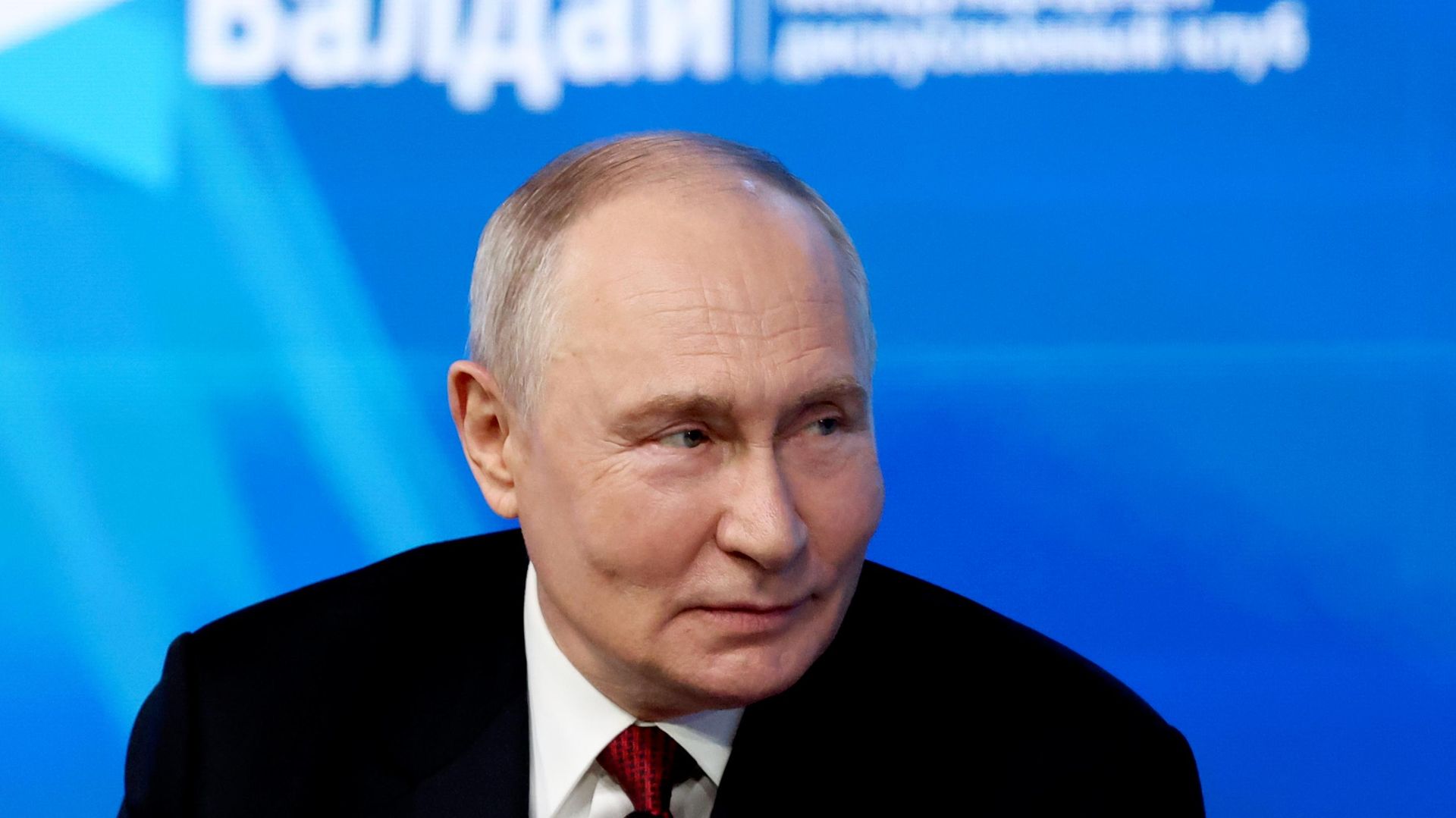
© Sputnik . POOL
/ Subscribe
The Russian president made specific reference to what he termed "acute issues." His focus on fair and equitable development partnerships between Russia and Africa was significant, highlighting the qualitative difference between assisting countries with industrial self-determination and hegemonic practices of economic and value extraction disguised as cooperation — practices Africa and other formerly colonized regions know all too well, the co-founder of the analytical center Friends Of BRICS+ Society Karlind Govender told Sputnik Africa.
African development requires greater economic complexity and production along more holistic pathwayss, Govender argued with adding that perception that Africa is somehow less skilled is a falsehood: there is no shortage of skills, only limited access — often strategically hindered by financialization.
On the UN, the analyst found Putin's arguments highly persuasive, especially his reference to the organization's "moral exceptionalism" despite not treating all countries equally.
Govender also noted Putin's framing of BRICS+ as a new centre of power and its path from RIC to its expanded form, remarking that greater potential would emerge as younger people joined the effort behind integrity-rooted socio-economic development, with Africa bringing abundant capacity and innovation to the table.
The analyst described "digital totalitarianism," as Putin referred to it, as a genuine and concerning factor in today's world, noting that digital technologies were frequently weaponized. Holistic public-private digital partnerships with Russia and the Global South, Govender added, would help Africa stay ahead of the curve rather than at the mercy of outcomes that did not have its interests at heart.
"Authentic partnerships with the Global South and equal standing in the global arena will bring the world forward."
Speaking about the Africa's part in developing the principles of the new international order, the analyst listed underpinning principles that should be included in the new architecture:
▪️ Banking and financial systems must not be weaponized against people — a fundamental human right in the modern world.
▪️ Financial inclusion and banking dignity through holistic practices that are not purely extractive but directly plugged into socio-economic and community development.
▪️ Livability, sustainability and equitability entrenched as results-based praxis and an underpinning directive for shared and connected value creation.
▪️ A paradigm shift in economics education, replacing neo-classical equilibrium models with rigorous, science-based economic modelling that includes banking as a factor rather than merely an intermediary.
▪️ All of the above in open, transparent and accountable decentralized databases that respect privacy and are accessible via app.
▪️ Banking and financial systems must not be weaponized against people — a fundamental human right in the modern world.
▪️ Financial inclusion and banking dignity through holistic practices that are not purely extractive but directly plugged into socio-economic and community development.
▪️ Livability, sustainability and equitability entrenched as results-based praxis and an underpinning directive for shared and connected value creation.
▪️ A paradigm shift in economics education, replacing neo-classical equilibrium models with rigorous, science-based economic modelling that includes banking as a factor rather than merely an intermediary.
▪️ All of the above in open, transparent and accountable decentralized databases that respect privacy and are accessible via app.