https://en.sputniknews.africa/20260928/from-soil-maps-to-drones-precision-farming-rewrites-rules-of-african-agriculture-1089517737.html
From Soil Maps to Drones, Precision Farming Rewrites Rules of African Agriculture
From Soil Maps to Drones, Precision Farming Rewrites Rules of African Agriculture
Sputnik Africa
As African countries face rising food demand and growing pressure on farmland, technology is offering farmers new ways to increase productivity without... 28.09.2026, Sputnik Africa
2026-09-28T15:12+0200
2026-09-28T15:12+0200
2026-09-28T15:12+0200
global south pole
podcasts
nigeria
agriculture
food security
food
drones
drought
farmers
crops
https://cdn1.img.sputniknews.africa/img/07ea/09/1c/1089522734_0:0:1673:941_1920x0_80_0_0_d4c33636e82cd7941bdb9c2ef5aaf965.jpg
From Soil Maps to Drones, Precision Farming Rewrites Rules of African Agriculture
Sputnik Africa
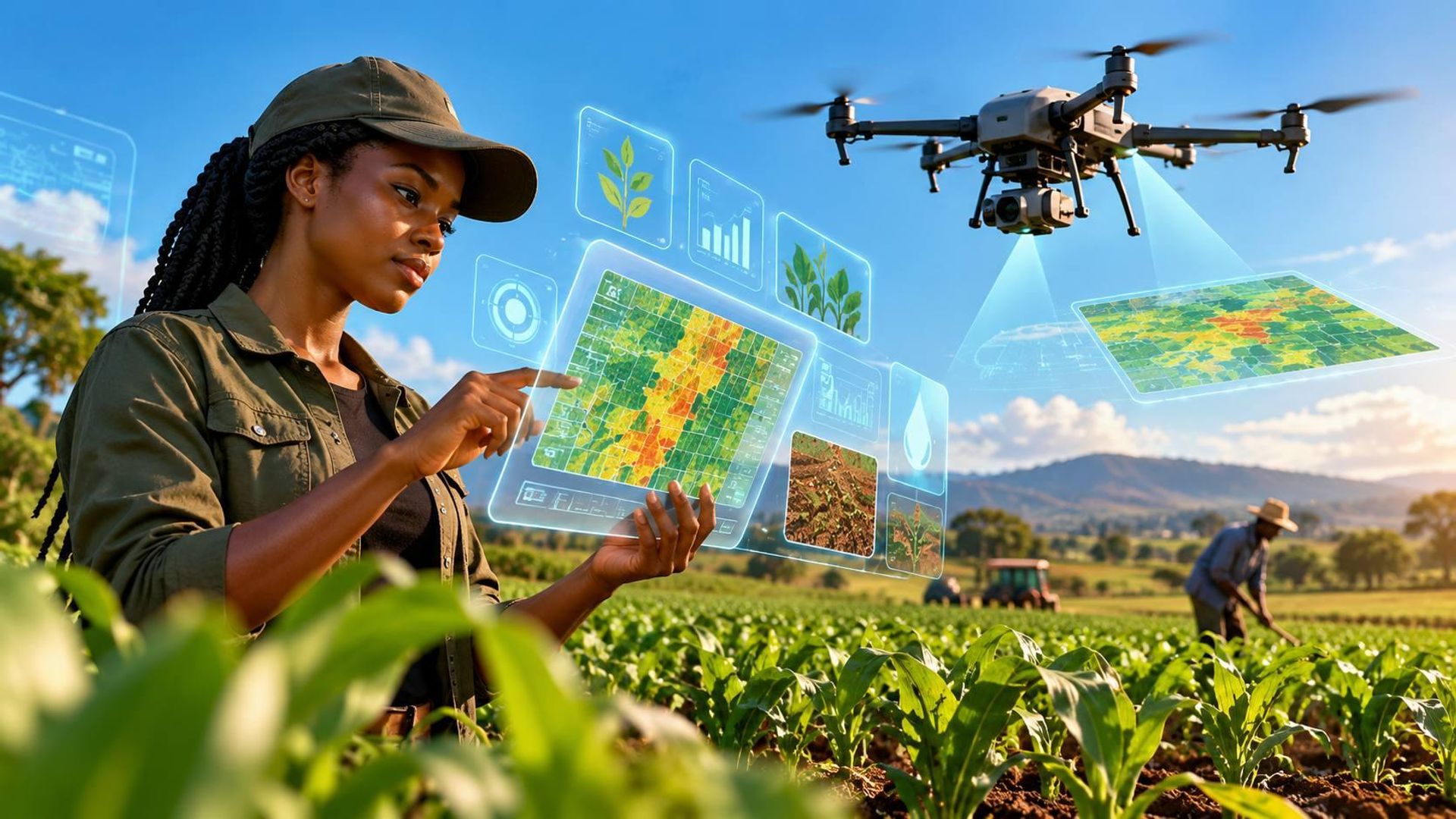
As African countries face rising food demand and growing pressure on farmland, technology is offering farmers new ways to increase productivity without continually expanding cultivation. Drones, soil mapping, and remote sensing can provide detailed information that helps farmers use land, water, and other inputs more efficiently.
Precision agriculture combines data and targeted farm management to determine where resources are needed, rather than applying them uniformly across an entire field. Technologies including satellite imagery, soil mapping, and drones can help farmers monitor crops, identify problems, and make more informed decisions.Global South Pole spoke with Femi Adekoya, founder and managing director of Integrated Aerial Precision and a precision agriculture specialist popularly known as the “Flying Farmer,” to examine how digital tools can help Nigerian and African farmers close productivity gaps, reduce input costs, and make better use of existing farmland.Adekoya said precision agriculture is fundamentally about using the right resources in the right place and at the right time. He pointed to Nigeria’s cassava production as an example of the productivity challenge, saying farmers currently average about 7.5 tonnes per hectare while the crop has the potential to produce up to 90 tonnes per hectare. He argued that improving productivity should focus on getting more from land already under cultivation rather than simply clearing more land.To listen to the whole discussion, tune in to the Global South Pole podcast, brought to you by Sputnik Africa.In addition to the website, you can also catch our episodes on Telegram.► You can also listen to our podcast on Apple Podcasts, Spotify, Deezer, Castbox, Pocket Casts, Afripods, Podcast Addict, Overcast, and Mave Stream.► Check out all the episodes of Global South Pole
nigeria
africa
Sputnik Africa
feedback@sputniknews.com
+74956456601
MIA „Rossiya Segodnya“
2026
Aliyu Bello
https://cdn1.img.sputniknews.africa/img/07e9/0a/16/1079780916_214:0:1067:853_100x100_80_0_0_4bd8916543c40cbb732ddb736f79e903.jpg
Aliyu Bello
https://cdn1.img.sputniknews.africa/img/07e9/0a/16/1079780916_214:0:1067:853_100x100_80_0_0_4bd8916543c40cbb732ddb736f79e903.jpg
News
en_EN
Sputnik Africa
feedback@sputniknews.com
+74956456601
MIA „Rossiya Segodnya“
Sputnik Africa
feedback@sputniknews.com
+74956456601
MIA „Rossiya Segodnya“
Aliyu Bello
https://cdn1.img.sputniknews.africa/img/07e9/0a/16/1079780916_214:0:1067:853_100x100_80_0_0_4bd8916543c40cbb732ddb736f79e903.jpg
podcasts, nigeria, agriculture, food security , food, drones, drought, farmers, crops, technology, digital technology , african continental free trade area (afcfta), africa, cooperation, trade, аудио
podcasts, nigeria, agriculture, food security , food, drones, drought, farmers, crops, technology, digital technology , african continental free trade area (afcfta), africa, cooperation, trade, аудио
From Soil Maps to Drones, Precision Farming Rewrites Rules of African Agriculture
Aliyu Bello
Correspondent, Podcast Host
As African countries face rising food demand and growing pressure on farmland, technology is offering farmers new ways to increase productivity without continually expanding cultivation. Drones, soil mapping, and remote sensing can provide detailed information that helps farmers use land, water, and other inputs more efficiently.
Precision agriculture combines data and targeted farm management to determine where resources are needed, rather than applying them uniformly across an entire field. Technologies including satellite imagery, soil mapping, and drones can help farmers monitor crops, identify problems, and make more informed decisions.
Global South Pole spoke with Femi Adekoya, founder and managing director of Integrated Aerial Precision and a precision agriculture specialist popularly known as the “Flying Farmer,” to examine how digital tools can help Nigerian and African farmers close productivity gaps, reduce input costs, and make better use of existing farmland.
Adekoya said precision agriculture is fundamentally about using the right resources in the right place and at the right time. He pointed to Nigeria’s cassava production as an example of the productivity challenge, saying farmers currently average about 7.5 tonnes per hectare while the crop has the potential to produce up to 90 tonnes per hectare. He argued that improving productivity should focus on getting more from land already under cultivation rather than simply clearing more land.
“The change would be for us to massively adopt precision agriculture and its technologies because that is what we need right now. As precision agriculture itself promotes better resource use efficiency, [...] we need to learn and adopt how we can leverage precision agriculture and its technologies [...] to increase our productivity because it's a question of productivity. How can we get more from what we are doing presently instead of expanding and harming natural resources and all that?” Adekoya said.
To listen to the whole discussion, tune in to the
Global South Pole podcast, brought to you by
Sputnik Africa.In addition to the website, you can also catch our episodes on
Telegram.► Check out all the episodes of Global South Pole