https://en.sputniknews.africa/20260927/africas-hidden-soil-life-could-hold-keys-to-food-security-1089445952.html
Africa’s Hidden Soil Life Could Hold Keys to Food Security
Africa’s Hidden Soil Life Could Hold Keys to Food Security
Sputnik Africa
Africa's land can begin losing its ability to support plants and agriculture long before degradation becomes visible. Scientists are increasingly looking... 27.09.2026, Sputnik Africa
2026-09-27T11:00+0200
2026-09-27T11:00+0200
2026-09-27T11:00+0200
global south pole
pretoria
africa
podcasts
research
artificial intelligence (ai)
landslide
floods
sub-saharan africa
forest
https://cdn1.img.sputniknews.africa/img/07ea/09/19/1089448741_0:0:1536:864_1920x0_80_0_0_0ca605116b089d8b350015f36e3825cf.jpg
Africa’s Hidden Soil Life Could Hold Keys to Food Security
Sputnik Africa
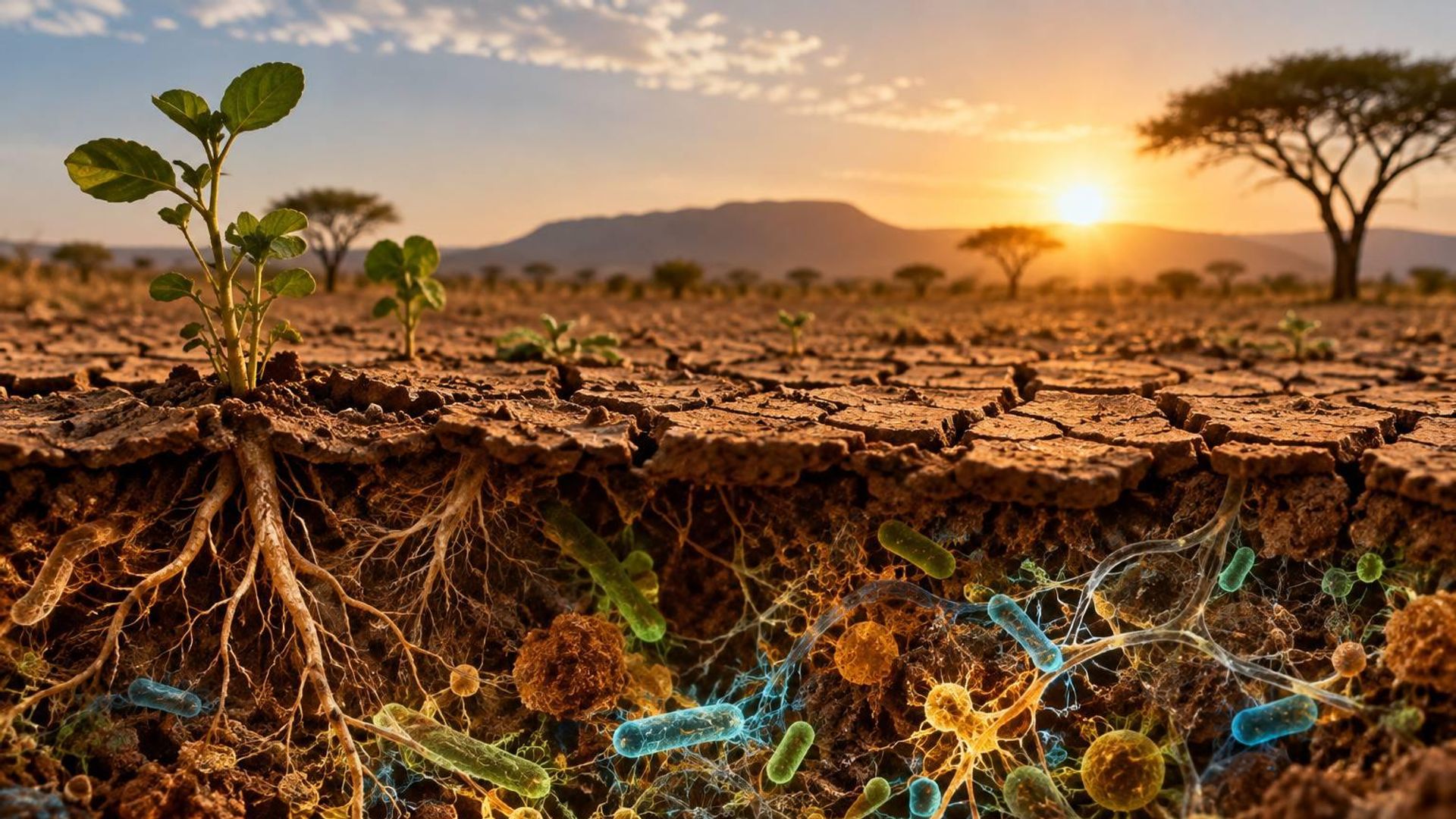
Africa's land can begin losing its ability to support plants and agriculture long before degradation becomes visible. Scientists are increasingly looking beneath the surface, where microscopic organisms respond rapidly to heat, water stress, and changing soil conditions, potentially providing an early warning of ecosystems moving towards aridity.
Soil microbes are largely invisible, but they perform functions that are fundamental to healthy agricultural land, from cycling nutrients to helping plants access nitrogen and retain moisture. When these microbial communities begin to disappear, the soil can gradually lose some of the functions that allow it to remain fertile and productive.The Global South Pole podcast spoke with Dr. Marc Van Goethem, a microbial ecologist at the University of Pretoria, to examine how studying microorganisms beneath Africa’s soils could help detect land degradation earlier, protect agricultural productivity, and inform more targeted approaches to soil management.Van Goethem explained that microbial communities respond to environmental stress much faster than plants and animals, making them potential indicators of changes taking place before visible damage appears. He said identifying which microbes disappear as soils degrade could help researchers develop an early warning system, allowing action to be taken before restoring soil fertility becomes more difficult and expensive.To listen to the whole discussion, tune in to the Global South Pole podcast, brought to you by Sputnik Africa.In addition to the website, you can also catch our episodes on Telegram.► You can also listen to our podcast on Apple Podcasts, Spotify, Deezer, Castbox, Pocket Casts, Afripods, Podcast Addict, Overcast, and Mave Stream.► Check out all the episodes of Global South Pole
pretoria
africa
sub-saharan africa
Sputnik Africa
feedback@sputniknews.com
+74956456601
MIA „Rossiya Segodnya“
2026
Aliyu Bello
https://cdn1.img.sputniknews.africa/img/07e9/0a/16/1079780916_214:0:1067:853_100x100_80_0_0_4bd8916543c40cbb732ddb736f79e903.jpg
Aliyu Bello
https://cdn1.img.sputniknews.africa/img/07e9/0a/16/1079780916_214:0:1067:853_100x100_80_0_0_4bd8916543c40cbb732ddb736f79e903.jpg
News
en_EN
Sputnik Africa
feedback@sputniknews.com
+74956456601
MIA „Rossiya Segodnya“
Sputnik Africa
feedback@sputniknews.com
+74956456601
MIA „Rossiya Segodnya“
Aliyu Bello
https://cdn1.img.sputniknews.africa/img/07e9/0a/16/1079780916_214:0:1067:853_100x100_80_0_0_4bd8916543c40cbb732ddb736f79e903.jpg
pretoria, africa, podcasts, research, artificial intelligence (ai), landslide, floods, sub-saharan africa, forest, climate change, climate, аудио
pretoria, africa, podcasts, research, artificial intelligence (ai), landslide, floods, sub-saharan africa, forest, climate change, climate, аудио
Africa’s Hidden Soil Life Could Hold Keys to Food Security
Aliyu Bello
Correspondent, Podcast Host
Africa's land can begin losing its ability to support plants and agriculture long before degradation becomes visible. Scientists are increasingly looking beneath the surface, where microscopic organisms respond rapidly to heat, water stress, and changing soil conditions, potentially providing an early warning of ecosystems moving towards aridity.
Soil microbes are largely invisible, but they perform functions that are fundamental to healthy agricultural land, from cycling nutrients to helping plants access nitrogen and retain moisture. When these microbial communities begin to disappear, the soil can gradually lose some of the functions that allow it to remain fertile and productive.
The Global South Pole podcast spoke with Dr. Marc Van Goethem, a microbial ecologist at the University of Pretoria, to examine how studying microorganisms beneath Africa’s soils could help detect land degradation earlier, protect agricultural productivity, and inform more targeted approaches to soil management.
Van Goethem explained that microbial communities respond to environmental stress much faster than plants and animals, making them potential indicators of changes taking place before visible damage appears. He said identifying which microbes disappear as soils degrade could help researchers develop an early warning system, allowing action to be taken before restoring soil fertility becomes more difficult and expensive.
"We need to use it [soil microbes research] as a springboard to bring on international partners to invest more in Africa, to study more of Africa, and to understand what makes our continent so beautiful and so diverse. Even within our country borders, there is so much variety in each of our countries, and that variety extends to the soil microbiome," Dr. Van Goethem stressed.
To listen to the whole discussion, tune in to the
Global South Pole podcast, brought to you by
Sputnik Africa.In addition to the website, you can also catch our episodes on
Telegram.► Check out all the episodes of Global South Pole