Business Program of the XII St. Petersburg International Forum of United Cultures Published
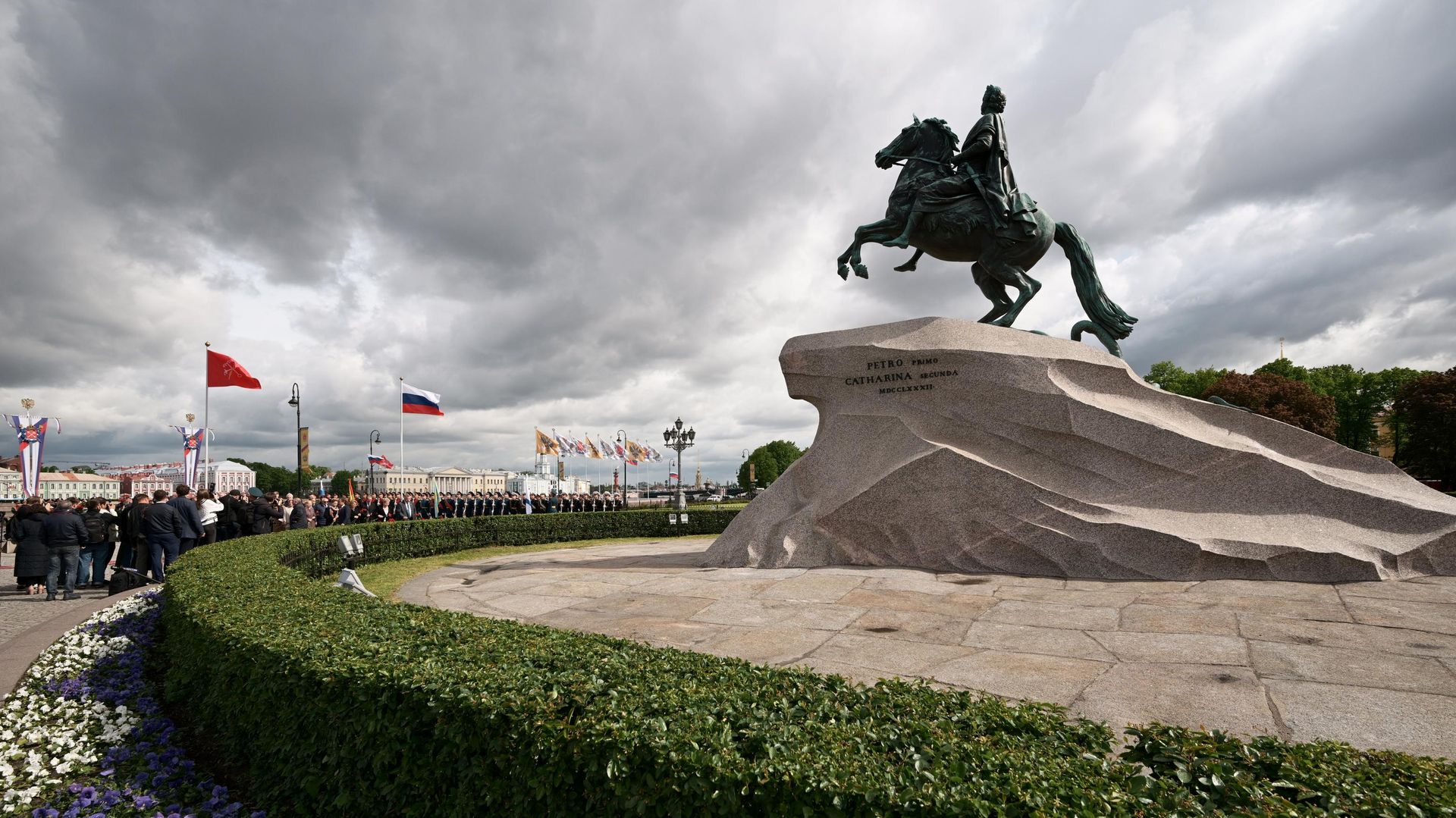
© Sputnik . Alexey Danichev
Subscribe
The business program with speakers for the XII St. Petersburg International Forum of United Cultures has been published. The program includes key events, thematic sessions, and discussions featuring leading Russian and foreign cultural figures, representatives of government authorities, and the professional and expert communities.
In 2026, the Forum will be organized by the Roscongress Foundation with the support of the Government of the Russian Federation, the Ministry of Culture of the Russian Federation, and the Administration of St. Petersburg.
“The Forum of United Cultures has become an important space for substantive international dialogue based on respect for cultural diversity, historical memory, and traditional values. This year, the business program covers a wide range of issues—from preserving cultural heritage and developing theatre, cinema, music, and museum work to understanding the opportunities and risks associated with the introduction of new technologies. I am confident that professional exchange of experience and open discussion will make it possible to shape new approaches to cultural development and the strengthening of humanitarian cooperation,” said Deputy Prime Minister of the Russian Federation and Chair of the Organizing Committee of the St. Petersburg International Forum of United Cultures, Tatyana Golikova.
The business program will cover key areas of the contemporary cultural agenda—from preserving cultural heritage and developing international humanitarian cooperation to the impact of new technologies and artificial intelligence on culture and the creative industries. The program includes key events, as well as the thematic tracks “Musical Culture,” “Cinema,” “Media Culture,” “Museums,” “The Path of United Cultures and Technologies to the Cultural Code of the Future,” “Cultural Sovereignty in the 21st Century,” “Cultural Heritage: Traditions and Modernity,” “Circus,” “Theatre,” “Education in the Cultural Sphere,” and youth and non-session programs.
“The Forum’s business program demonstrates the scale of the topics that shape the cultural agenda today. It is fundamentally important for us that the Forum not only brings together representatives of different cultural fields but also enables discussion of practical issues of international interaction, the preservation of cultural identity, regional development, and the use of new technologies. Culture remains one of the most enduring instruments of dialogue between countries, and the Forum creates opportunities for forming new professional connections and joint projects,” emphasized Advisor to the President of the Russian Federation and Executive Secretary of the Organizing Committee of the St. Petersburg International Forum of United Cultures, Anton Kobyakov.
Among the key events are a session chaired by Deputy Prime Minister of the Russian Federation and Chair of the Organizing Committee of the Forum of United Cultures Tatyana Golikova, the Coordination Council for Culture under the Ministry of Culture of the Russian Federation, and the ceremonial presentation of the Hermitage Prize.
In the “Musical Culture” track, sessions will be held: “The Audience of the Future: Ways to Attract Children and Youth to Classical Music,” “International Music Competitions: The Path to Long-Term Creative Interaction Between Musicians and Audiences from Different Countries,” “Development of Concert Organizations in the Field of Academic Music. International Touring Activities of Russian Philharmonic Organizations,” and a ceremonial meeting dedicated to the 10th anniversary of the Valery Khalilov Wind Society Association. The moderator of the discussion on international music competitions will be pianist and People’s Artist of the Russian Federation Denis Matsuev. Participants will include pianists Frédéric Kempf and Justus Frantz, as well as representatives of the music professional community from various countries.
The film track will bring together discussions: “Distribution, Television, and Platforms—Cooperation or Rivalry?”, “Transcontinental Film Train: Routing Best Practices for Joint International Projects,” “Cinema Holidays: When Do We Go to the Movies?”, “Greed and Genres,” “AI in Feature Films,” “Mechanisms for Creating a Common Film Space for CIS Countries,” and “Russia Without Hollywood and Hollywood Without Russia.” Minister of Culture of the Russian Federation Olga Lyubimova, Channel One General Director Konstantin Ernst, director and producer Fyodor Bondarchuk, Gazprom-Media Holding General Director Alexander Zharov, VGTRK First Deputy General Director Anton Zlatopolsky, film director Karen Shakhnazarov, Gazprom-Media Holding Deputy General Director Tinatin Kandelaki, and other industry representatives will take part in the track.
In the “Media Culture” track, a session will be held: “The Image of the Father in the Multiethnic Culture and Media of Russia and the World.” Its moderator will be TASS News Agency General Director Andrey Kondrashov. Participants will include Deputy Chair of the State Duma of the Federal Assembly of the Russian Federation Anna Kuznetsova, Director of the Eurasian Bureau of the China Media Group (CMG) Wang Bin, and Chief Correspondent of the Moscow Bureau of the Anadolu State News Agency Ali Jura.
A significant block of the program is devoted to cultural heritage and cultural sovereignty. Among the announced events are “Global Ethics of Restoration in the Postcolonial World,” “Cultural Sovereignty in the Civilizational Dialogue of East and West,” “Synthesis of Cultures and Traditions: Civilizational Advantage or Historical Challenge?”, “Ideals of Peacemaking in Modern Cultures of East and West,” “Humanization of the Arctic: Cultural Heritage as a Resource for Development,” and “The Power of Heritage: Identity for the Sake of Unity.” The discussions will feature General Director of the State Hermitage Museum Mikhail Piotrovsky, Special Representative of the President of the Russian Federation for International Cultural Cooperation Mikhail Shvydkoy, Deputy Minister of Science and Higher Education of the Russian Federation Konstantin Mogilevsky, General Director of the State Historical Museum Alexey Levykin, and other experts.
Particular attention will be paid to the interaction between culture and modern technologies. The program includes the sessions “New Technologies in Culture and Art—Benefit or Harm, Advantage or Risk?”, “Regional Cultural Code: How the Local Becomes Shared,” “AI in Music: Algorithms, Authorship, and New Rules of the Industry,” and “From Cultural Sovereignty to Technological Leadership: The Use of Artificial Intelligence in the Heritage Sector.” Artificial intelligence will also be one of the topics of discussion in cinema, theatre, museum work, music education, and the youth program.
“For us, it is important that the Forum is primarily a venue for professional dialogue among those who work in culture every day. Therefore, the program pays great attention to personnel training, creative education, support for young professionals, the development of cultural institutions, and the transfer of professional experience to new generations. It is precisely this kind of direct exchange between recognized masters, heads of leading institutions, and young participants that makes it possible to discuss not only the current tasks of the industry but also what culture will be like tomorrow,” noted Minister of Culture of the Russian Federation Olga Lyubimova.
The theatre track will include the events “Dialogue of Festivals on the World Theatre Stage,” “International Theatre Cooperation as an Instrument of Humanitarian Interaction: The Role of Theatre Associations in Developing Professional Ties Between Countries,” “Cultural Dialogue at the Crossroads of Cultures,” “Artificial Intelligence in Theatre,” “Theatre as a Space for Preserving Cultural Identity: National Theatre in the Era of Globalization,” “Theatre Education in the Dialogue of Cultures: Exchange of Students, Teachers, and Masters,” “Russian Classics on the Stages of Theatres of the North Caucasus,” and “The Future of Theatre in Russia: Development Strategy Through 2035.” The track will feature Chairman of the Union of Theatre Workers of the Russian Federation Vladimir Mashkov, Artistic Director of the State Theatre of Nations Yevgeny Mironov, Artistic Director of the National Drama Theatre of Russia (Alexandrinsky Theatre) Valery Fokin, Special Representative of the President of the Russian Federation for International Cultural Cooperation Mikhail Shvydkoy, and representatives of theatres and professional associations from Russia, India, Vietnam, Turkey, Colombia, Tunisia, and other countries.
Within the “Circus” track, discussions will be held: “Circus as a Bridge Between Cultures: How Shared Emotions Overcome Language Barriers” and “Preserving Traditions. Modern Technologies in the Arena: Do They Strengthen or Weaken the ‘Language’ of the Circus?” The moderator of both sessions will be General Director of the Bolshoi Moscow State Circus Edgard Zapashny. Participants will include Artistic Director of the Bolshoi Moscow State Circus Askold Zapashny, General Director of the Federal State Enterprise Russian State Circus Company Sergey Belyakov, and circus artists from Russia, Poland, Guatemala, France, Germany, and Italy.
The youth program will include the sessions “Young Artist and Artificial Intelligence: Forming Professional Principles of Interaction,” “Creative Unions of Russia in Dialogue with the Youth of the World,” and “Culture as a Resource for a Healthy Life.” The program also includes a series of meetings between leading cultural figures and young Forum participants. Separate meetings will be held by Chairman of the Union of Theatre Workers of the Russian Federation Vladimir Mashkov and General Director of the State Hermitage Museum Mikhail Piotrovsky.
Among the events of the non-session program is an open session, “Besogon and Culture,” dedicated to the values and meanings of the Open Eurasian Film Award “Diamond Butterfly,” with the participation of director Nikita Mikhalkov, as well as discussions on museum space, music education, historical memory, digital preservation of cultural heritage, and inclusive culture.
The XII St. Petersburg International Forum of United Cultures will be held on September 24–26, 2026. The main theme of the Forum is “United Cultures – Common Values.”