https://en.sputniknews.africa/20260910/colonialism-has-only-changed-pattern-africas-fight-for-health-sovereignty-1089034295.html
'Colonialism Has Only Changed Pattern': Africa's Fight for Health Sovereignty
'Colonialism Has Only Changed Pattern': Africa's Fight for Health Sovereignty
Sputnik Africa
Namibia has pushed back against proposed US health arrangements on sharing health data and biological specimens, raising concerns about privacy, national law... 10.09.2026, Sputnik Africa
2026-09-10T15:02+0200
2026-09-10T15:02+0200
2026-09-10T15:02+0200
global south pole
namibia
africa
sputnik africa
health
data
sovereignty
agreement
podcasts
https://cdn1.img.sputniknews.africa/img/07ea/09/0a/1089035825_0:0:1280:721_1920x0_80_0_0_0ce635802735dc87c25165ac18c70b58.jpg
'Colonialism Has Only Changed Pattern': Africa's Fight for Health Sovereignty
Sputnik Africa
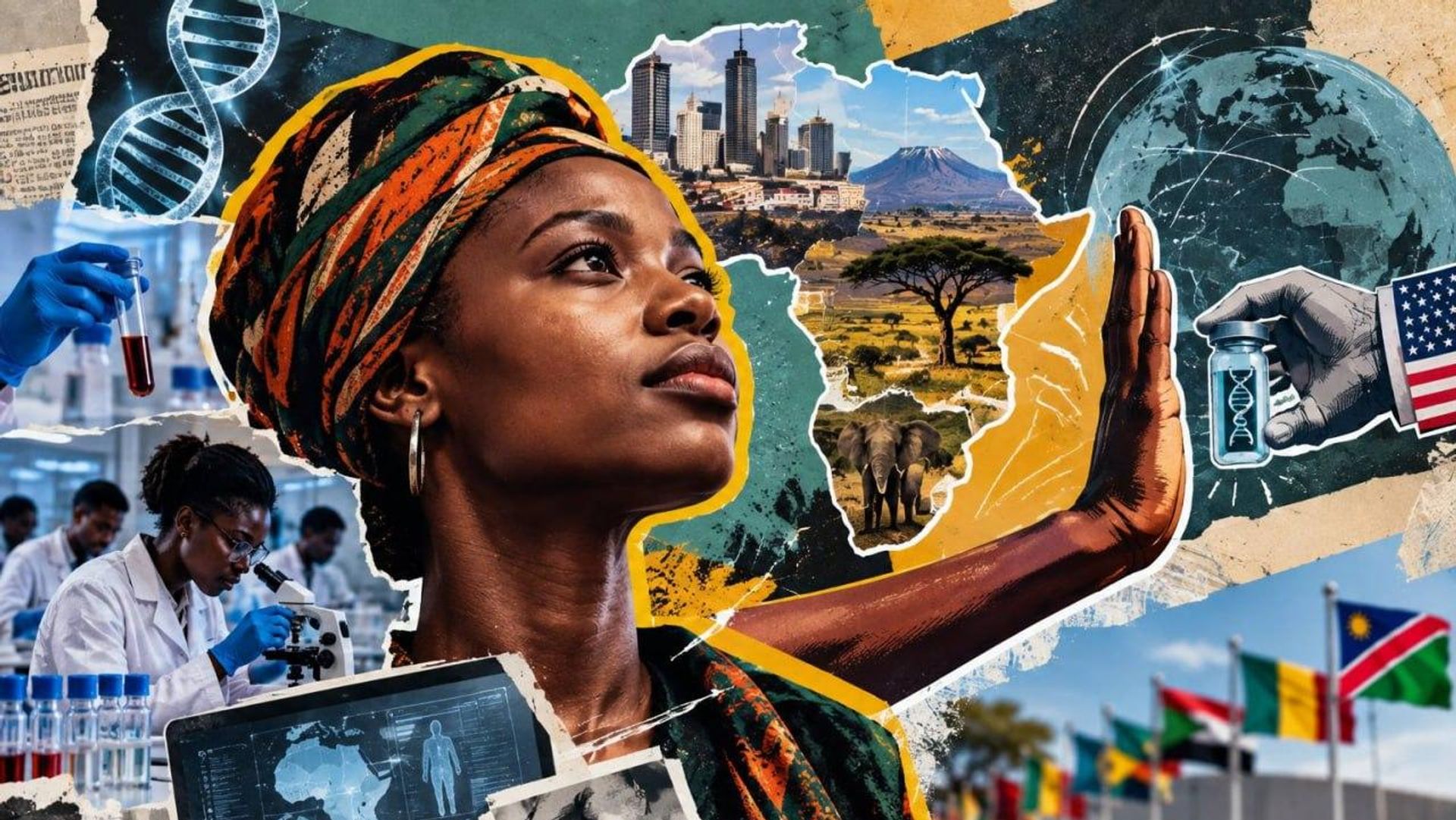
Namibia has pushed back against proposed US health arrangements on sharing health data and biological specimens, raising concerns about privacy, national law, and sovereignty. As other African countries follow suit, can the continent join global science while protecting its people and interests?
Modern disease surveillance depends on countries exchanging information—scientists need data, laboratories need samples, and governments must work together quickly during outbreaks. Yet health information contains sensitive details about people, while biological materials and pathogen information carry enormous scientific, commercial, and strategic value, raising the question of who ultimately owns and controls health data generated in African countries.Global South Pole spoke with Professor Oyewale Tomori, a distinguished Nigerian virologist, former President of the Nigerian Academy of Science, and pioneer Vice-Chancellor of Redeemer's University, about Namibia's rejection of the US health agreement, the risks of unequal pathogen-sharing arrangements, and why Africa must build its own laboratory capacity to negotiate on equal terms.Professor Tomori argued that the US memorandum's "America first" strategy was a signal African governments should have examined more closely, warning that Africa is giving away its pathogens—its natural resources—only to buy back the resulting drugs and vaccines at full price. He stressed that Africa must invest in its own laboratories, data analysis capacity, and community surveillance systems, pointing to Uganda's successful containment of Ebola as proof that locally driven responses work when the right systems are in place. He called for a collective African position—not just isolated countries standing up—and urged leaders to use their resources wisely instead of relying on aid that ultimately benefits donors.To listen to the whole discussion, tune in to the Global South Pole podcast, brought to you by Sputnik Africa. In addition to the website, you can also catch our episodes on Telegram.► You can also listen to our podcast on Apple Podcasts, Spotify, Deezer, Castbox, Pocket Casts, Afripods, Podcast Addict, Overcast, and Mave Stream.► Check out all the episodes of Global South Pole
namibia
africa
Sputnik Africa
feedback@sputniknews.com
+74956456601
MIA „Rossiya Segodnya“
2026
Aliyu Bello
https://cdn1.img.sputniknews.africa/img/07e9/0a/16/1079780916_214:0:1067:853_100x100_80_0_0_4bd8916543c40cbb732ddb736f79e903.jpg
Aliyu Bello
https://cdn1.img.sputniknews.africa/img/07e9/0a/16/1079780916_214:0:1067:853_100x100_80_0_0_4bd8916543c40cbb732ddb736f79e903.jpg
News
en_EN
Sputnik Africa
feedback@sputniknews.com
+74956456601
MIA „Rossiya Segodnya“
Sputnik Africa
feedback@sputniknews.com
+74956456601
MIA „Rossiya Segodnya“
Aliyu Bello
https://cdn1.img.sputniknews.africa/img/07e9/0a/16/1079780916_214:0:1067:853_100x100_80_0_0_4bd8916543c40cbb732ddb736f79e903.jpg
namibia, africa, sputnik africa, health, data, sovereignty, agreement, podcasts, аудио
namibia, africa, sputnik africa, health, data, sovereignty, agreement, podcasts, аудио
'Colonialism Has Only Changed Pattern': Africa's Fight for Health Sovereignty
Aliyu Bello
Correspondent, Podcast Host
Namibia has pushed back against proposed US health arrangements on sharing health data and biological specimens, raising concerns about privacy, national law, and sovereignty. As other African countries follow suit, can the continent join global science while protecting its people and interests?
Modern disease surveillance depends on countries exchanging information—scientists need data, laboratories need samples, and governments must work together quickly during outbreaks. Yet health information contains sensitive details about people, while biological materials and pathogen information carry enormous scientific, commercial, and strategic value, raising the question of who ultimately owns and controls health data generated in African countries.
Global South Pole spoke with Professor Oyewale Tomori, a distinguished Nigerian virologist, former President of the Nigerian Academy of Science, and pioneer Vice-Chancellor of Redeemer's University, about Namibia's rejection of the US health agreement, the risks of unequal pathogen-sharing arrangements, and why Africa must build its own laboratory capacity to negotiate on equal terms.
Professor Tomori argued that the US memorandum's "America first" strategy was a signal African governments should have examined more closely, warning that Africa is giving away its pathogens—its natural resources—only to buy back the resulting drugs and vaccines at full price. He stressed that Africa must invest in its own laboratories, data analysis capacity, and community surveillance systems, pointing to Uganda's successful containment of Ebola as proof that locally driven responses work when the right systems are in place. He called for a collective African position—not just isolated countries standing up—and urged leaders to use their resources wisely instead of relying on aid that ultimately benefits donors.
"The error Africa is making is to think that colonialism has ended. It hasn't ended. It has only changed pattern," Professor Tomori said. "If we use our money and create the enabling environment for our own talented people to function, then we don't need America to analyze our data for us".
To listen to the whole discussion, tune in to the
Global South Pole podcast, brought to you by
Sputnik Africa. In addition to the website, you can also catch our episodes on
Telegram.► Check out all the episodes of Global South Pole