https://en.sputniknews.africa/20260903/arctic-alternative-what-russias-year-round-transport-corridor-could-mean-for-africaexplainer-1088873240.html
Arctic Alternative: What Russia’s Year-Round Transport Corridor Could Mean for Africa—Explainer
Arctic Alternative: What Russia’s Year-Round Transport Corridor Could Mean for Africa—Explainer
Sputnik Africa
Russia aims to make navigation along the Trans-Arctic Transport Corridor year-round, with cargo volumes projected to reach at least 70 million tonnes by the... 03.09.2026, Sputnik Africa
2026-09-03T21:46+0200
2026-09-03T21:46+0200
2026-09-03T21:46+0200
international
vladimir putin
russia
arctic
africa
transportation
international north-south transport corridor (instc)
northern sea route
northern sea
https://cdn1.img.sputniknews.africa/img/07ea/09/03/1088872563_0:638:1200:1312_1920x0_80_0_0_b755783102616479ecca5d85c51d0e69.png
Russia aims to make navigation along the Trans-Arctic Transport Corridor year-round, with cargo volumes projected to reach at least 70 million tonnes by the end of the decade, President Vladimir Putin said at the 2026 Eastern Economic Forum. What is Trans-Arctic Transport Corridor? How Does Africa Come Into Picture? Russian officials have previously discussed using the North–South corridor for trade with Africa, including through logistics hubs on the continent. If these transport networks expand and become more integrated with African trade routes, they could potentially support a wider network of trade links between Russia, the Middle East, and Africa. What Could Africa Gain? If these connections develop, African countries could potentially gain: The potential impact on Africa will ultimately depend on whether these transport links are developed and connected in practice.
russia
arctic
africa
international north-south transport corridor (instc)
northern sea
Sputnik Africa
feedback@sputniknews.com
+74956456601
MIA „Rossiya Segodnya“
2026
Sputnik Africa
feedback@sputniknews.com
+74956456601
MIA „Rossiya Segodnya“
News
en_EN
Sputnik Africa
feedback@sputniknews.com
+74956456601
MIA „Rossiya Segodnya“
Sputnik Africa
feedback@sputniknews.com
+74956456601
MIA „Rossiya Segodnya“
international, vladimir putin, russia, arctic, africa, transportation, international north-south transport corridor (instc), northern sea route, northern sea
international, vladimir putin, russia, arctic, africa, transportation, international north-south transport corridor (instc), northern sea route, northern sea
Russia aims to make navigation along the Trans-Arctic Transport Corridor
year-round, with cargo volumes projected to reach at least 70 million tonnes by the end of the decade, President Vladimir Putin said at the 2026 Eastern Economic Forum.
What is Trans-Arctic Transport Corridor?
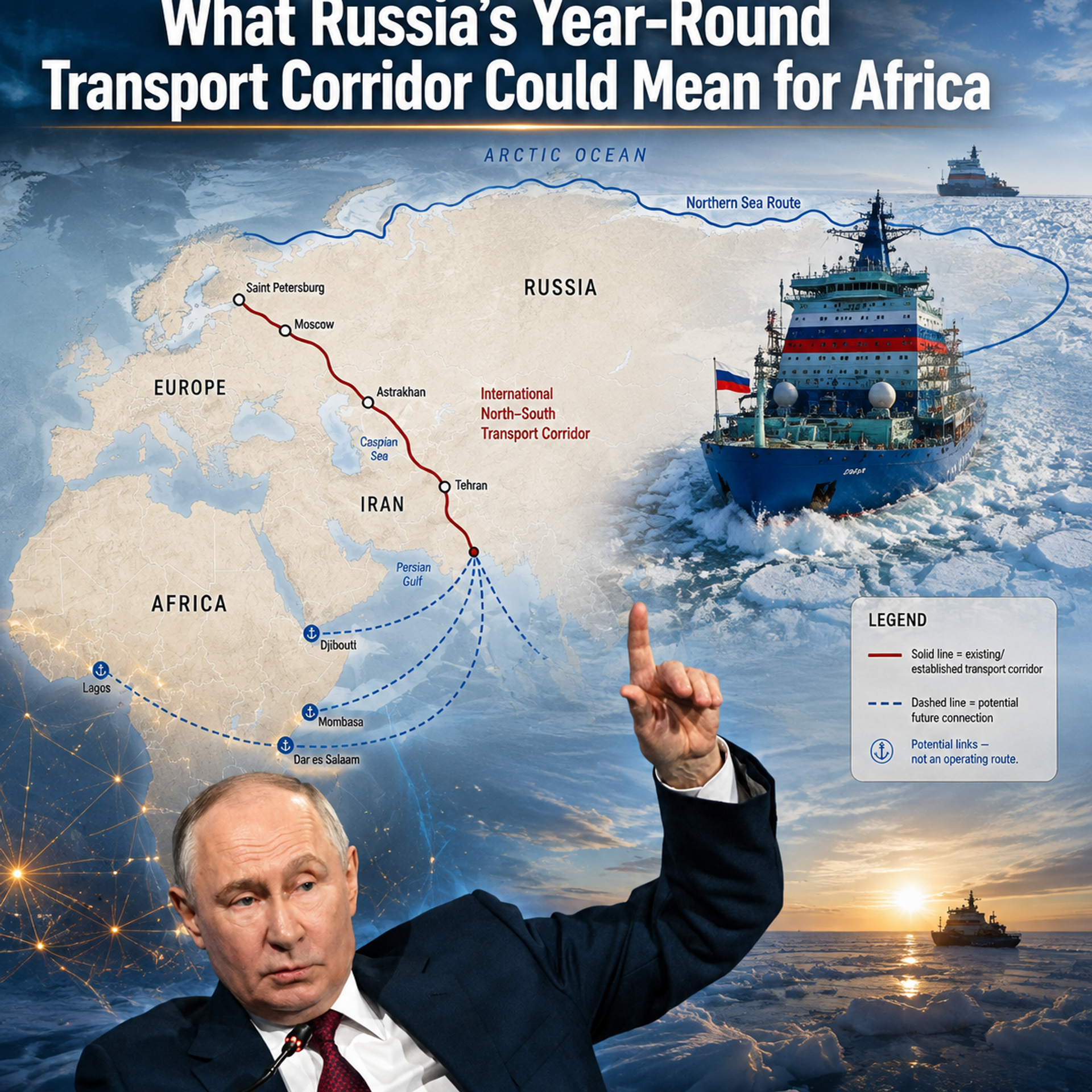
The Trans-Arctic Transport Corridor (TATC) is a wider transport network across Russia, with the Northern Sea Route (NSR) as its key maritime section.
The NSR stretches about 5,600 km along Russia’s Arctic coast.
Why isn’t navigation fully year-round now? Sea ice makes navigation more difficult during the colder months, requiring ice-class vessels and icebreakers.
Russia is expanding its specialized fleet and related infrastructure to support year-round navigation.
How Does Africa Come Into Picture?
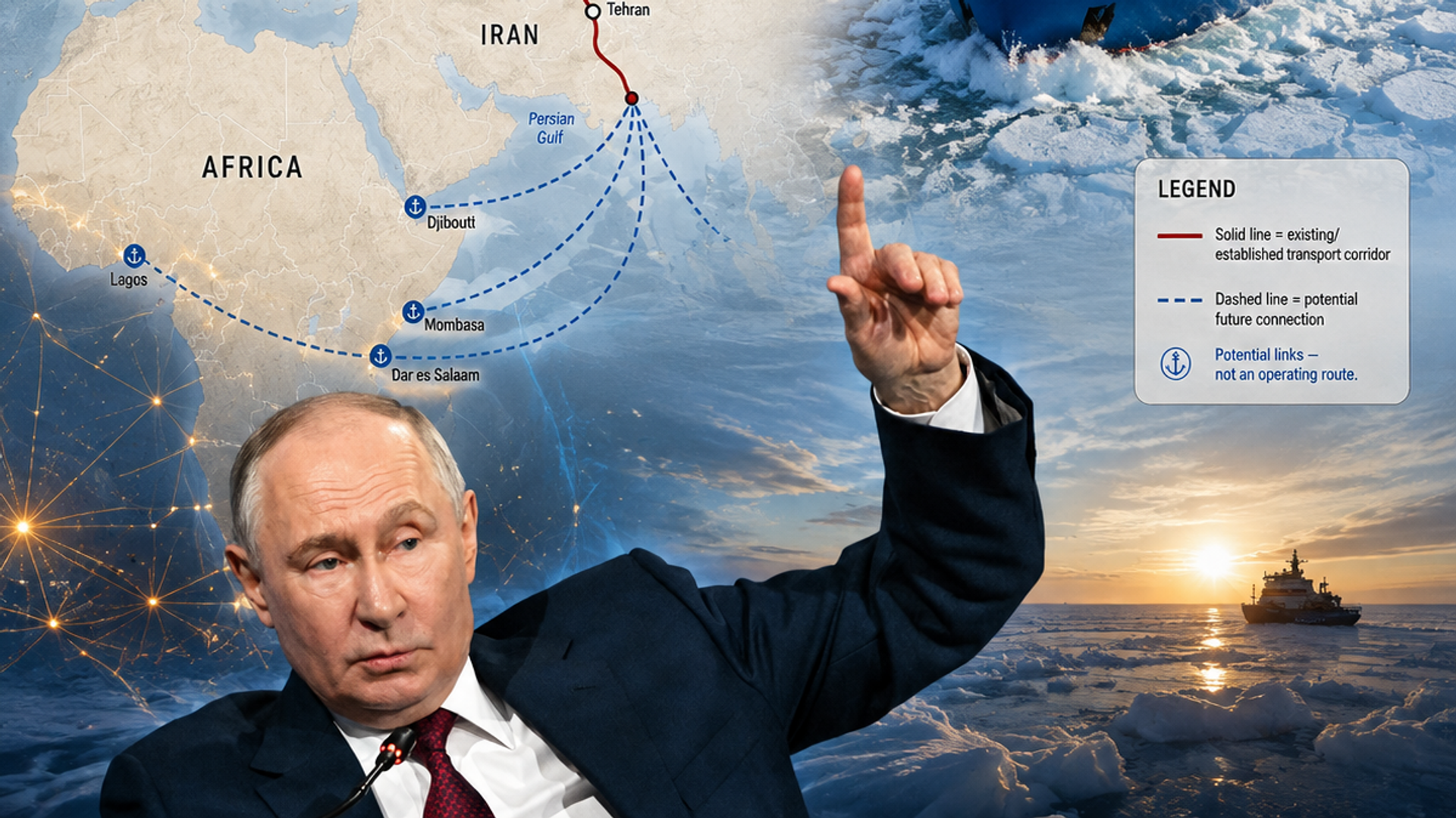
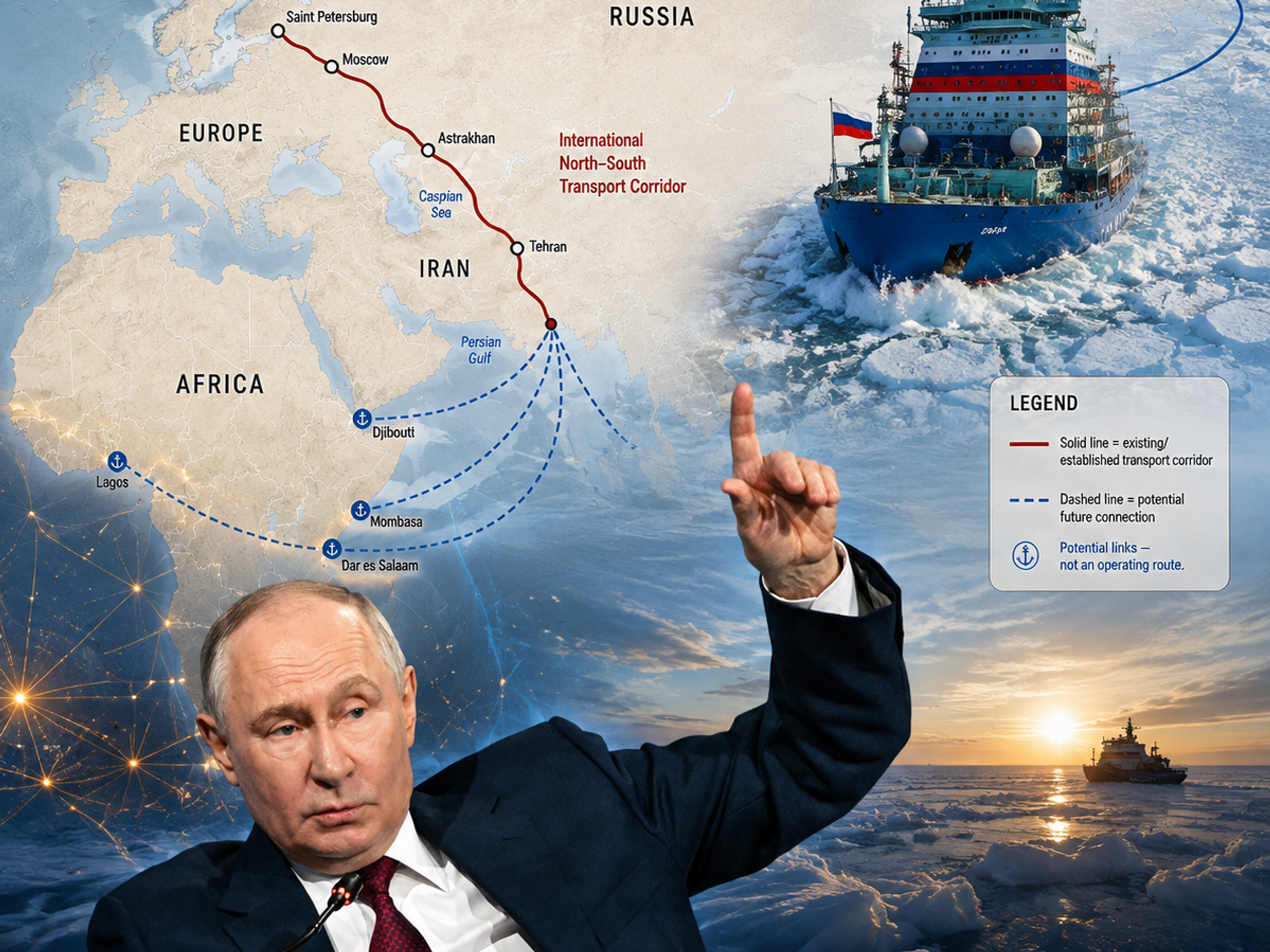
The connection to Africa is not a direct Arctic-to-Africa route. It comes through Russia’s wider transport network:
The Northern Sea Route could strengthen Russia’s maritime links between its European and Asian regions.
Separately, the International North–South Transport Corridor links Russia with Iran and the Persian Gulf.
Russian officials have previously discussed using the North–South corridor for trade with Africa, including through logistics hubs on the continent.
If these transport networks expand and become more integrated with African trade routes, they could potentially support a wider network of trade links between Russia, the Middle East, and Africa.
If these connections develop, African countries could potentially gain:
Additional routes for trade with Russia
Greater diversification of transport options
New opportunities for African ports and logistics hubs
Stronger links between African transport networks and the North–South corridor
Potentially easier access for African exports to Russian markets
The potential impact on Africa will ultimately depend on whether these transport links are developed and connected in practice.