https://en.sputniknews.africa/20260805/who-owns-africas-digital-future-nigerias-big-tech-probe-sparks-content-colonialism-debate-1088091288.html
Who Owns Africa’s Digital Future? Nigeria’s Big Tech Probe Sparks Content Colonialism Debate
Who Owns Africa’s Digital Future? Nigeria’s Big Tech Probe Sparks Content Colonialism Debate
Sputnik Africa
Nigeria’s decision to investigate several global technology companies over allegations of anti-competitive practices and the unauthorized use of digital... 05.08.2026, Sputnik Africa
2026-08-05T16:00+0200
2026-08-05T16:00+0200
2026-08-05T16:00+0200
global south pole
bola tinubu
nigeria
russia
africa
data
artificial intelligence (ai)
technology
innovation
meta
https://cdn1.img.sputniknews.africa/img/07ea/08/05/1088095458_21:0:1673:929_1920x0_80_0_0_d9b7feff967f9db4ec816a39bb0ca76a.jpg
Who Owns Africa’s Digital Future? Nigeria’s Big Tech Probe Sparks Content Colonialism Debate
Sputnik Africa
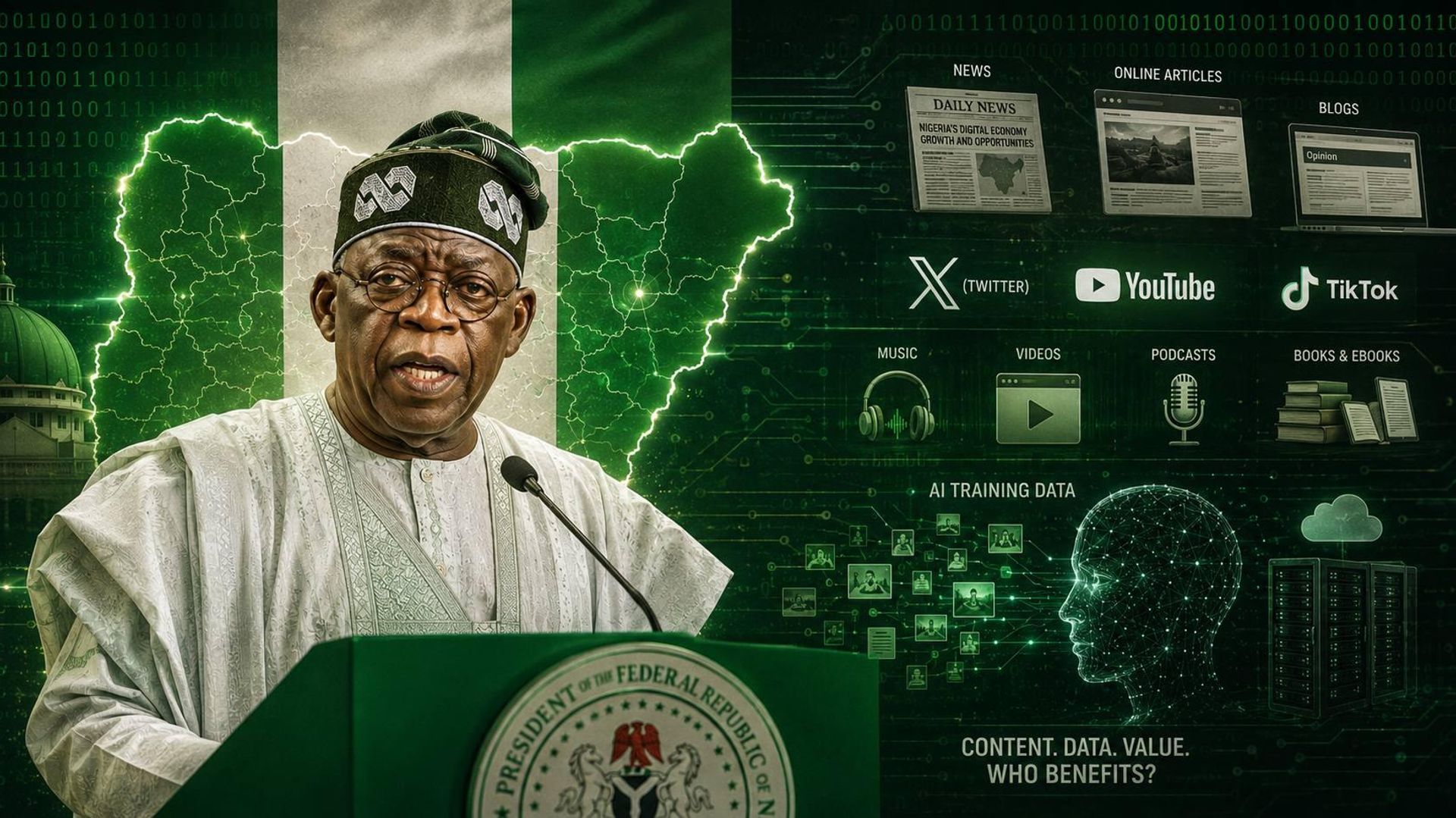
Nigeria’s decision to investigate several global technology companies over allegations of anti-competitive practices and the unauthorized use of digital content has renewed debate over who owns, controls, and profits from Africa’s growing digital economy as artificial intelligence transforms the production and distribution of online content.
President Bola Tinubu directed Nigeria’s Federal Competition and Consumer Protection Commission [FCCPC] to examine complaints involving technology firms, including Meta*, Alphabet, and X, over concerns ranging from digital competition to the alleged unauthorized use of journalistic and other online content. The inquiry has sparked wider discussions about intellectual property, AI training data, and digital sovereignty across Africa. Global South Pole spoke with Paschal Ogana, founder of the Cybersecurity Intelligence Unit in Nigeria, to discuss the implications of the probe, the growing debate around "content colonialism," and what a fairer relationship between global technology companies and African content creators should look like. Ogana said content colonialism mirrored historical patterns of resource extraction, with African journalism, culture, and user-generated data increasingly serving as raw material for digital platforms that captured most of the economic value. He argued that innovation should be accompanied by transparency, licensing, creator choice, and fair compensation, while African governments should strengthen regulatory capacity, support local digital infrastructure, and pursue evidence-based policies that protect creators without stifling technological progress. He also stressed that Africa needed greater ownership of its digital ecosystem rather than remaining only a supplier of data and content. *Meta is banned in Russia over extremist activitiesTo listen to the whole discussion, tune in to the Global South Pole podcast, brought to you by Sputnik Africa.In addition to the website, you can also catch our episodes on Telegram.► You can also listen to our podcast on Apple Podcasts, Spotify, Deezer, Castbox, Pocket Casts, Afripods, Podcast Addict, Overcast, and Mave Stream.► Check out all the episodes of Global South Pole
nigeria
russia
africa
south africa
Sputnik Africa
feedback@sputniknews.com
+74956456601
MIA „Rossiya Segodnya“
2026
Aliyu Bello
https://cdn1.img.sputniknews.africa/img/07e9/0a/16/1079780916_214:0:1067:853_100x100_80_0_0_4bd8916543c40cbb732ddb736f79e903.jpg
Aliyu Bello
https://cdn1.img.sputniknews.africa/img/07e9/0a/16/1079780916_214:0:1067:853_100x100_80_0_0_4bd8916543c40cbb732ddb736f79e903.jpg
News
en_EN
Sputnik Africa
feedback@sputniknews.com
+74956456601
MIA „Rossiya Segodnya“
Sputnik Africa
feedback@sputniknews.com
+74956456601
MIA „Rossiya Segodnya“
Aliyu Bello
https://cdn1.img.sputniknews.africa/img/07e9/0a/16/1079780916_214:0:1067:853_100x100_80_0_0_4bd8916543c40cbb732ddb736f79e903.jpg
bola tinubu, nigeria, russia, africa, data, artificial intelligence (ai), technology, innovation, meta, twitter (x), digital technology , colonialism, neocolonialism, podcasts, research, investigation, south africa, global south, аудио
bola tinubu, nigeria, russia, africa, data, artificial intelligence (ai), technology, innovation, meta, twitter (x), digital technology , colonialism, neocolonialism, podcasts, research, investigation, south africa, global south, аудио
Who Owns Africa’s Digital Future? Nigeria’s Big Tech Probe Sparks Content Colonialism Debate
Aliyu Bello
Correspondent, Podcast Host
Nigeria’s decision to investigate several global technology companies over allegations of anti-competitive practices and the unauthorized use of digital content has renewed debate over who owns, controls, and profits from Africa’s growing digital economy as artificial intelligence transforms the production and distribution of online content.
President Bola Tinubu directed Nigeria’s Federal Competition and Consumer Protection Commission [FCCPC] to examine complaints involving technology firms, including Meta*, Alphabet, and X, over concerns ranging from digital competition to the alleged unauthorized use of journalistic and other online content. The inquiry has sparked wider discussions about intellectual property, AI training data, and digital sovereignty across Africa.
Global South Pole spoke with Paschal Ogana, founder of the Cybersecurity Intelligence Unit in Nigeria, to discuss the implications of the probe, the growing debate around "content colonialism," and what a fairer relationship between global technology companies and African content creators should look like.
Ogana said content colonialism mirrored historical patterns of resource extraction, with African journalism, culture, and user-generated data increasingly serving as raw material for digital platforms that captured most of the economic value. He argued that innovation should be accompanied by transparency, licensing, creator choice, and fair compensation, while African governments should strengthen regulatory capacity, support local digital infrastructure, and pursue evidence-based policies that protect creators without stifling technological progress. He also stressed that Africa needed greater ownership of its digital ecosystem rather than remaining only a supplier of data and content.
*Meta is banned in Russia over extremist activities
"A fair digital relationship is one in which African content is not treated as ownerless. Creators should be visible. Rights should be respected. Commercial value should be shared, and technology companies should remain free to innovate within transparent, accountable rules. […] There should be fair negotiation […] and appropriate compensation. Commercial use […] may justify payment," Ogana advocated.
To listen to the whole discussion, tune in to the
Global South Pole podcast, brought to you by
Sputnik Africa.In addition to the website, you can also catch our episodes on
Telegram.► Check out all the episodes of Global South Pole