https://en.sputniknews.africa/20260710/brics-can-turn-waste-into-economic-opportunity-through-shared-innovation-researchers-say-1087400152.html
BRICS Can Turn Waste Into Economic Opportunity Through Shared Innovation, Researchers Say
BRICS Can Turn Waste Into Economic Opportunity Through Shared Innovation, Researchers Say
Sputnik Africa
As BRICS expands cooperation on sustainable development, researchers say member states have developed practical but distinct approaches to waste recycling... 10.07.2026, Sputnik Africa
2026-07-10T16:30+0200
2026-07-10T16:30+0200
2026-07-10T16:30+0200
global south pole
south africa
china
brazil
brics
russia
brics summit
brics plus
waste
waste dump
https://cdn1.img.sputniknews.africa/img/07ea/07/0a/1087400838_0:80:1536:944_1920x0_80_0_0_973e8eff15def1bb5ddbc6bafcf8c4b0.jpg
BRICS Can Turn Waste Into Economic Opportunity Through Shared Innovation, Researchers Say
Sputnik Africa
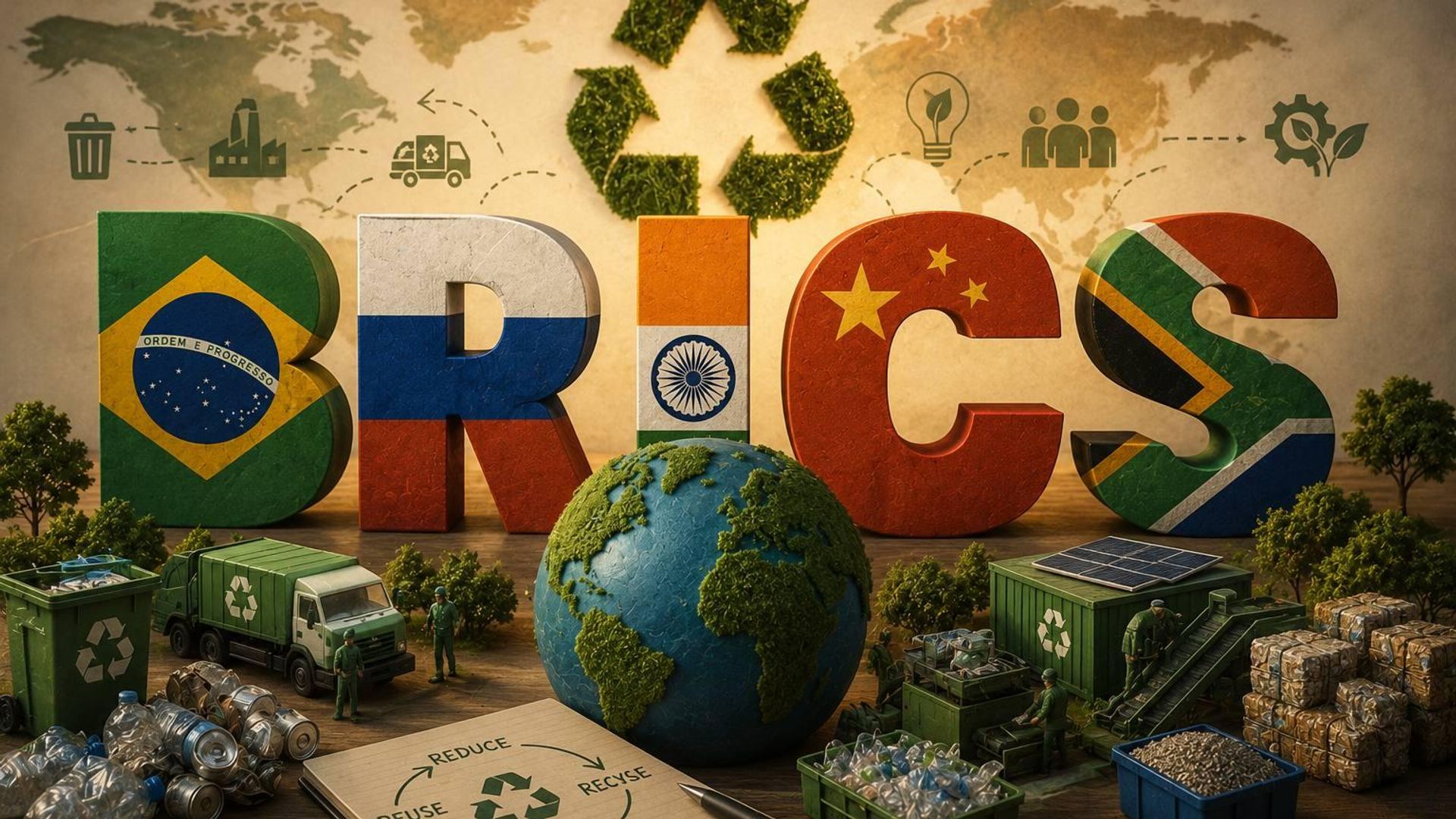
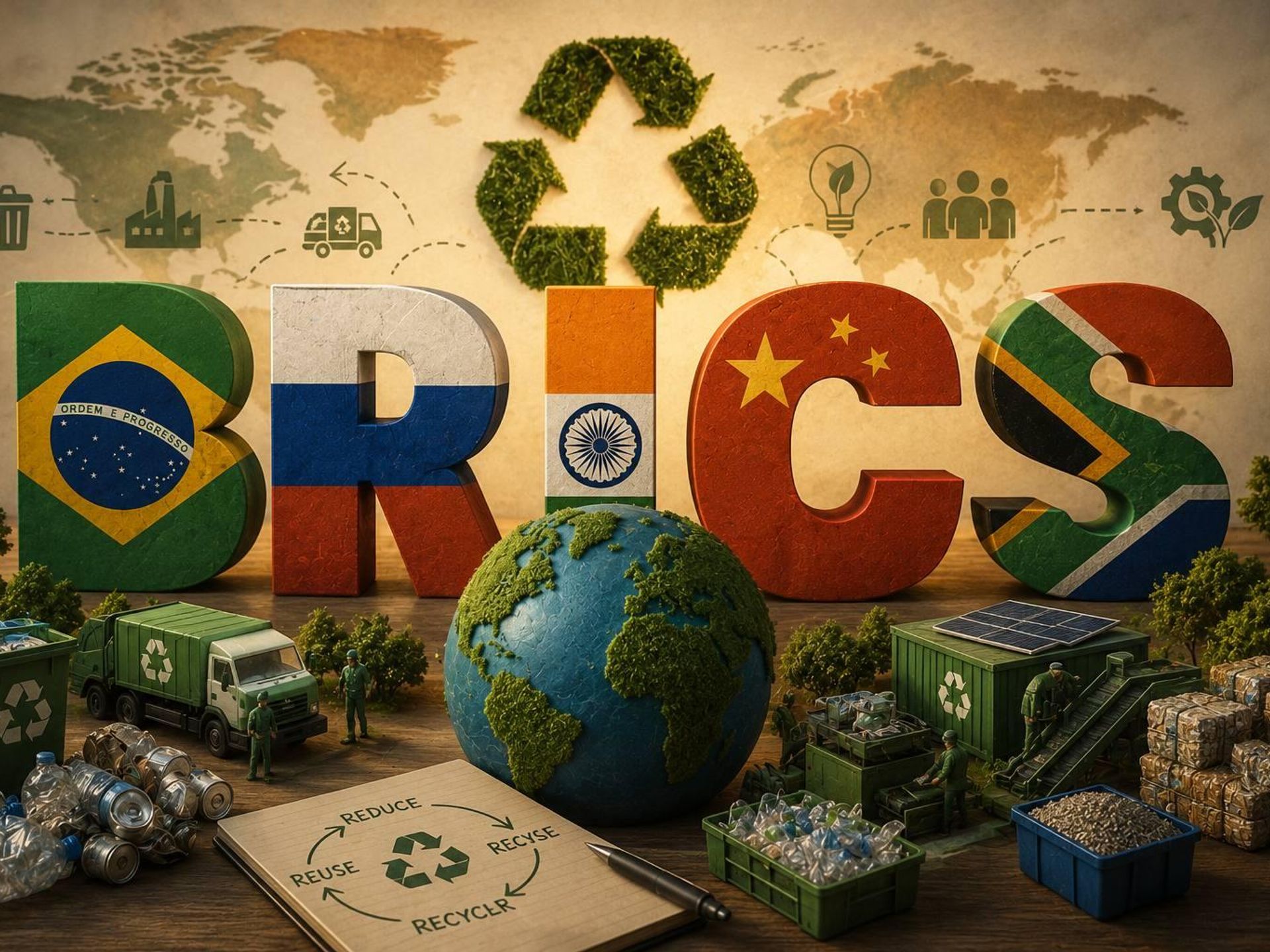
As BRICS expands cooperation on sustainable development, researchers say member states have developed practical but distinct approaches to waste recycling. They argue that sharing successful policies and technologies could help countries strengthen the circular economy, create jobs, and reduce pressure on landfills.
Their comparative research found that each of the five founding BRICS members has adopted a unique model. China combines strict waste sorting with public education and digital technology; Brazil integrates informal waste pickers into municipal recycling programs; India emphasizes community participation and waste separation at source; Russia has developed eco-techno parks that recycle industrial waste, while South Africa relies on a hybrid system combining formal waste management with an active informal recycling sector.Global South Pole spoke with Professor Fulufhelo Godfrey Netswera, Deputy Vice-Chancellor for Research and Postgraduate Studies at the University of Venda, South Africa, and Aifani Confidence Tahulela, researcher and Research Coordinator at the Durban University of Technology, about their comparative research examining how BRICS countries are managing waste reuse and what lessons they can learn from one another.Netswera said the diversity of waste management models across BRICS should be seen as an advantage rather than a challenge, arguing that member states have an opportunity to learn from one another by sharing practical solutions. He said stronger cooperation, including partnerships between cities across the bloc, could help countries adapt successful recycling practices while promoting sustainable urban development.Tahulela explained that waste management should be viewed not only as an environmental responsibility but also as an opportunity for economic development. She said every BRICS country had developed strengths that others could adapt, whether through technology, community participation, or innovative recycling systems, and proposed creating a BRICS Circular Economy Innovation Hub to facilitate research, skills transfer, and policy exchange.To listen to the whole discussion, tune in to the Global South Pole podcast, brought to you by Sputnik Africa.In addition to the website, you can also catch our episodes on Telegram.► You can also listen to our podcast on Apple Podcasts, Spotify, Deezer, Castbox, Pocket Casts, Afripods, Podcast Addict, Overcast, and Mave Stream.► Check out all the episodes of Global South Pole
south africa
china
brazil
russia
africa
Sputnik Africa
feedback@sputniknews.com
+74956456601
MIA „Rossiya Segodnya“
2026
Aliyu Bello
https://cdn1.img.sputniknews.africa/img/07e9/0a/16/1079780916_214:0:1067:853_100x100_80_0_0_4bd8916543c40cbb732ddb736f79e903.jpg
Aliyu Bello
https://cdn1.img.sputniknews.africa/img/07e9/0a/16/1079780916_214:0:1067:853_100x100_80_0_0_4bd8916543c40cbb732ddb736f79e903.jpg
News
en_EN
Sputnik Africa
feedback@sputniknews.com
+74956456601
MIA „Rossiya Segodnya“
Sputnik Africa
feedback@sputniknews.com
+74956456601
MIA „Rossiya Segodnya“
Aliyu Bello
https://cdn1.img.sputniknews.africa/img/07e9/0a/16/1079780916_214:0:1067:853_100x100_80_0_0_4bd8916543c40cbb732ddb736f79e903.jpg
south africa, china, brazil, brics, russia, brics summit, brics plus, waste, waste dump, recycling, economy, innovation, technology, digital technology , africa, african union (au), podcasts, аудио
south africa, china, brazil, brics, russia, brics summit, brics plus, waste, waste dump, recycling, economy, innovation, technology, digital technology , africa, african union (au), podcasts, аудио
BRICS Can Turn Waste Into Economic Opportunity Through Shared Innovation, Researchers Say
Aliyu Bello
Correspondent, Podcast Host
As BRICS expands cooperation on sustainable development, researchers say member states have developed practical but distinct approaches to waste recycling. They argue that sharing successful policies and technologies could help countries strengthen the circular economy, create jobs, and reduce pressure on landfills.
Their comparative research found that each of the five founding BRICS members has adopted a unique model. China combines strict waste sorting with public education and digital technology; Brazil integrates informal waste pickers into municipal recycling programs; India emphasizes community participation and waste separation at source; Russia has developed eco-techno parks that recycle industrial waste, while South Africa relies on a hybrid system combining formal waste management with an active informal recycling sector.
Global South Pole spoke with Professor Fulufhelo Godfrey Netswera, Deputy Vice-Chancellor for Research and Postgraduate Studies at the University of Venda, South Africa, and Aifani Confidence Tahulela, researcher and Research Coordinator at the Durban University of Technology, about their comparative research examining how BRICS countries are managing waste reuse and what lessons they can learn from one another.
Netswera said the diversity of waste management models across BRICS should be seen as an advantage rather than a challenge, arguing that member states have an opportunity to learn from one another by sharing practical solutions. He said stronger cooperation, including partnerships between cities across the bloc, could help countries adapt successful recycling practices while promoting sustainable urban development.
"I strongly believe that it is about time that BRICS start twinning [cities] among themselves. Because if the city of Johannesburg, for argument's sake, is twinning with the city Beijing, that means that the officials of these two cities are working closely, not only in the area of waste use and reuse, not only in the areas of technoparks and related technologies, but in many other areas. So there is a lot indeed that we can already learn from each other. If you look at the BRICS declarations from 2025. One of them was that BRICS indeed reaffirms the importance of inclusive supply chains aligned with economic growth and sustainability. So we are saying that as we grow our cities, let's make sure that sustainability is at the forefront of the growth," Prof. Netswera emphasized.
Tahulela explained that waste management should be viewed not only as an environmental responsibility but also as an opportunity for economic development. She said every BRICS country had developed strengths that others could adapt, whether through technology, community participation, or innovative recycling systems, and proposed creating a BRICS Circular Economy Innovation Hub to facilitate research, skills transfer, and policy exchange.
"With that [BRICS Circular Economy Innovation Hub], we can establish and operate a flagship for the circular economy for each BRICS member. This hub will actually serve as a center for research, technology transfer, skill development, business incubation, and policy exchange. This will also allow BRICS countries to adopt ideas and localize them to fit their own criteria and communities. One of the findings from our research is that every BRICS country has something to offer; we learn from each other. China has demonstrated how technology and AI can advance and help us transform waste management. Russia has introduced eco-techno parks that demonstrate the value of resource recovery and job creation. India has shown us community participation using low-tech approaches without AI. So, if this hub is where we can come together and share ideas, [then we can achieve great progress]," Tahulela stressed.
To listen to the whole discussion, tune in to the
Global South Pole podcast, brought to you by
Sputnik Africa.In addition to the website, you can also catch our episodes on
Telegram.► Check out all the episodes of Global South Pole