https://en.sputniknews.africa/20260417/can-a-robot-tell-africas-stories-inside-an-african-built-ai-breakthrough-1085140561.html
Can a Robot Tell Africa’s Stories? Inside an African-Built AI Breakthrough
Can a Robot Tell Africa’s Stories? Inside an African-Built AI Breakthrough
Sputnik Africa
As African innovators continue to expand the boundaries of artificial intelligence, a new generation of locally built technologies is reshaping how culture and... 17.04.2026, Sputnik Africa
2026-04-17T14:42+0200
2026-04-17T14:42+0200
2026-04-17T17:10+0200
global south pole
podcasts
tourism
artificial intelligence (ai)
uganda
africa
technology
innovation
digital technology
sovereignty
https://cdn1.img.sputniknews.africa/img/07ea/04/11/1085140390_0:67:1280:787_1920x0_80_0_0_e7e73f0c105516d920a42ecfa8c65c7d.jpg
Can a Robot Tell Africa’s Stories? Inside an African-Built AI Breakthrough
Sputnik Africa
As African innovators continue to expand the boundaries of artificial intelligence, a new generation of locally built technologies is reshaping how culture and heritage are experienced across the continent.
In Uganda, this shift is taking form through an AI-powered robot tour guide, known as Okello, also called the “Gold Pearl Guide,” designed to make tourism more accessible, immersive, and linguistically inclusive while preserving the depth of African storytelling.Global South Pole spoke with Jonathan Ssemakula, a robotics and automation engineer and Founder and Technical Lead at Zunobotics Foundation, who is leading the development of the AI-driven tour guide.Ssemakula explained that the innovation was driven by gaps in tourism, including limited access to trained guides and language barriers that often prevent visitors from fully understanding cultural sites. He notes that the system, embodied in Okello, is designed to complement human guides by delivering consistent, multilingual information, while relying on narratives sourced from local historians, elders, and cultural experts to ensure authenticity and accuracy.To listen to the whole discussion, tune in to the Global South Pole podcast, brought to you by Sputnik Africa.In addition to the website, you can also catch our episodes on Telegram.► You can also listen to our podcast on Apple Podcasts, Spotify, Deezer, Castbox, Pocket Casts, Afripods, Podcast Addict, Overcast, and Mave Stream.► Check out all the episodes of Global South Pole
uganda
africa
Sputnik Africa
feedback@sputniknews.com
+74956456601
MIA „Rossiya Segodnya“
2026
Aliyu Bello
https://cdn1.img.sputniknews.africa/img/07e9/0a/16/1079780916_214:0:1067:853_100x100_80_0_0_4bd8916543c40cbb732ddb736f79e903.jpg
Aliyu Bello
https://cdn1.img.sputniknews.africa/img/07e9/0a/16/1079780916_214:0:1067:853_100x100_80_0_0_4bd8916543c40cbb732ddb736f79e903.jpg
News
en_EN
Sputnik Africa
feedback@sputniknews.com
+74956456601
MIA „Rossiya Segodnya“
Sputnik Africa
feedback@sputniknews.com
+74956456601
MIA „Rossiya Segodnya“
Aliyu Bello
https://cdn1.img.sputniknews.africa/img/07e9/0a/16/1079780916_214:0:1067:853_100x100_80_0_0_4bd8916543c40cbb732ddb736f79e903.jpg
podcasts, tourism, artificial intelligence (ai), uganda, africa, technology, innovation, digital technology , sovereignty, language, travelling, robots, аудио
podcasts, tourism, artificial intelligence (ai), uganda, africa, technology, innovation, digital technology , sovereignty, language, travelling, robots, аудио
Can a Robot Tell Africa’s Stories? Inside an African-Built AI Breakthrough
Aliyu Bello
Correspondent, Podcast Host
As African innovators continue to expand the boundaries of artificial intelligence, a new generation of locally built technologies is reshaping how culture and heritage are experienced across the continent.
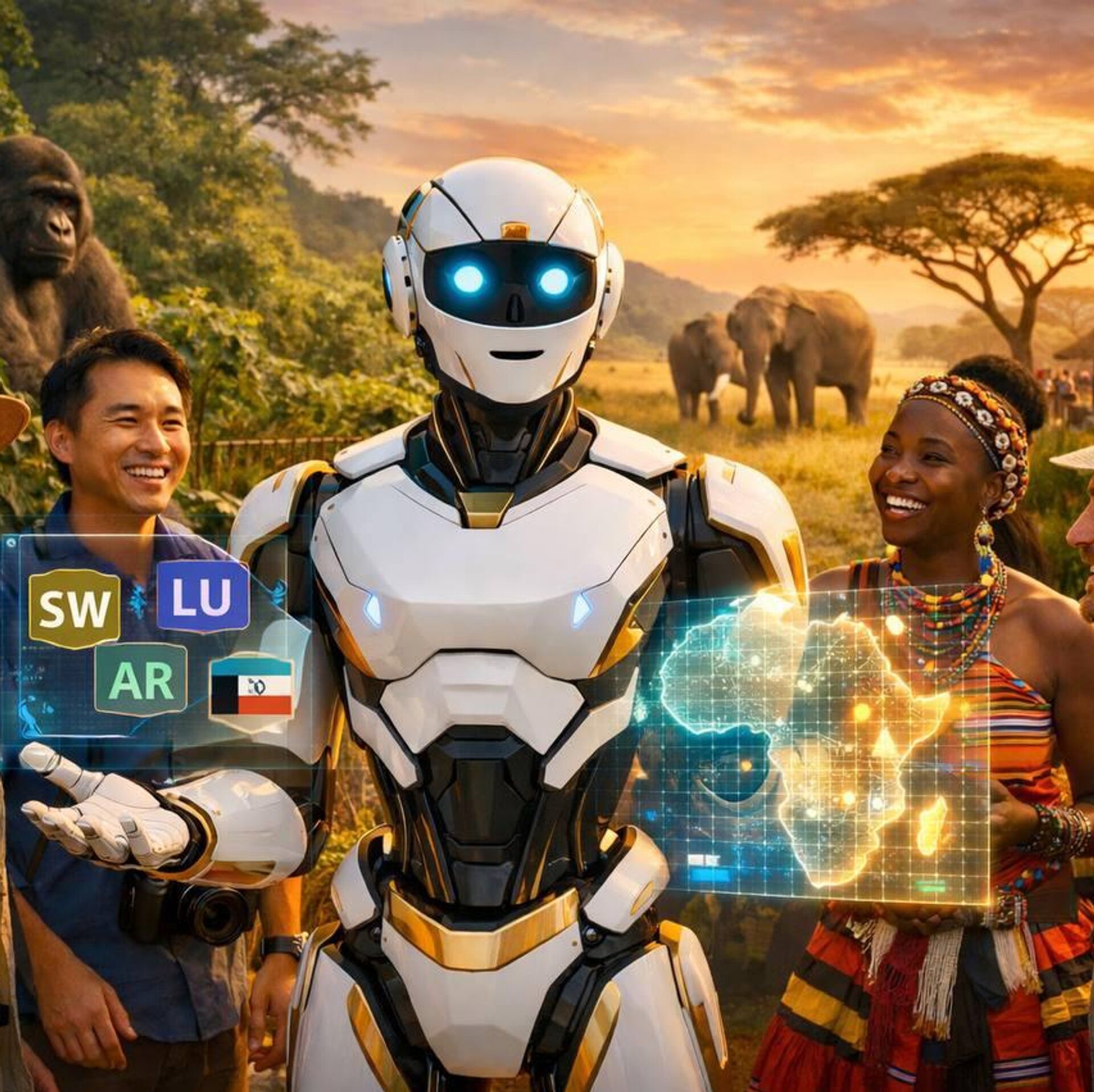
In Uganda, this shift is taking form through an AI-powered robot tour guide, known as Okello, also called the “Gold Pearl Guide,” designed to make tourism more accessible, immersive, and linguistically inclusive while preserving the depth of African storytelling.
Global South Pole spoke with Jonathan Ssemakula, a robotics and automation engineer and Founder and Technical Lead at Zunobotics Foundation, who is leading the development of the AI-driven tour guide.
Ssemakula explained that the innovation was driven by gaps in tourism, including limited access to trained guides and language barriers that often prevent visitors from fully understanding cultural sites. He notes that the system, embodied in Okello, is designed to complement human guides by delivering consistent, multilingual information, while relying on narratives sourced from local historians, elders, and cultural experts to ensure authenticity and accuracy.
"We are not looking at replicating human storytelling, but we are looking at creating a complementary experience that preserves and amplifies the human narratives. So, our key approach is, first of all AI cannot generate authentic cultural stories, that would be fabrication. However, we're using pearl-guide as a vessel for human stories. So, from our cultural artefacts, in this case, you have Miss Tourism, we have the elders, we have the historians, so they contribute to the narratives, and we just will just be using pearl-guide to deliver them consistently, because we know that you as humans, we can't provide 24/7 consistent information. So, in these cases […] We are building emotional mapping into our system, whereby our robot will be able to recognize emotions, it will know when to pause, it will how to modulate the voice tone for different contexts,” Ssemakula explained.
To listen to the whole discussion, tune in to the Global South Pole podcast, brought to you by Sputnik Africa.
In addition to the website, you can also catch our episodes on
Telegram.► Check out all the episodes of Global South Pole