Why US, Israel, and Argentina Opposed Ghana’s UN Resolution, Sudanese Scholar Explains
17:53 31.03.2026 (Updated: 20:27 31.03.2026)
© Sputnik
Subscribe
Why US, Israel, and Argentina Opposed Ghana’s UN Resolution, Sudanese Scholar Explains
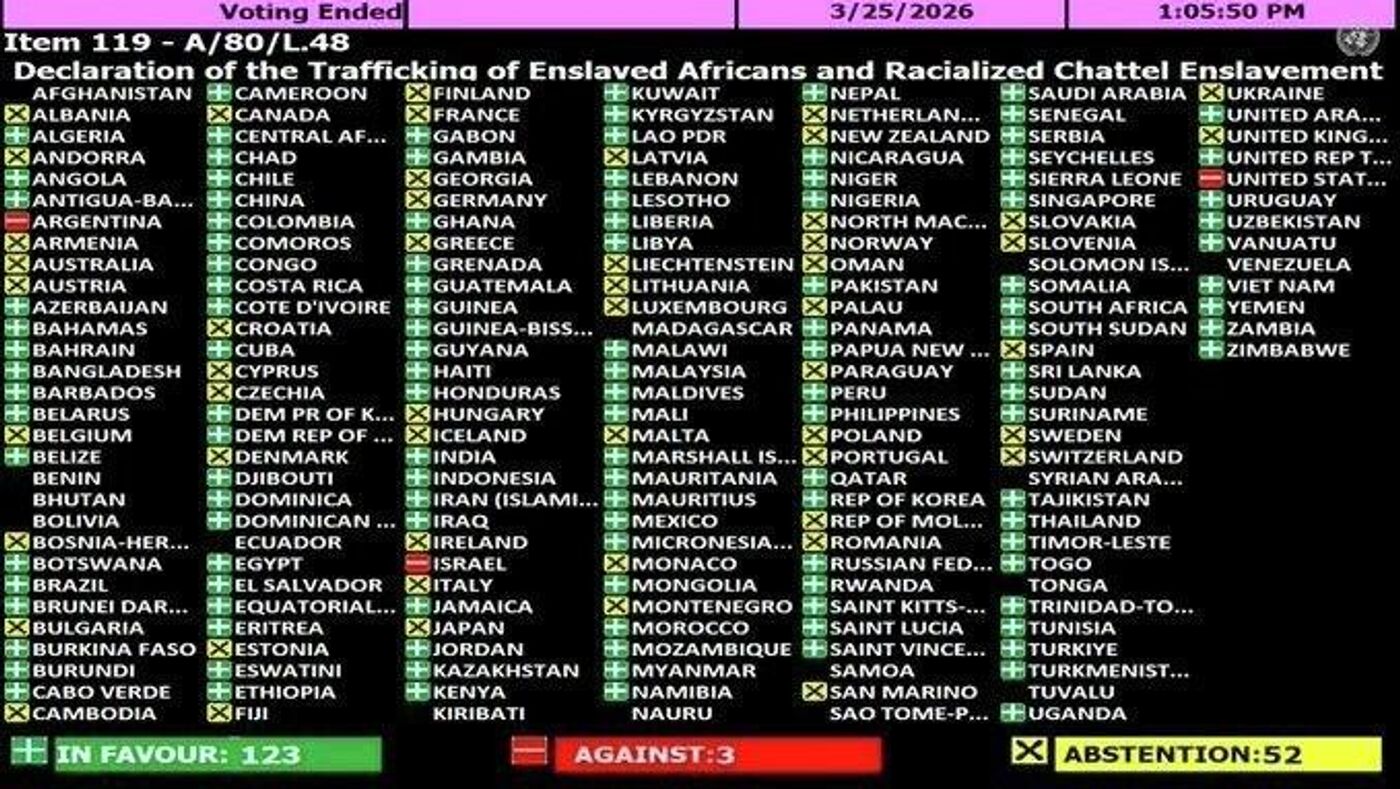
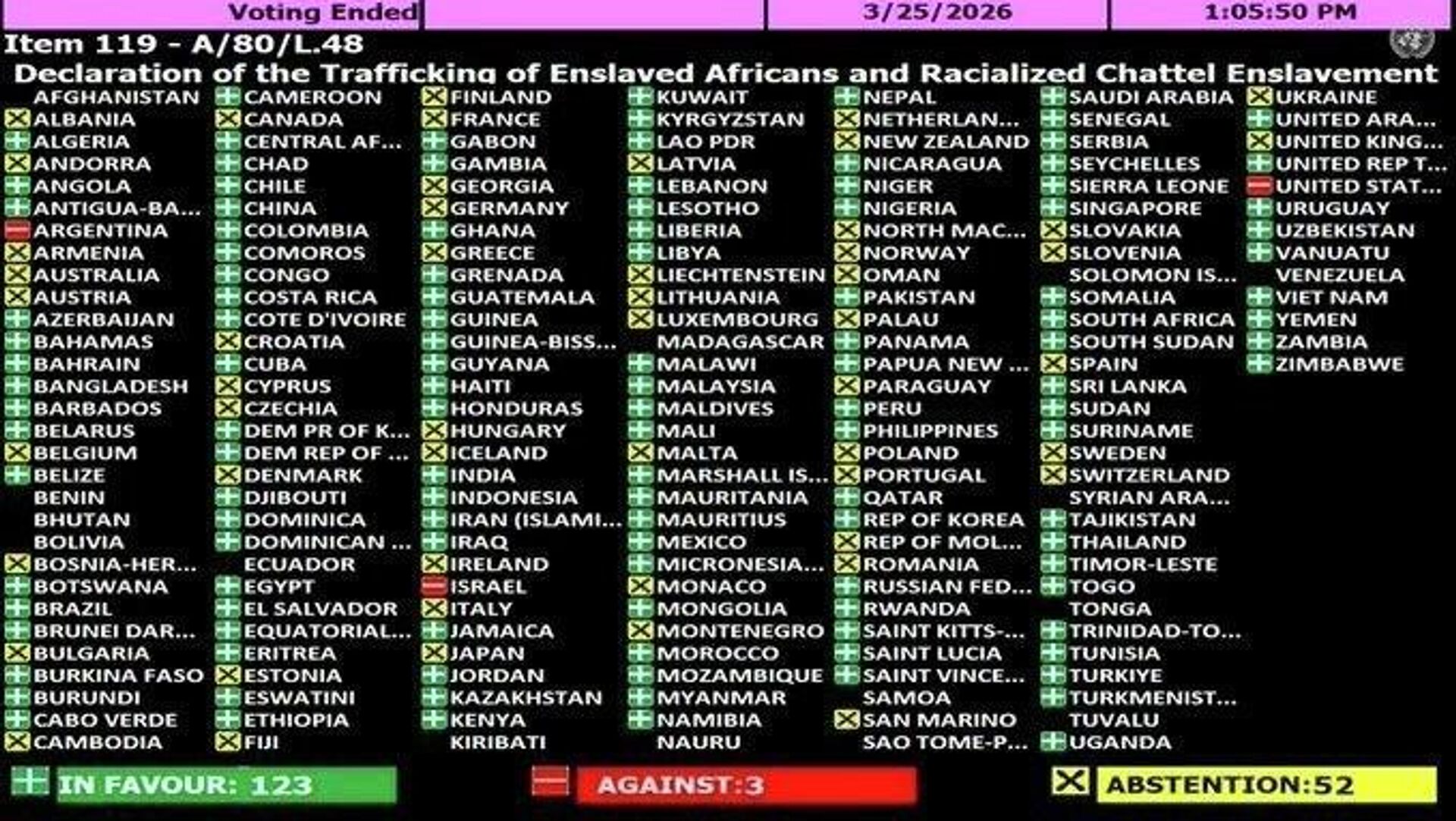
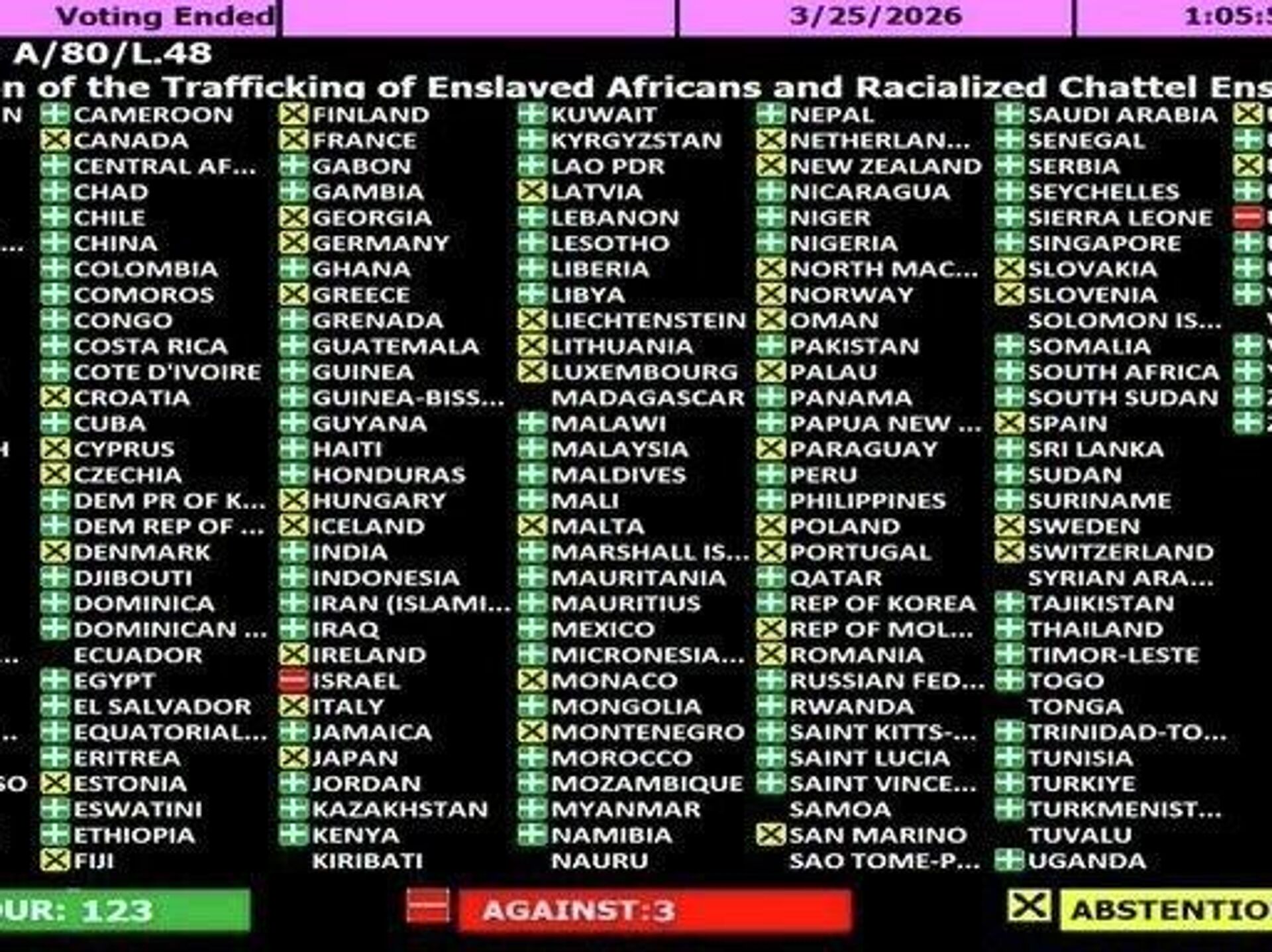
While 123 nations backed the resolution, opposition and abstentions revealed "realpolitik and strategic calculations" of some countries, Abobakr Mohamed Abbakar Khussein, assistant professor of communication, told Sputnik Africa.
Why US voted against:
🟠US approval of the resolution could lead to massive domestic and international lawsuits against governments, corporations, banks, insurers, and universities that profited from slavery;
🟠UN norm could justify claims for other historical atrocities—such as Native American displacement—and would counter the current US administration's pushback against reparations.
Why Israel voted against:
🟠Alignment with the US allows it to preserve "diplomatic cover" in the UN and political capital in Washington;
🟠The resolution could generate "analogous claims" related to the Nakba and Palestinian displacement, and delegitimize Israel's "own historical trauma claims."
Why Argentina voted against:
🟠The vote served as a "low-cost" political stance to prove ideological alignment with US and Israel and reject the "globalist UN agenda;"
🟠It also served as a domestic distraction, with "Argentina facing severe economic crisis."
"The real reasons are about money, precedent, domestic policies, and diplomatic alignment," the scholar added.
Watch the video to find out why UK, EU states & Japan abstained.
Subscribe to @sputnik_africa
Sputnik Africa | X
While 123 nations backed the resolution, opposition and abstentions revealed "realpolitik and strategic calculations" of some countries, Abobakr Mohamed Abbakar Khussein, assistant professor of communication, told Sputnik Africa.
Why US voted against:
🟠US approval of the resolution could lead to massive domestic and international lawsuits against governments, corporations, banks, insurers, and universities that profited from slavery;
🟠UN norm could justify claims for other historical atrocities—such as Native American displacement—and would counter the current US administration's pushback against reparations.
Why Israel voted against:
🟠Alignment with the US allows it to preserve "diplomatic cover" in the UN and political capital in Washington;
🟠The resolution could generate "analogous claims" related to the Nakba and Palestinian displacement, and delegitimize Israel's "own historical trauma claims."
Why Argentina voted against:
🟠The vote served as a "low-cost" political stance to prove ideological alignment with US and Israel and reject the "globalist UN agenda;"
🟠It also served as a domestic distraction, with "Argentina facing severe economic crisis."
"The real reasons are about money, precedent, domestic policies, and diplomatic alignment," the scholar added.
Watch the video to find out why UK, EU states & Japan abstained.
Subscribe to @sputnik_africa
Sputnik Africa | X