https://en.sputniknews.africa/20260325/ussr-and-africas-fight-for-freedom--a-history-still-shaping-todays-alliances-1084587142.html
USSR and Africa’s Fight for Freedom — History Still Shaping Today’s Alliances
USSR and Africa’s Fight for Freedom — History Still Shaping Today’s Alliances
Sputnik Africa
From the classrooms of Moscow to the frontlines of liberation struggles, the Soviet Union’s engagement with Africa left a lasting imprint on the continent’s... 25.03.2026, Sputnik Africa
2026-03-25T11:53+0100
2026-03-25T11:53+0100
2026-03-25T12:04+0100
global south pole
russia-africa cooperation
soviet union (ussr)
moscow
africa
podcasts
politics
west
colonialism
british colonialism
https://cdn1.img.sputniknews.africa/img/07ea/03/19/1084605140_0:80:1536:944_1920x0_80_0_0_7d2ad3d8dff0ea0aa86df0fe874997b7.jpg
USSR and Africa’s Fight for Freedom — A History Still Shaping Today’s Alliances
Sputnik Africa
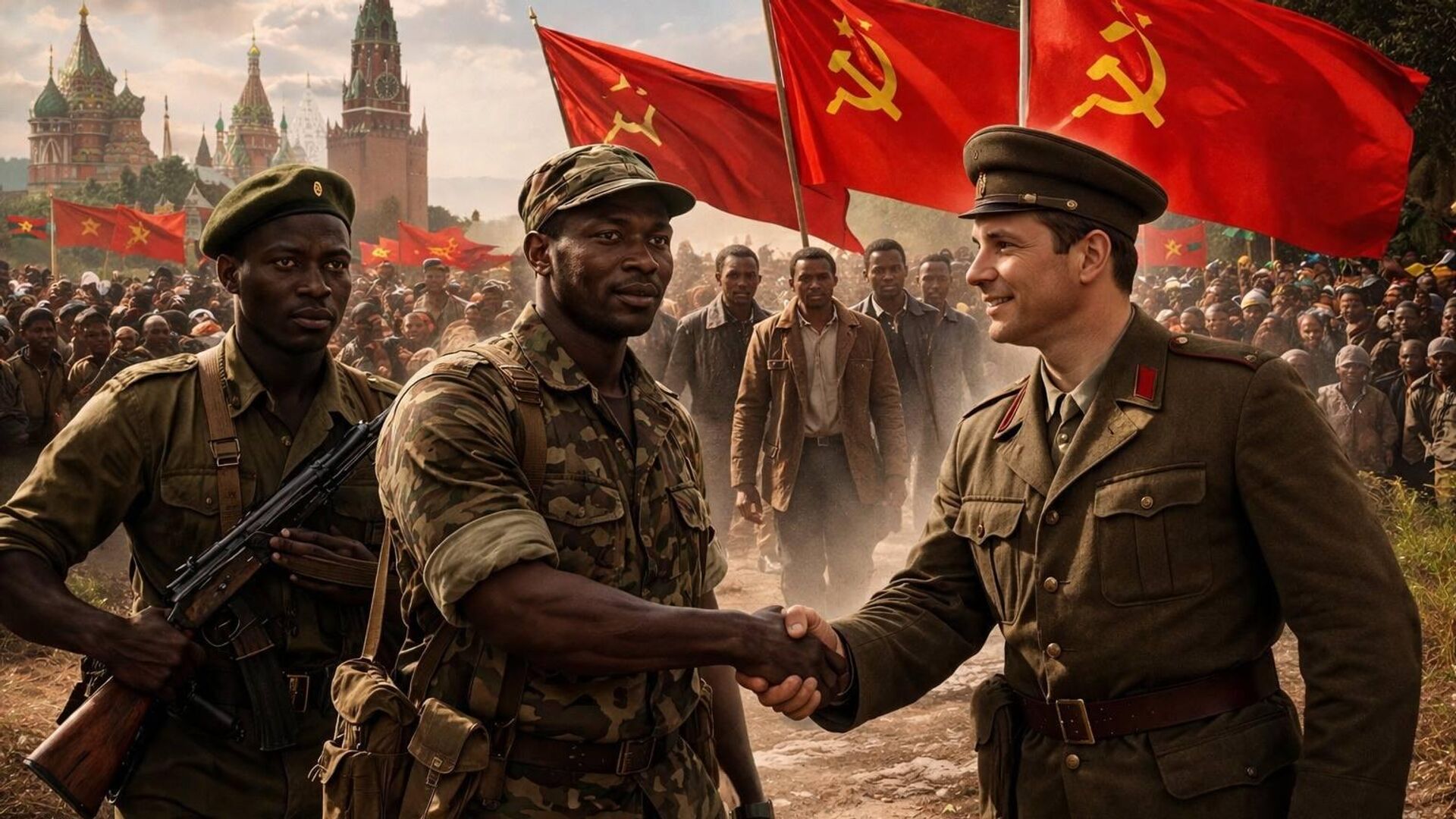
From the classrooms of Moscow to the frontlines of liberation struggles, the Soviet Union's engagement with Africa left a lasting imprint on the continent's political awakening. Decades later, that legacy continues to influence how African nations understand partnership, sovereignty, and their place within an evolving global order.
During the height of decolonization, African liberation movements operated within a complex international landscape where external support is often determined both survival and success. The USSR emerged as a key partner, offering not only military assistance but also education, diplomatic backing, and institutional support. Today, those historical connections continue to shape Africa's engagement with Russia, reflecting a relationship rooted in shared experiences and long-term strategic interaction.
During the height of decolonization, African liberation movements operated within a complex international landscape where external support often determined both survival and success. The USSR emerged as a key partner, offering not only military assistance but also education, diplomatic backing, and institutional support. Today, those historical connections continue to shape Africa’s engagement with Russia, reflecting a relationship rooted in shared experiences and long-term strategic interaction.Global South Pole engaged two distinguished voices on this subject: Dr. David Matsanga, a Ugandan political analyst and international law expert, and Professor Vladimir Shubin, a historian and former secretary of the Soviet Afro-Asian Solidarity Committee, who also served in the International Department of the Communist Party of the Soviet Union.Beyond Weapons — The Deeper Architecture of SupportThe Russian historian explained that Soviet involvement in Africa’s liberation movements was broad and multifaceted, extending far beyond military aid. He noted that support included training, humanitarian assistance, and significant investment in education, which helped build future leadership across the continent. For him, the relationship was grounded in solidarity and mutual need, combining moral support with strategic considerations.A Legacy That Still BreathesBuilding on this perspective, the African political analyst emphasized how these efforts were experienced on the ground and how they continue to shape African memory and institutions today.The Ugandan analyst highlights that the Soviet Union played a pivotal role not only in supporting armed struggles but also in educating African students who later became leaders and policymakers. He stressed that this educational foundation was critical in shaping post-independence governance and continues to influence Africa’s political and social structures, as well as its approach to global partnerships.To listen to the whole discussion, tune in to the Global South Pole podcast, brought to you by Sputnik Africa.In addition to the website, you can also catch our episodes on Telegram.► You can also listen to our podcast on Apple Podcasts, Spotify, Deezer, Castbox, Pocket Casts, Afripods, Podcast Addict, Overcast, and Mave Stream.► Check out all the episodes of Global South Pole
soviet union (ussr)
moscow
africa
west
united states (us)
russia
Sputnik Africa
feedback@sputniknews.com
+74956456601
MIA „Rossiya Segodnya“
2026
Aliyu Bello
https://cdn1.img.sputniknews.africa/img/07e9/0a/16/1079780916_214:0:1067:853_100x100_80_0_0_4bd8916543c40cbb732ddb736f79e903.jpg
Aliyu Bello
https://cdn1.img.sputniknews.africa/img/07e9/0a/16/1079780916_214:0:1067:853_100x100_80_0_0_4bd8916543c40cbb732ddb736f79e903.jpg
News
en_EN
Sputnik Africa
feedback@sputniknews.com
+74956456601
MIA „Rossiya Segodnya“
Sputnik Africa
feedback@sputniknews.com
+74956456601
MIA „Rossiya Segodnya“
Aliyu Bello
https://cdn1.img.sputniknews.africa/img/07e9/0a/16/1079780916_214:0:1067:853_100x100_80_0_0_4bd8916543c40cbb732ddb736f79e903.jpg
russia-africa cooperation, soviet union (ussr), moscow, africa, podcasts, politics, west, colonialism, british colonialism, neocolonialism, united states (us), exploitation, education, аудио, apartheid, anti-apartheid struggle, russia
russia-africa cooperation, soviet union (ussr), moscow, africa, podcasts, politics, west, colonialism, british colonialism, neocolonialism, united states (us), exploitation, education, аудио, apartheid, anti-apartheid struggle, russia
USSR and Africa’s Fight for Freedom — History Still Shaping Today’s Alliances
Aliyu Bello
Correspondent, Podcast Host
From the classrooms of Moscow to the frontlines of liberation struggles, the Soviet Union’s engagement with Africa left a lasting imprint on the continent’s political awakening. Decades later, that legacy continues to influence how African nations understand partnership, sovereignty, and their place within an evolving global order.
During the height of decolonization, African liberation movements operated within a complex international landscape where external support often determined both survival and success. The USSR emerged as a key partner, offering not only military assistance but also education, diplomatic backing, and institutional support. Today, those historical connections continue to shape Africa’s engagement with Russia, reflecting a relationship rooted in shared experiences and long-term strategic interaction.
Global South Pole engaged two distinguished voices on this subject: Dr. David Matsanga, a Ugandan political analyst and international law expert, and Professor Vladimir Shubin, a historian and former secretary of the Soviet Afro-Asian Solidarity Committee, who also served in the International Department of the Communist Party of the Soviet Union.
Beyond Weapons — The Deeper Architecture of Support
The Russian historian explained that Soviet involvement in Africa’s liberation movements was broad and multifaceted, extending far beyond military aid. He noted that support included training, humanitarian assistance, and significant investment in education, which helped build future leadership across the continent. For him, the relationship was grounded in solidarity and mutual need, combining moral support with strategic considerations.
"For us, it was the anti-imperialist struggle with the National Liberation Movement as part of this struggle. That gives a key to our concern about the liberation movements. The assistance was very strong, but I believe that we should not reduce it only to the military; it was very important training of cadres, supplies, but there were many humanitarian assistance. There was some practical assistance organizing the international conferences, and of course, a lot was spent in all senses, not just money, but efforts on education to bring people from Africa here or sometimes to send our people to be in the universities as teachers or lecturers in the universities [in] Africa. That's maybe more important, which is often neglected in the West; people speak a lot about the military assistance in those years, even now concerning Russia, but other things which will not forget about," Professor Shubin expressed.
A Legacy That Still Breathes
Building on this perspective, the African political analyst emphasized how these efforts were experienced on the ground and how they continue to shape African memory and institutions today.
The Ugandan analyst highlights that the Soviet Union played a pivotal role not only in supporting armed struggles but also in educating African students who later became leaders and policymakers. He stressed that this educational foundation was critical in shaping post-independence governance and continues to influence Africa’s political and social structures, as well as its approach to global partnerships.
"The role of the Soviet Union in modern Africa is clear [...] they laid a foundation. [...] The Soviet Union is the best; was simply the best of the military might. [...] they had ideological schools of teaching people how to share the little they have. You see, a country like Tanzania became one of the focal points of Ujamaa villages. "Ujamaa" means togetherness; "ubuntu" means to be and to share and to care for other people. [...] So in a nutshell, the Soviet Union also planted quite a lot of self-determination and self-agitation. [...] It gave us the morale to stand up and say, No, we are not going to accept this," Dr. Matsanga echoed.
To listen to the whole discussion, tune in to the Global South Pole podcast, brought to you by Sputnik Africa.
In addition to the website, you can also catch our episodes on
Telegram.► Check out all the episodes of Global South Pole