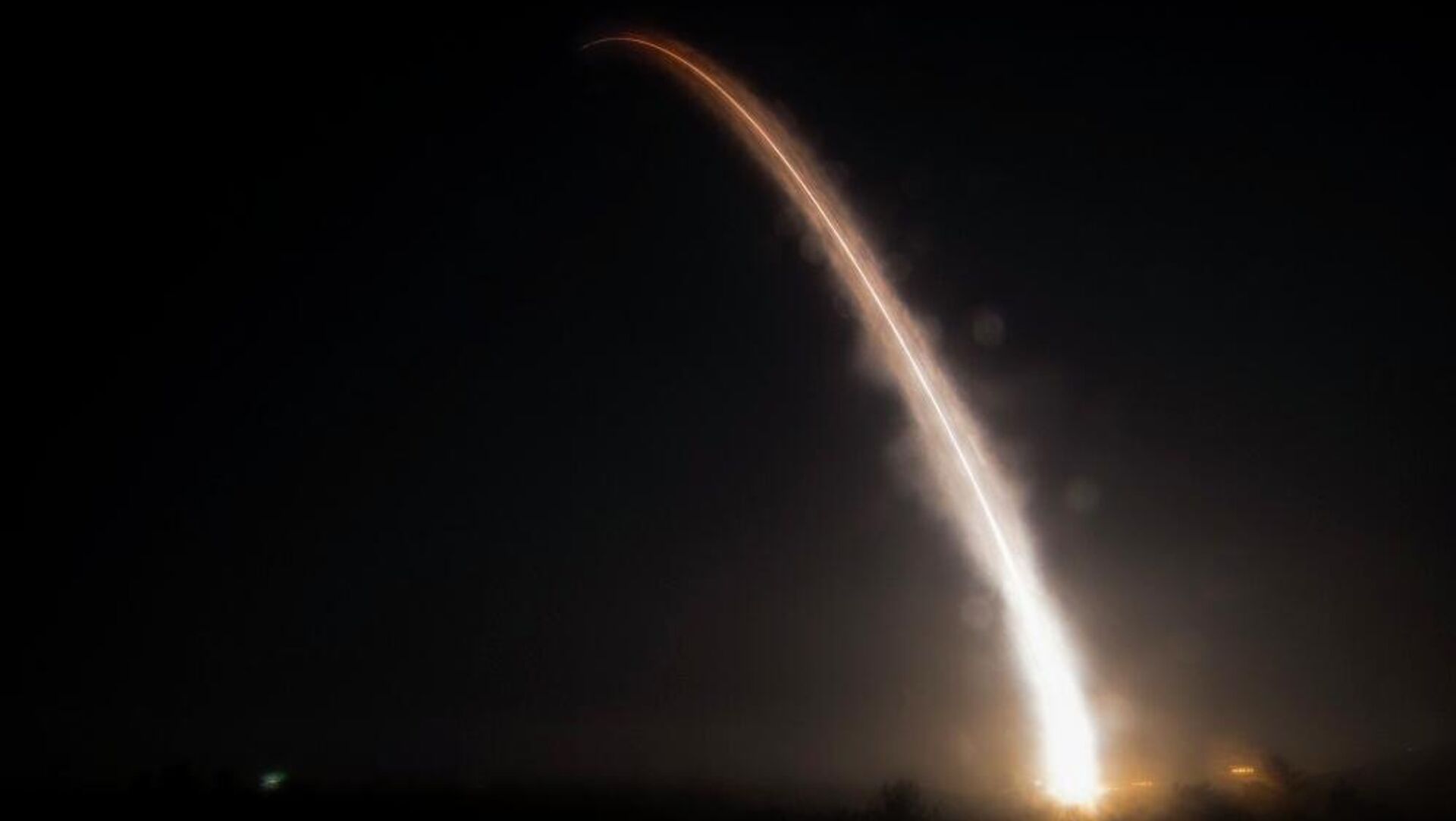
An unarmed Minuteman III intercontinental ballistic missile launches during an operational test on Wednesday, May 1, 2019, at Vandenberg Air Force Base, Calif - Sputnik Africa

How Moscow & Washington Worked on Nuclear Limits:

New START Treaty
What is New START treaty?
New START is a Russian–American agreement that regulates the size of both countries’ nuclear arsenals. Its full name is the Treaty on Measures for the Further Reduction and Limitation of Strategic Offensive Arms (also known as New START, from Strategic Arms Reduction Treaty).
What Weapons Does New START Place Limitations On?
The agreement set the following limits:
1

Nuclear warheads;

2

Their delivery systems (ballistic and cruise missiles, aerial bombs);

3

Launching means (mobile and fixed launch systems, heavy bombers) designed to strike critical targets at intercontinental distances (more than 5,500 km).

These include the following:

intercontinental ballistic missiles (American Minuteman II-III, Peacekeeper; Russian "Topol" family missile complexes, liquid-fueled intercontinental ballistic missiles, P-36M, PC-24 "Yars"), their launchers and warheads;

submarine-launched ballistic missiles and their delivery vehicles (American Trident-II and Russian R-29R, P-39, P-39RM and P-30);

heavy bombers capable of carrying nuclear weapons (Russian Tu-95MS and Tu-160, American B-52G, B-52N, B-1V and B-2A).

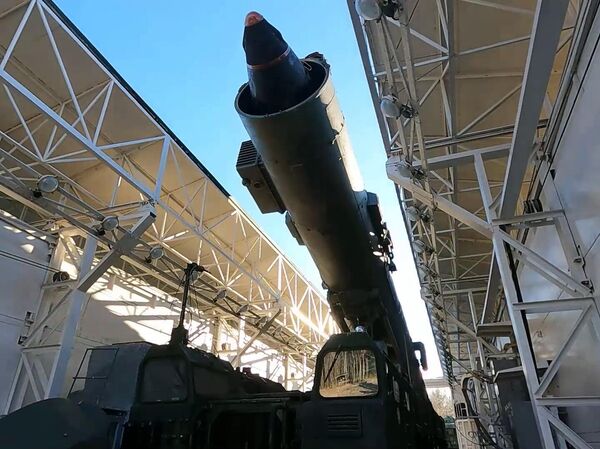
The launch of a Yars intercontinental ballistic missile during a strategic nuclear forces exercise involving their ground, naval, and air components at the Plesetsk State Test Cosmodrome, Russia. - Sputnik Africa
The launch of a Yars intercontinental ballistic missile during a strategic nuclear forces exercise involving their ground, naval, and air components at the Plesetsk State Test Cosmodrome, Russia.
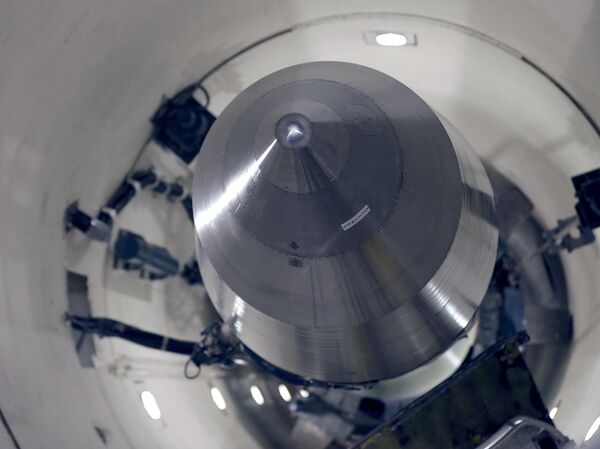
In this file photo taken June 25, 2014, an inert Minuteman 3 missile is seen in a training launch tube at Minot Air Force Base, N.D.  - Sputnik Africa
In this file photo taken June 25, 2014, an inert Minuteman 3 missile is seen in a training launch tube at Minot Air Force Base, N.D.
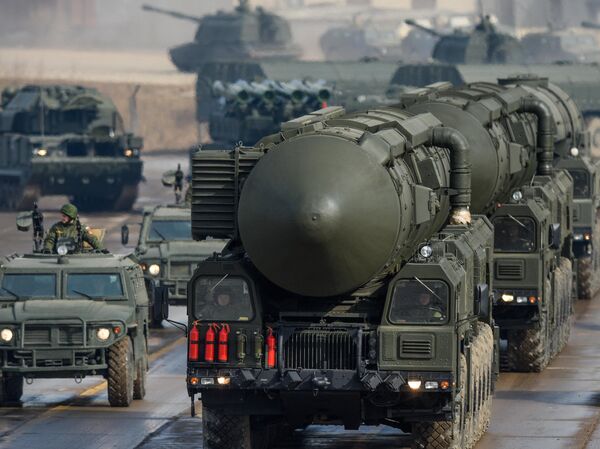
Topol-M ground-launched missile launcher during a rehearsal for the Victory Day parade. - Sputnik Africa
Topol-M ground-launched missile launcher during a rehearsal for the Victory Day parade.
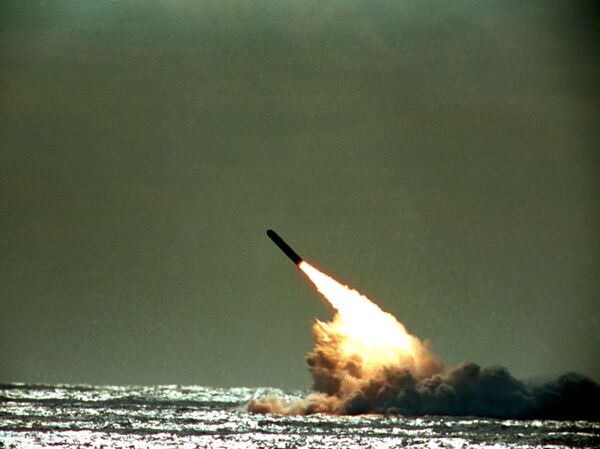
The archive photo shows the launch of a Trident II, D-5 missile from the USS Tennessee submarine submerged in the Atlantic Ocean off the coast of Florida. - Sputnik Africa
The archive photo shows the launch of a Trident II, D-5 missile from the USS Tennessee submarine submerged in the Atlantic Ocean off the coast of Florida.
1.
The launch of a Yars intercontinental ballistic missile during a strategic nuclear forces exercise involving their ground, naval, and air components at the Plesetsk State Test Cosmodrome, Russia.
2.
In this file photo taken June 25, 2014, an inert Minuteman 3 missile is seen in a training launch tube at Minot Air Force Base, N.D.
3.
Topol-M ground-launched missile launcher during a rehearsal for the Victory Day parade.
4.
The archive photo shows the launch of a Trident II, D-5 missile from the USS Tennessee submarine submerged in the Atlantic Ocean off the coast of Florida.

The treaty established clear boundaries:

1

No more than 700 strategic delivery systems deployed;

2

No more than 1,550 nuclear warheads deployed;

3

No more than 800 launchers and bombers (deployed and non-deployed).
The treaty permitted each party to determine the composition of its own nuclear triad. It did not, however, cover tactical nuclear weapons, missile defense systems, or non-nuclear strategic weapons (such as hypersonic missiles).
Compliance was monitored through a Bilateral Consultative Commission and an inspection regime.
Brief History of the Treaty
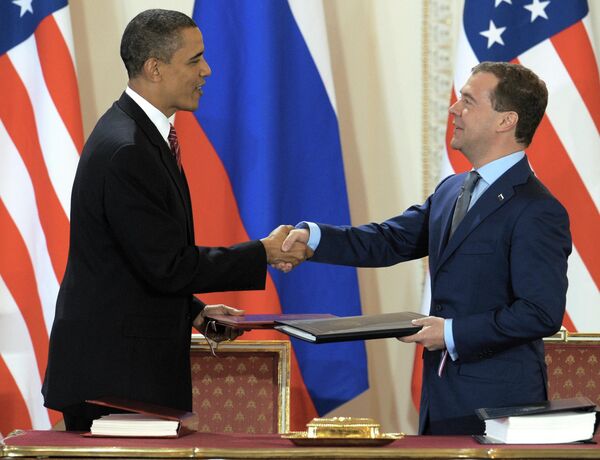
Then-US President Barack Obama and then-Russian President Dmitry Medvedev after signing the New START Treaty at Prague Castle on April 8, 2010. - Sputnik Africa
Then-US President Barack Obama and then-Russian President Dmitry Medvedev after signing the New START Treaty at Prague Castle on April 8, 2010.

2010

Signed by Russian President Dmitry Medvedev and American President Barack Obama on April 8 in Prague, it replaced the previous agreements (START I and SORT) and became a cornerstone of strategic stability.

2018

The obligations of the parties have been fulfilled.

2021

Concluded for 10 years, it was extended once for 5 years.

2023

In February, Russia announced the suspension of its participation, citing American violations.

2025

In September, Vladimir Putin declared Russia's willingness to continue to respect the limits of the treaty for one year after February 5, 2026.

2026

The treaty will definitively expire on February 5th.

Compliance and Alleged US Violations
By 2018, Russia reported that it had met the treaty's requirements by reducing its arsenal below the stipulated levels. According to Russian figures, its total START accountability stood at:
  • 527 deployed intercontinental ballistic missiles, submarine-launched ballistic missiles, and heavy bombers;
  • 1,444 warheads, including nuclear warheads;
  • 779 launchers (deployed and non-deployed) for intercontinental ballistic missiles, submarine-launched ballistic missiles, and heavy bombers (deployed and non-deployed).
The US also declared it had reached the stipulated levels, but Russia’s Foreign Ministry said this was achieved by what it called the illegitimate exclusion of certain systems classified as “converted,” specifically 56 Trident II SLBM launchers and 41 B-52H heavy bombers, which Russia said resulted in an excess of 101 delivery vehicles.
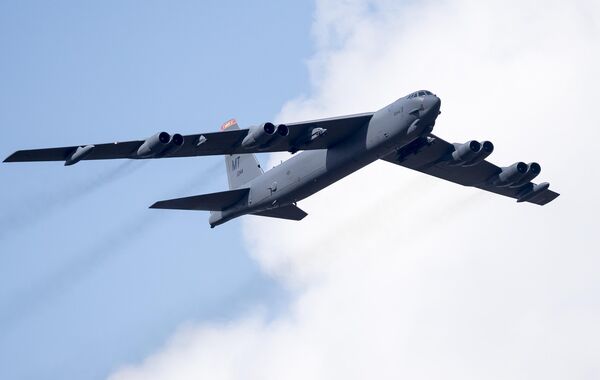
A US Air Force B-52 bomber flies over Training Range in Pabrade during a military exercise 'Iron Wolf 2016' some 60km.(38 miles) north of the capital Vilnius, Lithuania, Thursday, June 16, 2016. (AP Photo/Mindaugas Kulbis) - Sputnik Africa
A US Air Force B-52 bomber flies over Training Range in Pabrade during a military exercise 'Iron Wolf 2016'

The data announced by the American side on September 1, 2022 (659 launchers deployed, 1,420 warheads allocated to them under the START treaty and 800 launchers of intercontinental ballistic missiles, sea-launched ballistic missiles and heavy bombers, deployed or not) were also deemed not to be in line with reality.
China’s Position on New START
China has declined to join the treaty, citing the much smaller size of its nuclear arsenal. Beijing has said it would only consider participating after Russia and the US reduce their arsenals to China’s level—roughly 20 times smaller.
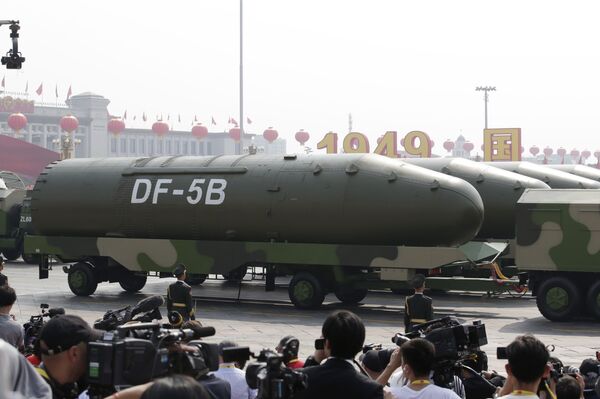
Military vehicles carrying DF-5B intercontinental ballistic missiles travel past Tiananmen Square during the military parade marking the 70th founding anniversary of People's Republic of China, on its National Day in Beijing, China October 1, 2019 - Sputnik Africa
Military vehicles carrying DF-5B intercontinental ballistic missiles travel past Tiananmen Square during the military parade marking the 70th founding anniversary of People's Republic of China, on its National Day in Beijing, China October 1, 2019. REUTERS/Jason Lee
Extension and the Crisis

After a period of uncertainty under the Trump administration, the treaty was extended without modification until February 5, 2026, by the Biden administration in February 2021. However, dialogue broke down after the start of Russia's special military operation in Ukraine. Inspection activities, previously suspended due to the pandemic, have not resumed, primarily due to obstacles related to sanctions: closed airspace and the United States' refusal to issue visas to Russian inspectors.

Russia’s Suspension of Participation and the Reasons

January 31, 2023

The United States has accused Russia of violating the treaty by refusing to allow inspections at its sites and by postponing consultations.

February 21, 2023

Vladimir Putin announced the suspension of Russia's participation in the treaty (without formally withdrawing). He emphasized that the United States was considering the possibility of real-world tests of its nuclear weapons, particularly in the context of Washington's development of new types of nuclear warheads.

President Putin Announces Russia’s Withdrawal from the New START Treaty
Reasons cited for the suspension:
1

Western arms deliveries, including American ones, to Ukraine, as well as Western assistance in striking Russian strategic aviation bases.

2

The United States and NATO openly declare their objective of inflicting a strategic defeat on Russia.

3

According to Vladimir Putin, any discussion on New START must take into account the arsenals of France and the United Kingdom, i.e. the combined strike potential of NATO.

4

The obstacles created by the United States to the conduct of the inspections provided for by the treaty.

US Actions After Russia’s Suspension
1

As of June 2023, the United States has ceased exchanging data on its nuclear weapons with Russia.

2

In June 2023, Washington proposed a compartmentalized dialogue to Moscow, separate from other international issues on which Moscow and Washington disagree. Russia rejected this format. In September of the same year, the United States declared its willingness to discuss START "without preconditions."

3

In January 2025, President Trump spoke in favor of reducing the nuclear arsenals of Russia, the United States and China, mentioning discussions with Beijing which he said could join the negotiations.

4

In July 2025, Trump announced work on limiting Russian and American nuclear capabilities. A month later, in August, Putin also raised the possibility of resuming negotiations with the United States on New START.


Current Status and Outlook
In September 2025, President Putin said Russia was ready to continue adhering to the treaty’s limits for one year after its expiration on February 5, 2026, provided the US does the same.
September 22, 2025, Putin Says Russia Ready to Uphold START Treaty Limits for One More Year
The initiative was welcomed by the United States, but as of early February 2026, no official response had been received from Washington.
Kremlin spokesman Dmitry Peskov said the time for a decision was running out and that “in a few days, the world may find itself in a more dangerous situation than before.”
Deputy Foreign Minister Sergey Ryabkov on the Causes of the New START Crisis
Go back to the beginningGo back to the main page
Newsfeed
0