https://en.sputniknews.africa/20260123/africas-cotton-dream-how-zimbabwe-is-stitching-jobs-back-into-the-continents-fabric-1082693412.html
Africa’s Cotton Dream: How Zimbabwe Is Stitching Jobs Back into the Continent’s Fabric
Africa’s Cotton Dream: How Zimbabwe Is Stitching Jobs Back into the Continent’s Fabric
Sputnik Africa
Across Africa, the future of industrial development is increasingly tied to how well countries turn what they grow into what they make. From farms to... 23.01.2026, Sputnik Africa
2026-01-23T11:05+0100
2026-01-23T11:05+0100
2026-01-23T11:05+0100
global south pole
podcasts
zimbabwe
africa
economy
industrialization
industry
cooperation
cotton tree
research
https://cdn1.img.sputniknews.africa/img/07ea/01/17/1082740282_0:67:1280:787_1920x0_80_0_0_77e509ebdf2d9f02f6de4291e62ad8ea.jpg
Africa's Cotton Dream: How Zimbabwe Is Stitching Jobs Back into the Continent's Fabric
Sputnik Africa
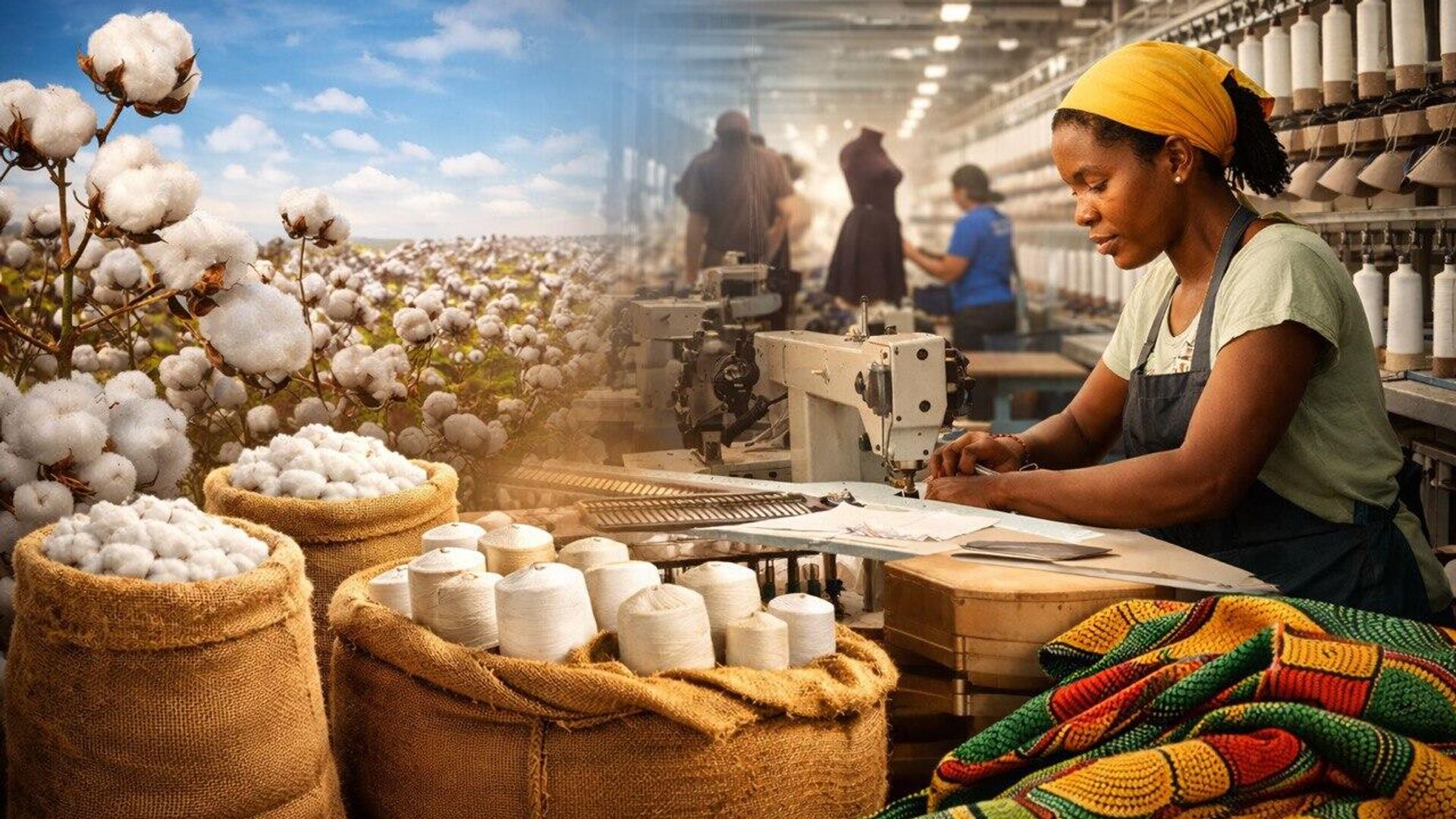
Across Africa, the future of industrial development is increasingly tied to how well countries turn what they grow into what they make. From farms to factories, value-addition is becoming central to job creation, economic resilience, and regional trade. Nowhere is this more visible than in efforts to rebuild textile and garment industries across the continent. In Zimbabwe, this continental push is taking shape through the government's Cotton to Clothing Strategy, which aims to reconnect agriculture with manufacturing and revive a sector that once employed tens of thousands.
Nowhere is this more visible than in efforts to rebuild textile and garment industries across the continent. In Zimbabwe, this continental push is taking shape through the government’s Cotton to Clothing Strategy, which aims to reconnect agriculture with manufacturing and revive a sector that once employed tens of thousands. Energy Deshe, Vice-Chairperson of the Zimbabwe Clothing Manufacturers Association (ZCMA) and Chairperson of the National Employment Council for the Clothing Industry, says the strategy is about more than policy. It is about restoring linkages, competitiveness, and confidence across the entire value chain.Deshe explained that what makes the current approach different is its emphasis on value addition and coordination. Instead of operating in silos, farmers, ginners, spinners, and garment manufacturers are being brought into one strategic framework. He stressed that the clothing segment plays a critical role because it is labor-intensive and has the strongest multiplier effect, driving demand for textiles and cotton while creating employment and supporting livelihoods across the economy.To listen to the whole conversation, tune in to the Global South Pole podcast, brought to you by Sputnik Africa.In addition to the website, you can also catch our episodes on Telegram.► You can also listen to our podcast on Apple Podcasts, Spotify, Deezer, Castbox, Pocket Casts, Afripods, Podcast Addict, Overcast, and Mave Stream.► Check out all the episodes of Global South Pole
zimbabwe
africa
Sputnik Africa
feedback@sputniknews.com
+74956456601
MIA „Rossiya Segodnya“
2026
Aliyu Bello
https://cdn1.img.sputniknews.africa/img/07e9/0a/16/1079780916_214:0:1067:853_100x100_80_0_0_4bd8916543c40cbb732ddb736f79e903.jpg
Aliyu Bello
https://cdn1.img.sputniknews.africa/img/07e9/0a/16/1079780916_214:0:1067:853_100x100_80_0_0_4bd8916543c40cbb732ddb736f79e903.jpg
News
en_EN
Sputnik Africa
feedback@sputniknews.com
+74956456601
MIA „Rossiya Segodnya“
Sputnik Africa
feedback@sputniknews.com
+74956456601
MIA „Rossiya Segodnya“
Aliyu Bello
https://cdn1.img.sputniknews.africa/img/07e9/0a/16/1079780916_214:0:1067:853_100x100_80_0_0_4bd8916543c40cbb732ddb736f79e903.jpg
podcasts, zimbabwe, africa, economy, industrialization, industry, cooperation, cotton tree, research, resources, аудио
podcasts, zimbabwe, africa, economy, industrialization, industry, cooperation, cotton tree, research, resources, аудио
Africa’s Cotton Dream: How Zimbabwe Is Stitching Jobs Back into the Continent’s Fabric
Aliyu Bello
Correspondent, Podcast Host
Across Africa, the future of industrial development is increasingly tied to how well countries turn what they grow into what they make. From farms to factories, value-addition is becoming central to job creation, economic resilience, and regional trade.
Nowhere is this more visible than in efforts to rebuild textile and garment industries across the continent. In Zimbabwe, this continental push is taking shape through the government’s Cotton to Clothing Strategy, which aims to reconnect agriculture with manufacturing and revive a sector that once employed tens of thousands. Energy Deshe, Vice-Chairperson of the Zimbabwe Clothing Manufacturers Association (ZCMA) and Chairperson of the National Employment Council for the Clothing Industry, says the strategy is about more than policy. It is about restoring linkages, competitiveness, and confidence across the entire value chain.
Deshe explained that what makes the current approach different is its emphasis on value addition and coordination. Instead of operating in silos, farmers, ginners, spinners, and garment manufacturers are being brought into one strategic framework. He stressed that the clothing segment plays a critical role because it is labor-intensive and has the strongest multiplier effect, driving demand for textiles and cotton while creating employment and supporting livelihoods across the economy.
“I would describe the clothing sector as a low-hanging fruit. In that one, it is essentially a sector which is not capital intensive, maybe in terms of ease of entry. And you will also see that the clothing sector provides a key linkage between the farmers and the textile industry. For instance, we are probably at the end of the value chain. We are the ones who actually demand what will come from the textiles, and the textiles will have demanded what will come from the farmers. If the clothing sector does well. What it means is that it will have a ripple effect on the other value chain nodes,” Deshe said.
To listen to the whole conversation, tune in to the Global South Pole podcast, brought to you by Sputnik Africa.
In addition to the website, you can also catch our episodes on
Telegram.► Check out all the episodes of Global South Pole