Reconciliation Day: National Healing Not One-Time Event but Ongoing Commitment, Says SA President
Reconciliation Day: National Healing Not One-Time Event but Ongoing Commitment, Says SA President
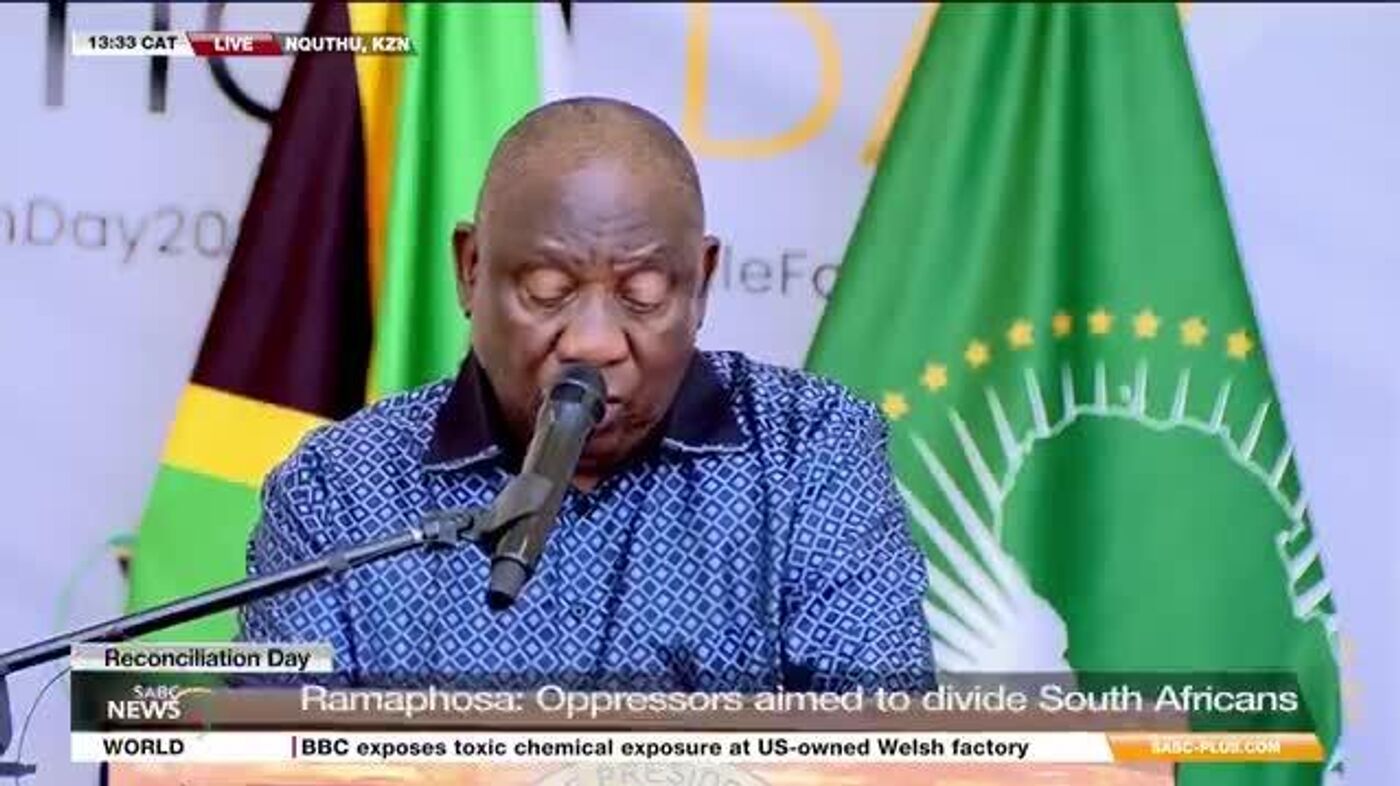
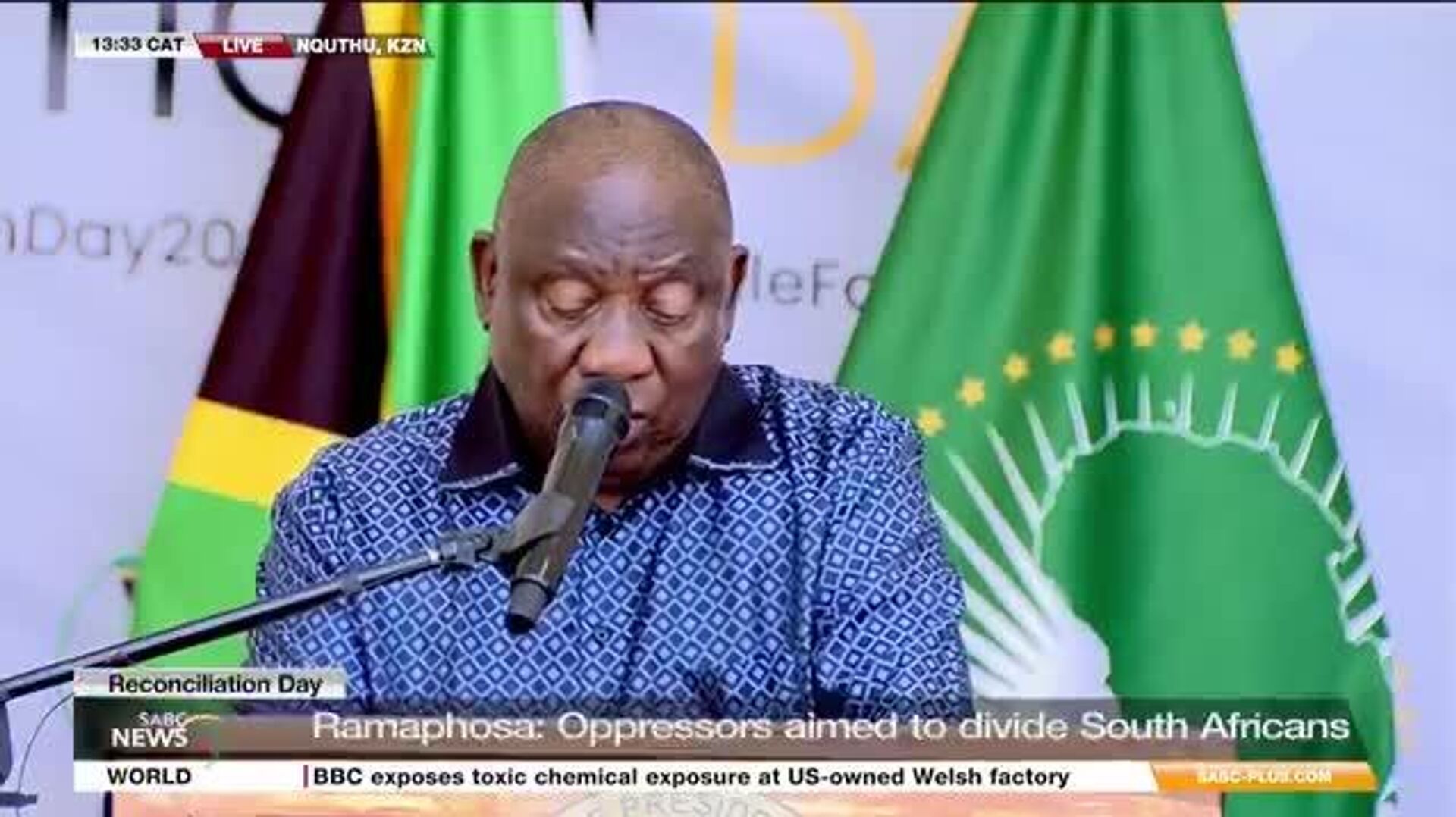
"We reconciled in 1994. We are still reconciling in 2025. We shall continue to reconcile our differences because we are one nation – we are all South African citizens," Cyril Ramaphosa said at the Ncome Museum – the site of the historic 1838 Battle of Ncome, where thousands of Zulu warriors fell defending their land.
The president highlighted how democracy was founded on reconciliation rather than retribution, invoking Nelson Mandela's words on freedom and mutual respect.
He stressed that true unity demands honest reckoning with past injustices, countering false narratives, and inclusive participation in the National Dialogue to build a shared future free from hatred and exclusion.
Other highlights from Ramaphosa's speech:
🟠Countering Misinformation: The president criticized those painting a false narrative of South Africa, highlighting positive surveys on improved race relations, interracial friendships, and successful land restitution.
🟠Gender-Based Violence: In a strong call to action, Ramaphosa urged men to harness the "warrior spirit" to protect women and children, condemning violence against them as an abomination that dishonors ancestors.
🟠Unity in Diversity: Citing local examples like Maskandi artist Imfezi Emnyama's song against infighting, he celebrated diverse cultures coexisting proudly within a unified South African identity.
🟠Festive Season Message: Ramaphosa encouraged family reconciliation during holidays, safe celebrations, and community efforts to combat crime and corruption for a better, inclusive nation.
Held annually on December 16, South Africa's Day of Reconciliation is a public holiday established in 1995 following the end of apartheid. Its purpose is to promote national unity and reconciliation.
Subscribe to @sputnik_africa