Ancient DNA Study Reveals Southern Africa’s Crucial Role in Human Evolution
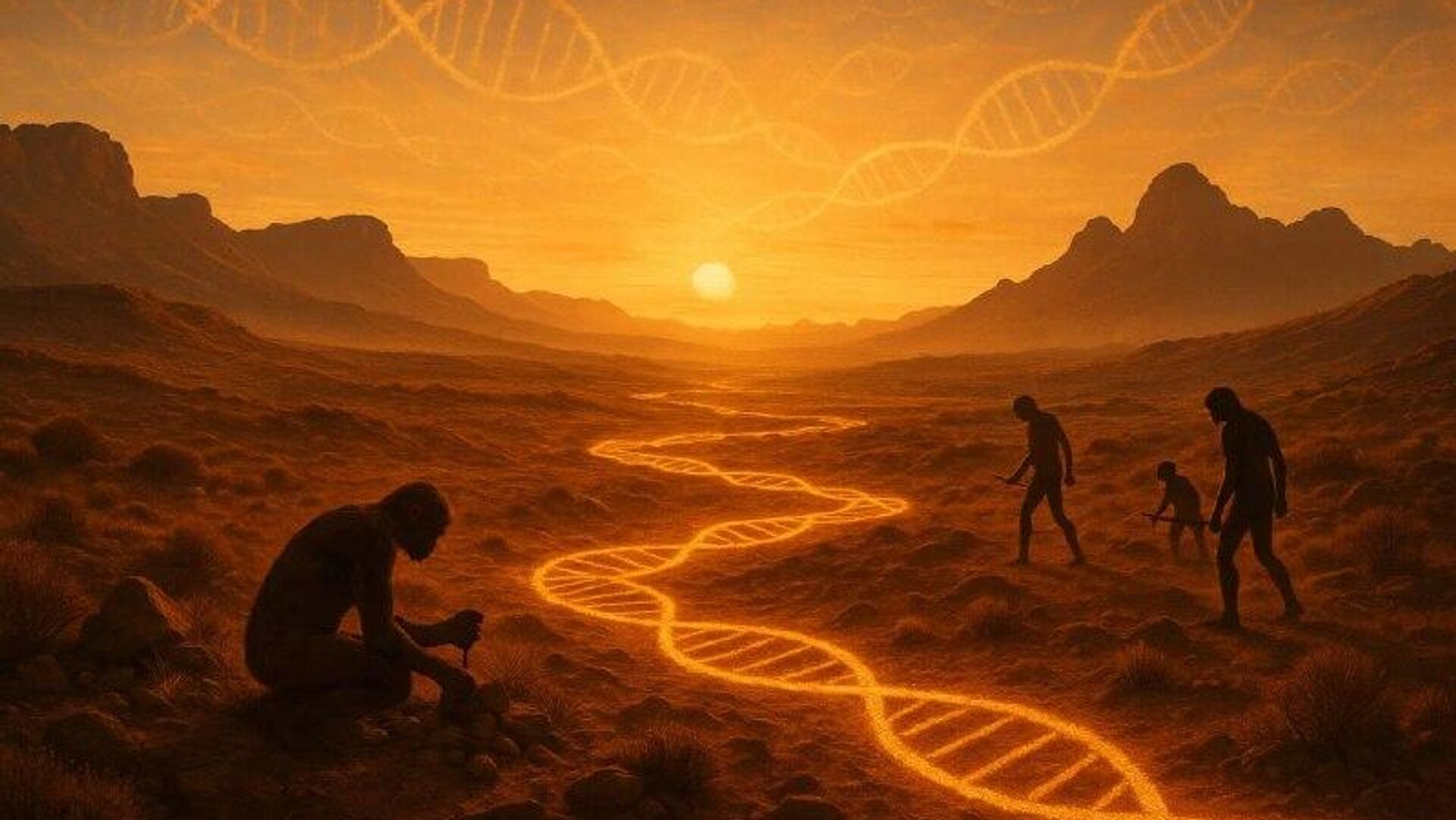
Ancient DNA Study Reveals Southern Africa’s Crucial Role in Human Evolution
A new Nature study, the largest of African ancient DNA, reveals a group in southern Africa lived in partial isolation for hundreds of thousands of years. Based on analyses of 28 genomes from individuals living between 10,200 and 150 years ago, researchers also identified genetic adaptations that likely shaped Homo sapiens.
Previously, many scientists believed Homo sapiens first emerged in East Africa around 300,000 years ago and later spread south. However, this new study, led by researchers from Uppsala University and the University of Johannesburg, suggests that Homo sapiens not only existed but evolved over an extended period in southern Africa.
The analysis revealed that Stone Age populations in the region experienced genetic isolation for at least 200,000 years. Significant gene flow from East and West Africa only appears in the data around 1,400 years ago.
Many of the analyzed remains came from the Matjes River Rock Shelter on South Africa’s southern coast.
The study found 79 unique genetic variants in all tested ancient and modern Homo sapiens, not seen in other hominins or primates, that affect gene function and represent a major part of human genetic diversity, much of it preserved only in southern African groups.
🟠Seven of these are tied to kidney function, possibly helping with efficient sweating and fluid balance—key for endurance and heat regulation.
🟠Others influence immunity and brain development, with over 40% linked to neurons, attention, and complex thinking.
AI-generated image
Subscribe to @sputnik_africa