12th Congress 'Innovative Practice: Science Plus Business' Takes Place in Moscow
© Innopraktika
Subscribe
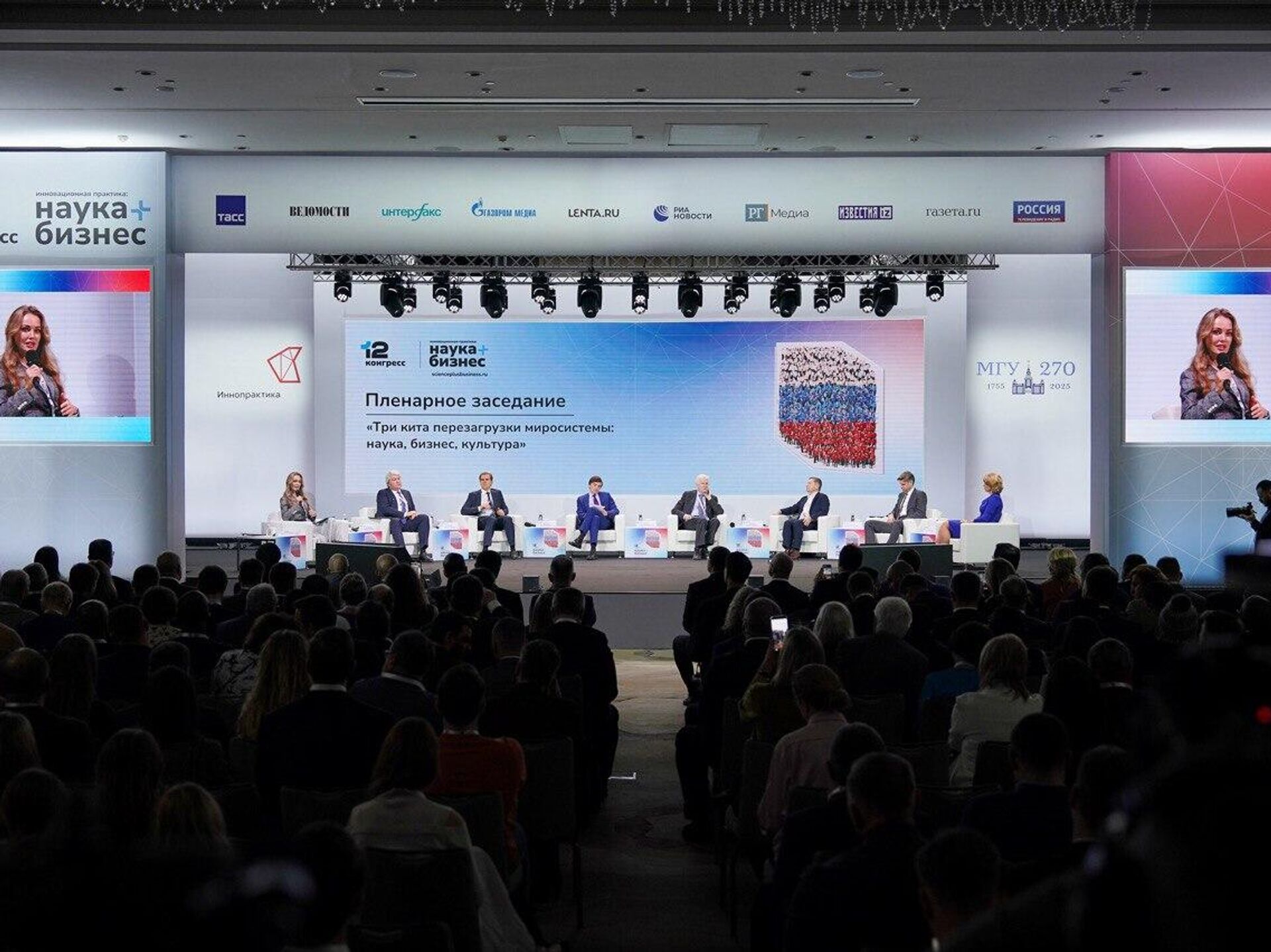
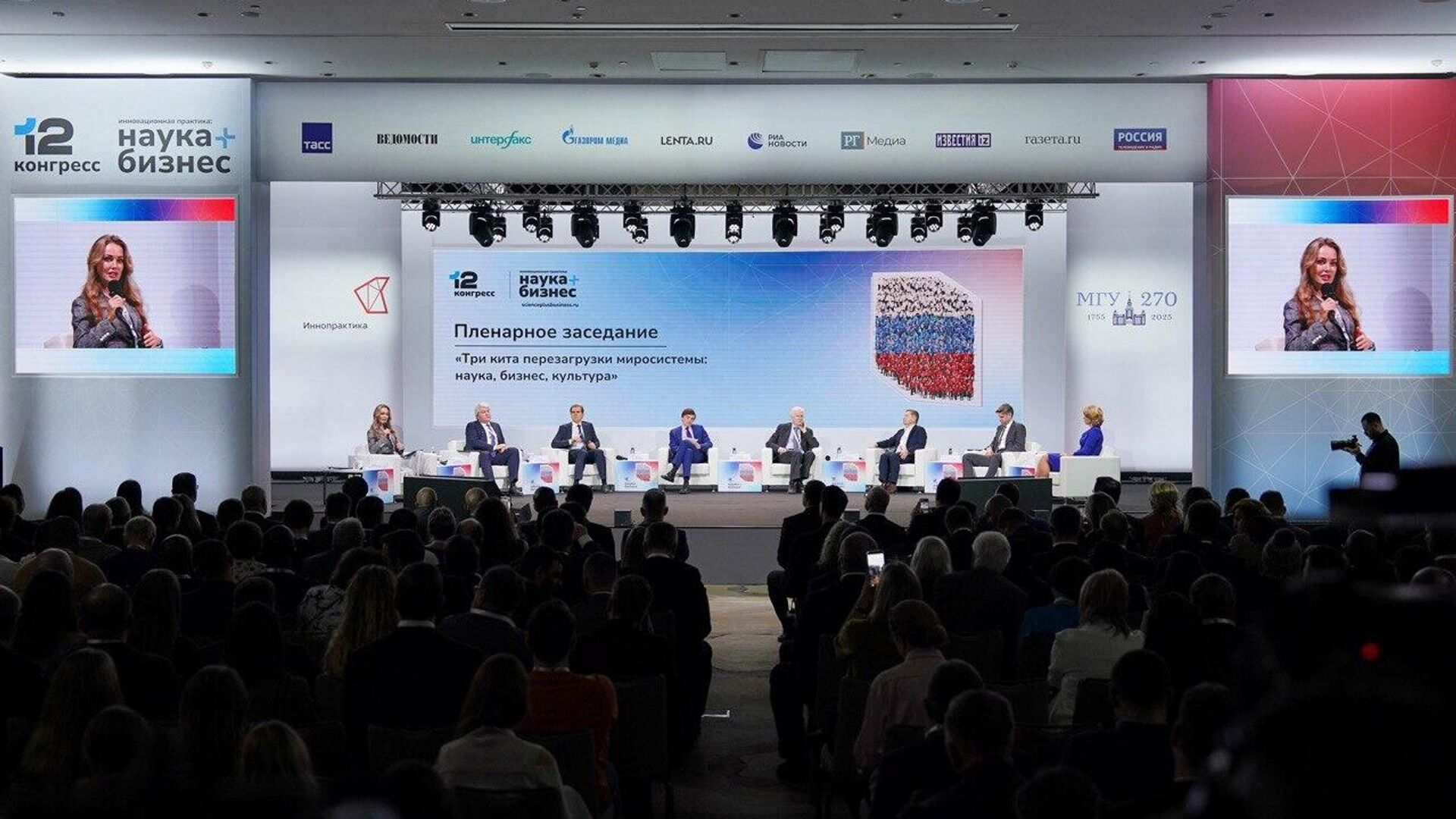
The event was organized by Innopraktika and Lomonosov Moscow State University (MSU).
On Tuesday, the congress hosted 19 events attended by over 2,000 participants, including senior officials and leading experts from government bodies, major Russian corporations, development institutions, investment firms, universities, research institutes, and high-tech Russian companies. For the first time, the congress featured a dedicated “Lead by Example” territory, where speakers used interactive formats to demonstrate how an innovative mindset functions in real-world projects.
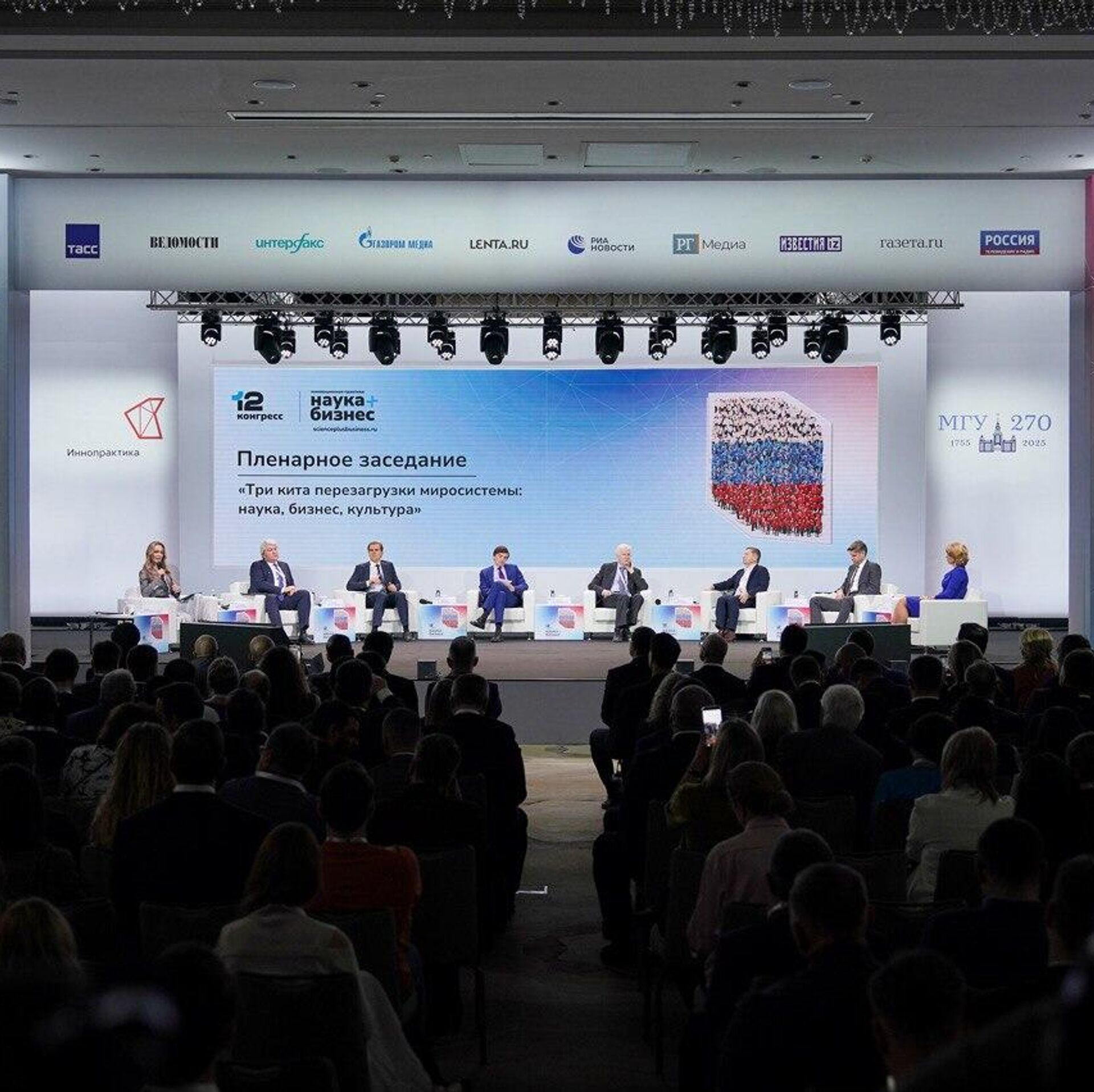
Key discussions centered on the transformations underway as the world shifts toward a multipolar order and on Russia’s role in reshaping the global system. Participants of the plenary session examined how a new culture of innovation—amid globalization and digitalization—can drive the growth of the Russian economy and foster mutually beneficial dialogue with countries worldwide. A critical enabler of this process is the tripartite model linking science, business, and culture, with a clear emphasis on achieving technological leadership.
“Innopraktika has always placed the individual at the heart of the innovation-driven economy, recognizing that human connections build bridges among market players at both regional and international levels,” said Katerina Tikhonova, CEO of Innopraktika, in her opening remarks. “Therefore, the congress theme invites us to consider how economic development depends on cooperation across different spheres—science and business, culture and the state. In our view, successful interaction among these domains is the key to achieving comprehensive sovereignty. Our experience shows that comprehensive sovereignty is needed not in isolation or for self-sufficiency alone, but to ensure parity and respectful engagement on the international stage. Culture is the foundation upon which the entire edifice of mutually enriching cooperation is built.”
Natalya Popova, First Deputy CEO of Innopraktika, highlighted the active growth of Russia’s high-tech business sector, citing the “TechSuccess” rating in which 104 companies reported annual revenue growth of up to 58%. She also noted the work of 142 “national champion” companies striving to bring Russian high-tech solutions to global markets. To support such leaders, the Innovation Engineering Center—part of the Innopraktika ecosystem—has successfully implemented a “scaling-up” mechanism for technology companies. A notable outcome is the RUB 1 billion contract between gas compressor manufacturer JSC RUMO and Serbia, following successful equipment trials for Gazprom.
“Successes of this kind clearly illustrate the synergy formula: science generates breakthrough knowledge, business turns it into marketable products and services, and culture creates an environment of trust and shared values—without which neither long-term investments nor market expansion are possible,” emphasized Popova.
The “scaling-up” mechanism and export hubs embody the science-business link, while international cultural initiatives cultivate the trust-based environment that enables multi-million-dollar agreements like the one with Serbian partners.
“The congress organized by Innopraktika has, since its first edition at MSU, become an effective platform for collaboration among corporations, scientific and educational institutions, and development agencies,” said Viktor Sadovnichiy, Rector of Lomonosov Moscow State University and Academician of the Russian Academy of Sciences.
“Many ideas born at this forum have already materialized into successful projects. Yet in this era of global transformation, it is crucial not to rest on past achievements but to respond to emerging challenges. In 2019, MSU established the Institute for Advanced Studies on Artificial Intelligence and Intelligent Systems. Last summer, Moscow University won a government grant to create a dedicated Research Center in Artificial Intelligence, and just a month ago, I signed an order to open a Faculty of Artificial Intelligence at our university. Studying cutting-edge technologies will strengthen Russia’s technological sovereignty and improve science-business collaboration.”
Sergey Kravtsov, Minister of Enlightenment of the Russian Federation, stressed that science, business, and culture shape the world through the people who work within them. Their knowledge and worldview determine whether the world changes for better or worse—and it is the school education system that lays the foundation for this. Today’s well-established system of fundamental knowledge is now organically complemented by educational efforts aimed at shaping individuals who care not only about personal success but also about the common good.
“Our school education system today fosters both fundamental knowledge and a worldview grounded in core values,” Kravtsov underlined. “We have approved unified curricula and organized systematic educational activities. This integrated approach ensures every child receives a solid academic foundation, moral and ethical guidance, and essential skills to realize their potential for the benefit of Russia.”
The minister also highlighted the successful implementation of educational initiatives aimed at instilling these key values in students.
Dmitry Bakanov, Director General of the State Space Corporation Roscosmos, emphasized the importance of engaging youth in building a talent pipeline for the space sector to develop more competitive solutions. As an example, he cited the “CosmoBreakthrough” project, which supports young people under 25 who wish to pursue careers in astronautics. This effort aligns with the state’s increasing involvement of companies in space-related technologies.
“Space is much closer than it may seem,” Bakanov noted. “It’s not just about the heroic feats of cosmonauts, but also about the practical use of space technologies. For instance, GLONASS satellites provide communication and navigation—essential, everyday services we can hardly imagine living without. The space sector encompasses numerous directions where businesses can invest effectively and profitably.”
Oksana Lut, Minister of Agriculture, addressed mechanisms to ensure a steady influx of motivated talent into the agro-industrial complex. She described a systemic approach involving school-level initiatives and tailored strategies for secondary and higher education. This multi-tiered talent development system begins with agricultural classes in rural schools—now numbering 1,000 across Russian regions, with plans to expand to 18,000 by 2030. Talented students are identified through the nationwide “InnAgrika” Olympiad in Agricultural Genetics, co-organized with Innopraktika. Registrations for the Olympiad have surged from 3,000 to 24,000 participants over three years. In 2026, a program to modernize agricultural colleges—“AgroProfessionalism”—is scheduled for launch.
“Promoting the agro-industrial complex is critically important,” said Lut. “We are grateful to those helping us demonstrate that our sector is interesting, modern, and knowledge-intensive—offering opportunities to work, create, and achieve excellent results.”
She added that the program encourages leading agricultural universities to expand scientific and educational projects integrated with practical business challenges.
According to Andrey Bezrukov, President of the Association for the Export of Technological Sovereignty and Professor at MGIMO’s Department of Applied Analysis of International Problems, the emerging world system will be shaped by whoever proposes the most effective strategic model linking science, business, and culture.
“In Russia, we are building our technological sovereignty—perhaps not yet complete, but we will certainly achieve it within a few years,” he affirmed. “And we are positioned to help our partners in other countries do the same. If we now establish a competitive model of long-term development and pursue it resolutely, no external force will divert us from our course, and we will accomplish the goals we have set.”
An example of such equitable cooperation is the strengthening of ties between Russia and Indonesia. Michael Jizhar, Executive Vice President of MODENA Group, noted the historical connections between Indonesia and the USSR, which have laid the groundwork for MODENA Group’s current active participation in joint projects with Russian corporations such as Rosatom and FESCO. He identified key areas of collaboration: nuclear energy development—including floating nuclear power plants—logistics infrastructure, pharmaceutical research, and educational initiatives. Jizhar particularly emphasized Indonesia’s drive toward technological and logistical sovereignty and Russia’s role as a strategic partner in building a multipolar future.
“We stand at the threshold of many paths leading to a diverse, multipolar future,” he concluded to applause. “This concerns not only business, but also technology, culture, and entertainment. We dream of a wonderful future—and we are ready to build it together with Russia!”
Also attending the congress was Sergey Novikov, Head of the Presidential Directorate for Public Projects, who stressed that when envisioning the future and technological leadership, it is essential to remember that we are not merely developing separate sectors—we are nurturing the future of the country by cultivating people, communities, and the cultural foundation upon which science, business, and the state are built.
Alexey Goreslavskiy, CEO of the non-profit “Internet Development Institute” (IRI), observed that in the digital content sphere—from audiovisual productions to gaming and neurotechnologies—the interconnection of science, business, and culture is especially evident, making technological sovereignty in each of these areas critically important.
“It has been proven that Russian audiences overwhelmingly support domestic content,” Goreslavskiy stated. “This is clear in television series, cinema, and animation—there is no doubt. Today, approximately 85% of film and series consumption consists of Russian productions. Yes, our citizens still watch Western films, but first, there is simply more Russian content available, and second, the quality of domestic productions has improved significantly. Box office earnings, ratings, and audience data confirm this trend across every segment.”
Concluding the discussion, Andrey Fursenko, Aide to the Russian president, warned that in the age of “post-truth,” emotional presentation often outweighs fact-based, value-driven information—a dangerous trend that affects all spheres, including science. He argued that the only defense lies in the reputation of key actors and primary value-bearers.
A core challenge for the education system, he said, is whether it can cultivate such “reputational” individuals and whether they will earn public trust. This requires deep foundational training and the ability to foster flexibility and truly innovative thinking. According to Fursenko, the competitiveness of such solutions ultimately rests on strategic vision and long-term forecasting.
“No competencies work without moral upbringing,” Fursenko asserted. “It is vital that future opinion leaders understand the responsibility tied to their reputation and resist the post-truth paradigm. Therefore, a student’s personal goals must align with the nation’s objectives—and their vision of the future must be based not on foreign clips, but on their own initiatives.”
Thus, the integration of science, business, and culture emerges as the cornerstone for national economic growth and expanded international partnerships.
“May technological leadership be guided by a broad Russian soul!” Natalya Popova concluded, summarizing the discussion.