Su-57: The 5th-Gen Jet Securing Russia’s Aerial Dominance Through of 21st Century
21:01 10.11.2025 (Updated: 21:07 10.11.2025)
© telegram sputnik_africa
Subscribe
Su-57: the 5th-gen jet securing Russia’s aerial dominance through of the 21st century
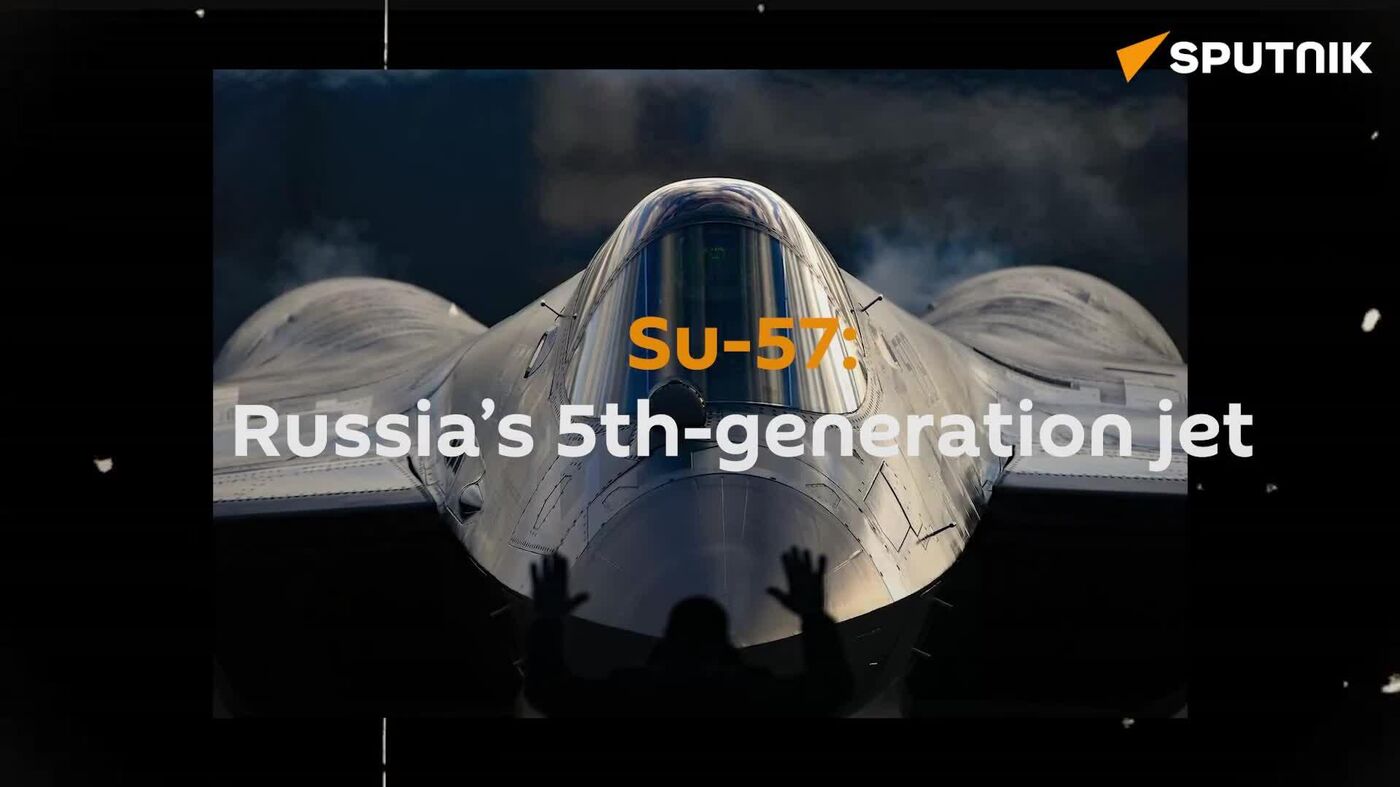
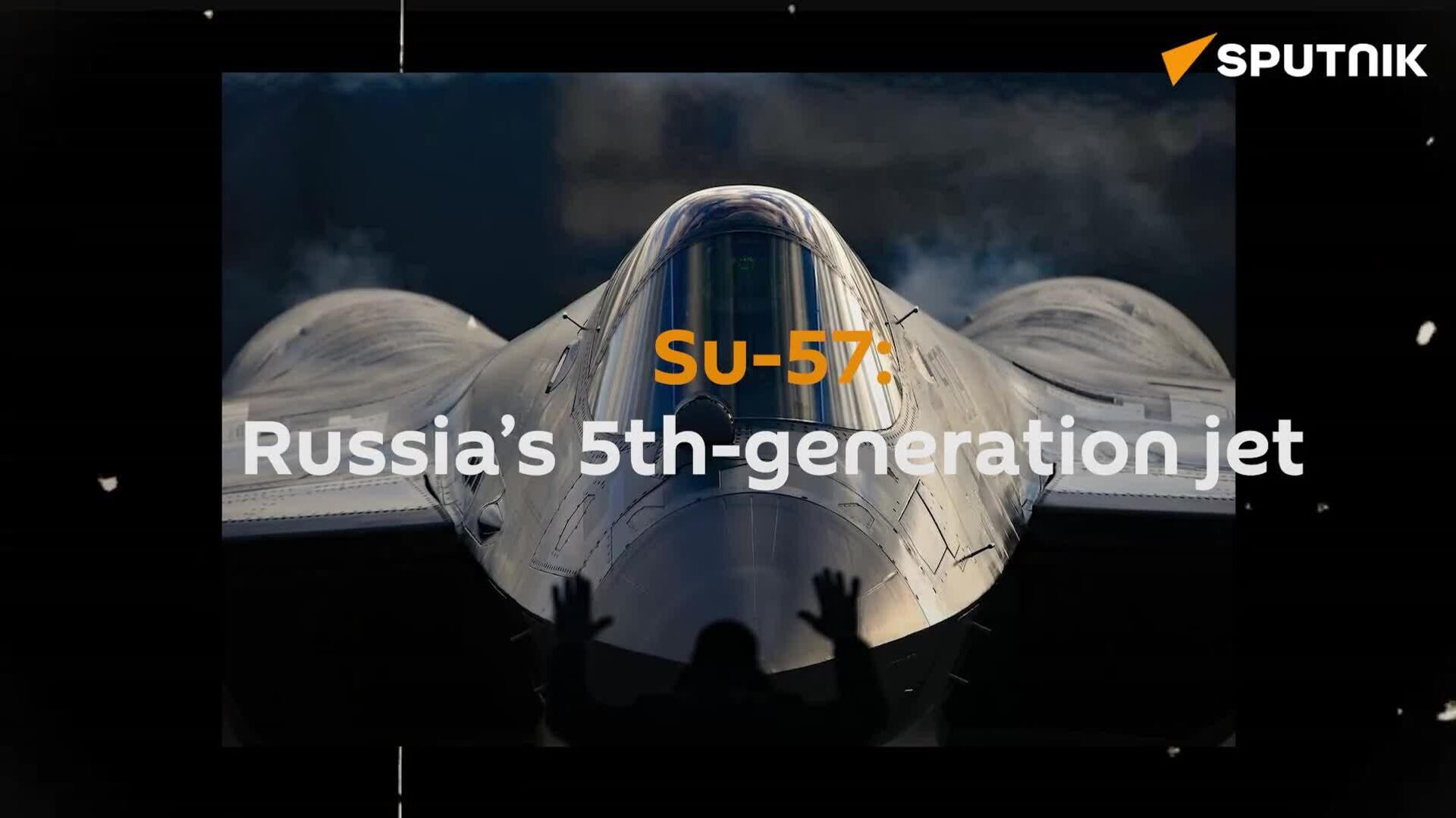
Russia’s entry in the multi-role fifth-gen fighter race differs markedly from its main competitor, the F-35, with the Su-57’s twin-engine design, superior speed, supermaneuverability, and standoff attack capabilities its key standout features.
The Su-57 has an effective combat range of over 1,500 km, Mach 1.3 high altitude supercruise flight speed and Mach 2 (up to 2,600 km km/h) top speed.
Its 12 hard points (6 internal, 6 external) can carry up to 10 tons of munitions, including all of Russia’s latest air-to-air (up to 380 km range), air-to-surface, anti-ship, anti-radiation and cruise missiles, as well as heavy guided glide bombs. For dogfights, the aircraft has a 30mm autocannon.
Unlike the do-it-all F-35, which has a single engine, the Su-57 comes with twin AL-51F1 engines with built-in supercruise, stealth-optimized nozzles and 2D thrust vectoring capability. Having two engines means that even if one is disabled, the Su-57 can safely limp back to friendly airspace.
Advanced subsystems
The Su-57 comes with multifunctional integrated radio electronic system, glass cockpit, wide-angle HUD and AI-equipped pilot support system.
The aircraft can also be paired with drone ‘wingmen’, including the new Okhotnik (‘Hunter’) – a large, flying wing-shaped heavy combat drone.
An advanced infrared search and track (IRST) system complements the Su-57’s main N036 radar and side-facing AESA radars, enabling passive tracking across a wide field of view.
Balanced Stealth
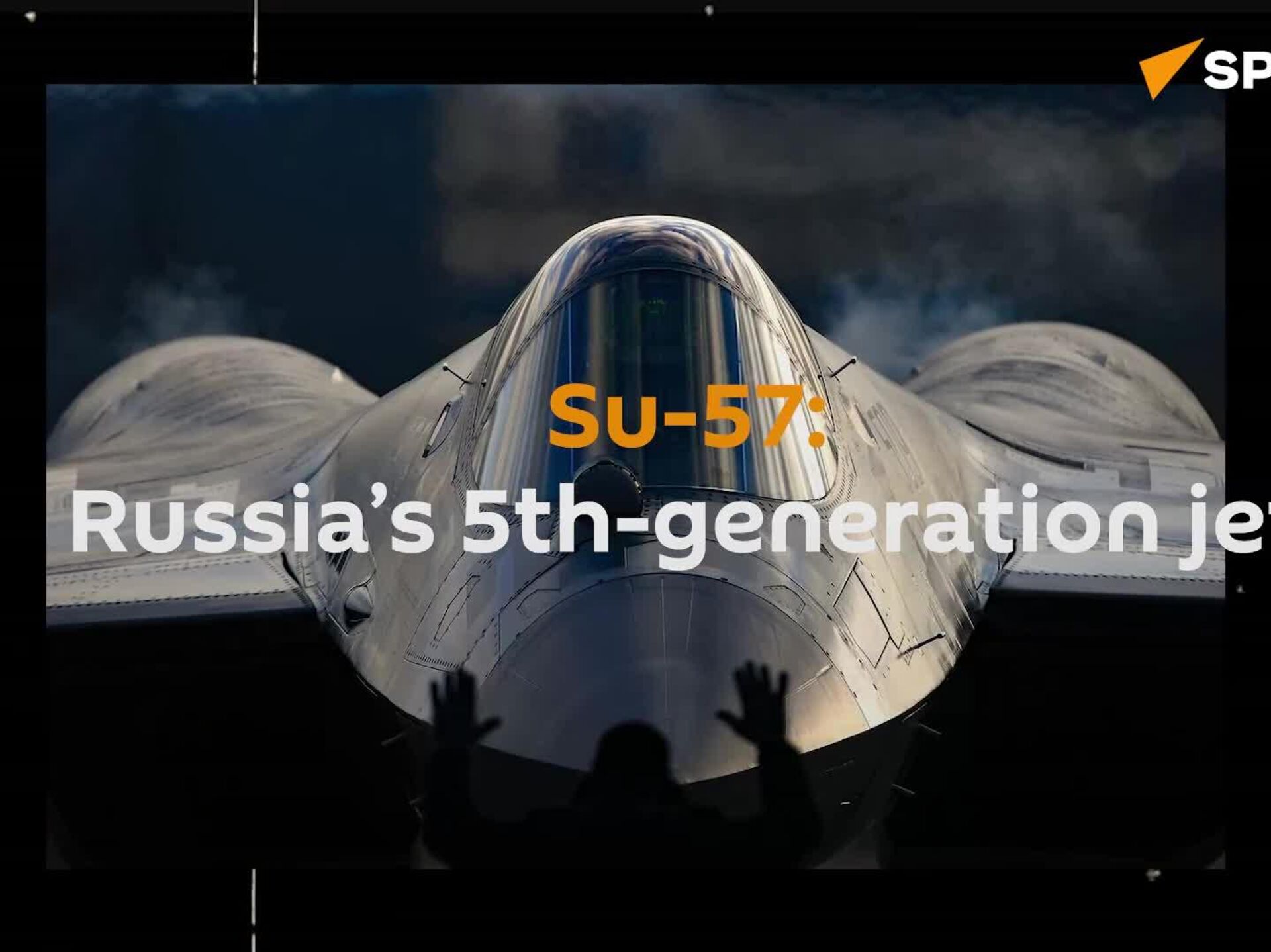
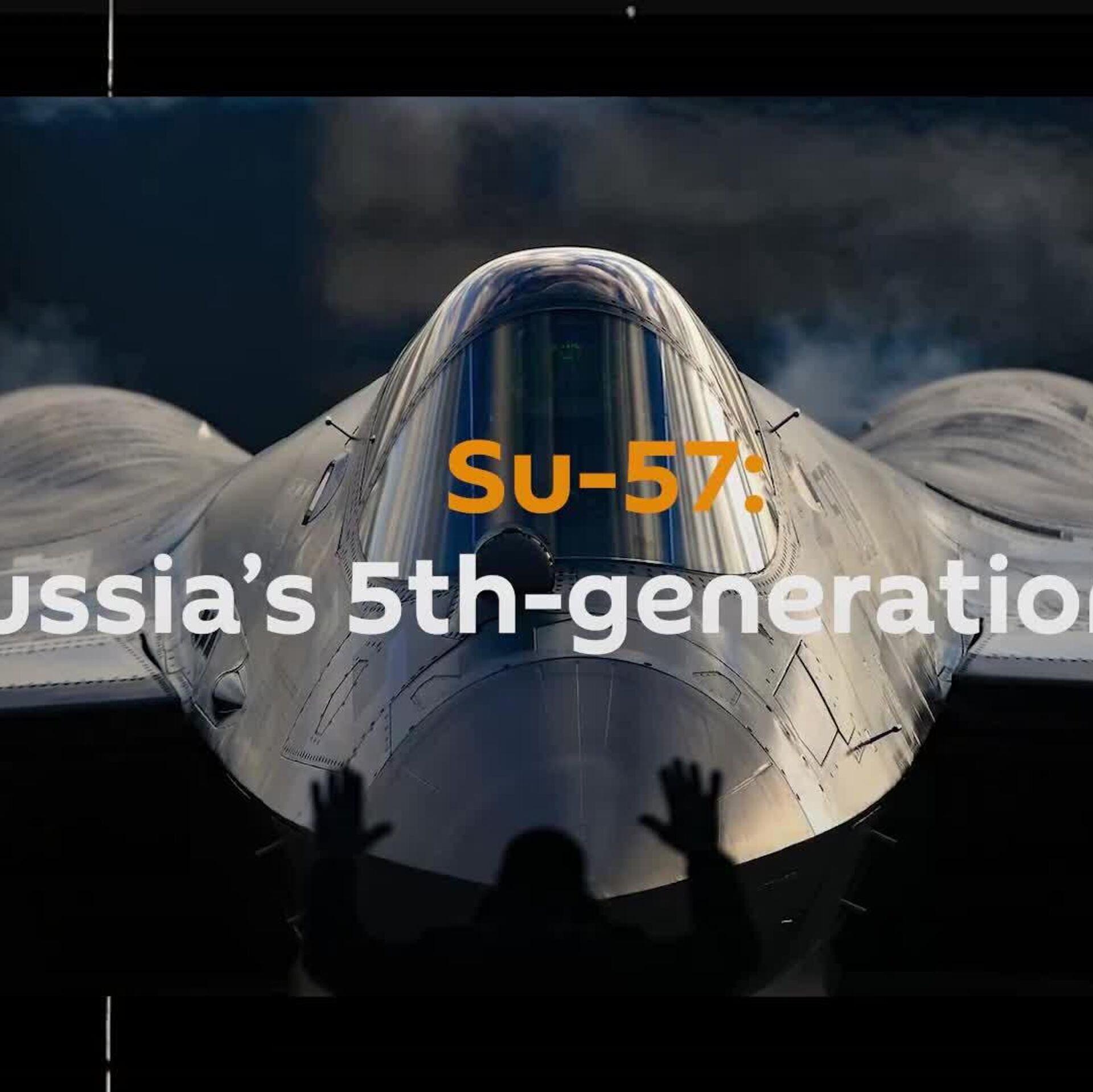
🟧 Stealth is achieved through the Su-57’s sharply swept wings, canted vertical tails, curved S-shape air inlets, internal weapons bays, and radar-absorbent coatings and composites, including on the canopy.
🟧 Frontal stealth is prioritized to penetrate enemy air defenses as powerful, multifrequency sensors detect the enemy before the Su-57 can be spotted, and standoff range air-to-air missiles and supermaneuverability do the rest.
Subscribe to @SputnikInt
Russia’s entry in the multi-role fifth-gen fighter race differs markedly from its main competitor, the F-35, with the Su-57’s twin-engine design, superior speed, supermaneuverability, and standoff attack capabilities its key standout features.
The Su-57 has an effective combat range of over 1,500 km, Mach 1.3 high altitude supercruise flight speed and Mach 2 (up to 2,600 km km/h) top speed.
Its 12 hard points (6 internal, 6 external) can carry up to 10 tons of munitions, including all of Russia’s latest air-to-air (up to 380 km range), air-to-surface, anti-ship, anti-radiation and cruise missiles, as well as heavy guided glide bombs. For dogfights, the aircraft has a 30mm autocannon.
Unlike the do-it-all F-35, which has a single engine, the Su-57 comes with twin AL-51F1 engines with built-in supercruise, stealth-optimized nozzles and 2D thrust vectoring capability. Having two engines means that even if one is disabled, the Su-57 can safely limp back to friendly airspace.
Advanced subsystems
The Su-57 comes with multifunctional integrated radio electronic system, glass cockpit, wide-angle HUD and AI-equipped pilot support system.
The aircraft can also be paired with drone ‘wingmen’, including the new Okhotnik (‘Hunter’) – a large, flying wing-shaped heavy combat drone.
An advanced infrared search and track (IRST) system complements the Su-57’s main N036 radar and side-facing AESA radars, enabling passive tracking across a wide field of view.
Balanced Stealth
🟧 Stealth is achieved through the Su-57’s sharply swept wings, canted vertical tails, curved S-shape air inlets, internal weapons bays, and radar-absorbent coatings and composites, including on the canopy.
🟧 Frontal stealth is prioritized to penetrate enemy air defenses as powerful, multifrequency sensors detect the enemy before the Su-57 can be spotted, and standoff range air-to-air missiles and supermaneuverability do the rest.
Subscribe to @SputnikInt